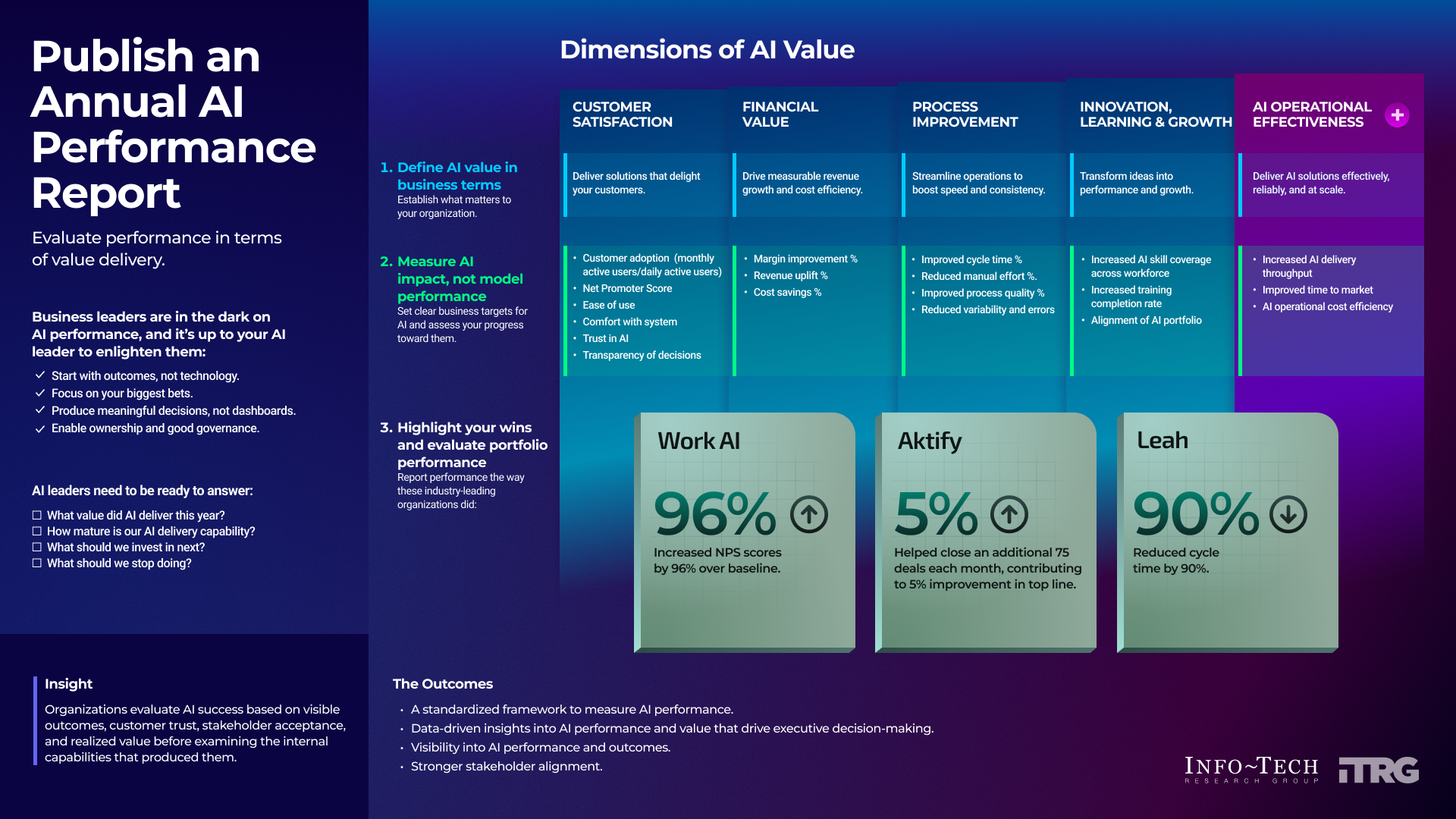
Publish an Annual AI Performance Report
Measure your AI performance to maximize return and mitigate risks with your AI investments.
Organizations are investing heavily in AI, but most lack a structured and repeatable way to define, measure, and communicate AI performance. You need to:
- Develop an approach to measure business value and ROI across multiple business functions.
- Assess the performance of your AI program to drive accountability, outcomes, and year-over-year improvement.
Our Advice
Critical Insight
Making progress against this mandate is challenging, because:
- There’s no clear view into the initiatives in progress across the organization.
- There’s no agreement on KPIs, baselines, dashboards, and reporting approach, leading to fragmented data and inconsistent metrics.
As a result, leaders struggle to justify continued AI investment or make informed decisions about scaling, funding, or improving their AI portfolio.
Impact and Result
Use this methodology to prepare for and develop an annual AI performance report to measure, benchmark, and communicate AI value consistently. You will:
- Define the scope of your measurement program.
- Identify standardized, business-aligned KPIs so every AI initiative is assessed in a comparable, repeatable way across the organization.
- Create a polished, executive-facing report that helps inform and drive decision-making on your AI portfolio.
Publish an Annual AI Performance Report
Measure your AI performance to maximize return and mitigate risks with your AI investments.
Analyst perspective
Connect AI initiatives with measurable business value and organizational priorities.
As organizations increasingly integrate artificial intelligence into core operations, the ability to measure, communicate, and govern AI performance and value has become essential. An annual AI performance report provides a structured mechanism for organizations to evaluate the outcomes of their AI initiatives and communicate their impact to key stakeholders. By consolidating insights on AI-driven value, operational effectiveness, and responsible AI practices, organizations can ensure that AI investments remain aligned with enterprise strategy and business priorities.
Use the methodology and tools in this research to connect AI strategy to execution by translating technical deployments into measurable business outcomes. It enables leaders to assess how AI initiatives contribute to customer and stakeholder satisfaction, financial performance, process improvement, operational effectiveness, and organizational innovation.
Publishing an annual AI performance report also strengthens transparency and accountability across the enterprise. A structured performance report provides visibility into how AI initiatives perform, the value realized, and the governance mechanisms used to support responsible and trustworthy AI practices.

Sumegha Sama
Research Analyst – AI
Info-Tech Research Group
Executive summary
|
Your Challenge |
Common Obstacles |
Info-Tech’s Approach |
|---|---|---|
|
Organizations are investing heavily in AI, but most lack a structured and repeatable way to define, measure, and communicate AI performance. You’re taking the lead on AI adoption in your organization, and you need to:
|
Making progress against this mandate is challenging because:
|
Use this methodology to prepare for and develop an Annual AI performance report to measure, benchmark, and communicate AI value consistently.
|
Info-Tech Insight
Organizations struggle to measure and govern AI investments effectively. A standardized annual AI performance report transforms fragmented initiatives into a measured portfolio, enabling leaders to prove value, prioritize investments, and scale AI with evidence-backed decisions.
Your challenge
This research is designed to help organizations that are looking to:
- Establish a structured and repeatable approach to track, measure, and communicate AI performance across the enterprise.
- Create a single consolidated view of AI initiatives across business functions, reducing siloed reporting and inconsistent metrics.
- Define clear, comparable performance metrics to assess AI value, ROI, and business impact year over year.
- Enable executives to identify which AI initiatives should be scaled, improved, or stopped based on evidence, not anecdotes.
- Produce an executive-ready annual AI performance report that supports informed investment decisions and future AI roadmap planning.
74% of companies struggle to achieve and scale measurable AI value.
Source: Integrate.io, 2026
Common obstacles
These barriers are challenging for many organizations:
- Lack of clear AI performance metrics and baselines, resulting in fragmented data, inconsistent KPIs, and limited visibility across AI use cases and business functions.
- AI performance measured at a model or technical level rather than against business outcomes, value realization, and enterprise impact.
- Inconsistent reporting and unclear ownership, with performance reviews varying by team and no central governance or standard oversight model.
- No standardized dashboards or review cadence, preventing leaders from tracking progress, comparing initiatives, or identifying underperforming AI investments.
- Limited ability to prove AI value, making it difficult to prioritize initiatives, justify continued funding, or make informed scale, improve, or stop decisions.
Info-Tech’s methodology to publish an annual AI performance report
|
Phase 1: Define AI Value & Success |
Phase 2: Measure Your Performance |
Phase 3: Build Your AI Performance Report |
|
|---|---|---|---|
|
Phase Steps |
1.1 Identify the AI initiatives in your funnel 1.2 Define value dimensions for your organization 1.3 Apply AI guiding principles to value and performance measurement 1.4 Define project value |
2.1 Establish your measurement approach 2.2 Measure your progress |
3.1 Communicate impact and drive decisions 3.2 Build a communication plan for your roadmap |
|
Phase Outcomes |
|
|
|
Blueprint Deliverables
Key deliverable
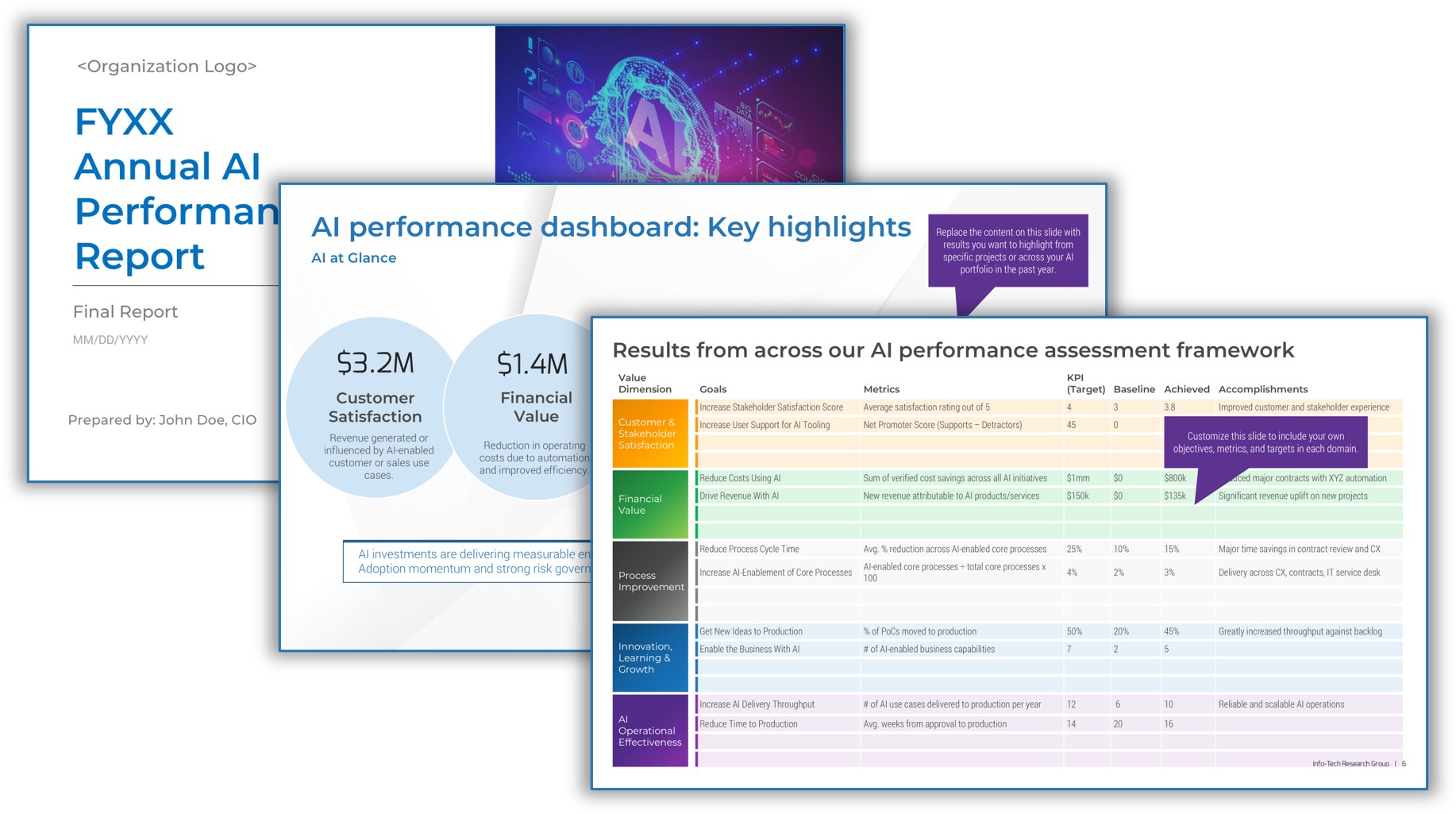
Annual AI Performance Report Executive Presentation Template
This template enables you to shape your generative AI roadmap and communicate the value of the initiatives to your C-suite sponsors.
Supporting deliverable
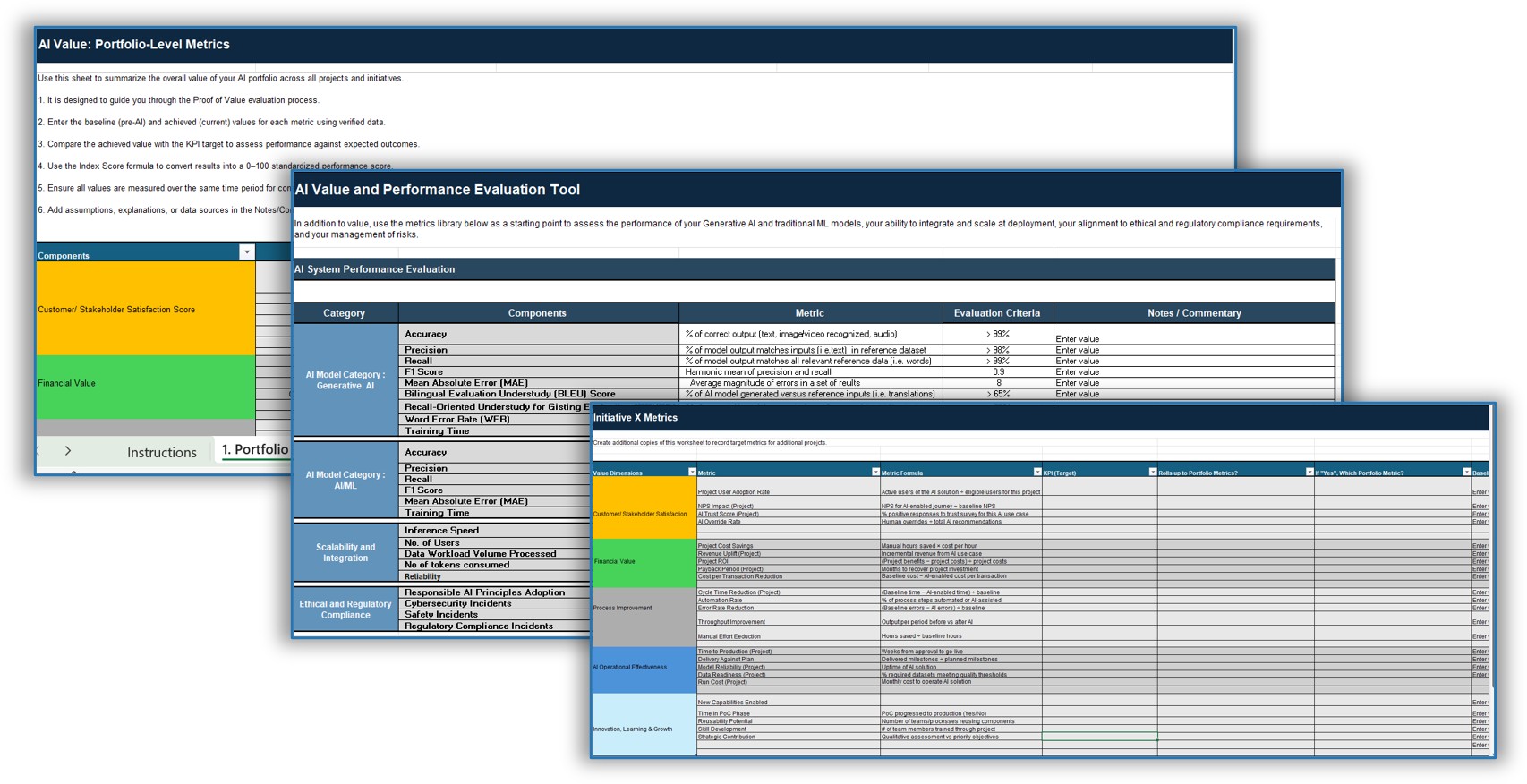
AI Value and Performance Evaluation Tool
Use this structured tool to assess whether an AI initiative delivers measurable business value across defined performance dimensions before scaling or further investment.
Blueprint benefits
|
IT Benefits |
Business Benefits |
|---|---|
|
|
Measure the value of this blueprint
Leverage this blueprint to institutionalize AI performance measurement, enabling transparent value reporting and informed investment decision-making.
|
Project Outcome |
Measured Value Delivered |
|---|---|
|
Pick the projects that truly return value, rather than experiments. |
For example: |
|
Highlight your successes for an executive audience. |
Clear executive-ready summaries of AI performance and business outcome. For example, portfolio-level metrics such as cost savings, productivity gains, and adoption rates to support leadership decisions and future AI investments. |
|
Build your performance reporting framework using Info-Tech’s AI performance and value framework. |
Save time and avoid rework. For example: 20 stakeholders @ 4 hours each * $100/hour = $8,000 |
|
Demonstrate your AI program’s value and impact across the organization. |
Quantify and communicate AI-driven value across financial impact, customer outcomes, operational efficiency, and innovation. |
|
Improve visibility into your AI portfolio. |
Reduce time spent collecting and consolidating AI performance data. For example: Save 40-60 reporting hours per cycle. |
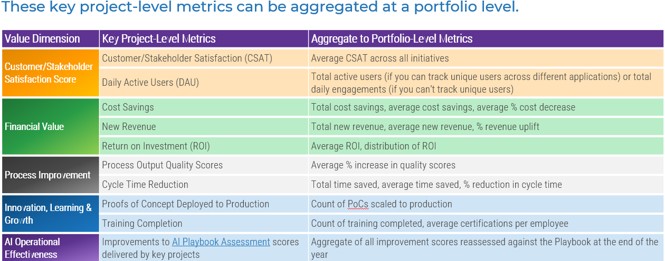
Following the implementation of the 12-month performance framework, monitor these metrics to prove enterprise AI value and ROI delivery.
Info-Tech offers various levels of support to best suit your needs
| DIY Toolkit | Guided Implementation | Workshop | Executive & Technical Counseling | Consulting |
|---|---|---|---|---|
| "Our team has already made this critical project a priority, and we have the time and capability, but some guidance along the way would be helpful." | "Our team knows that we need to fix a process, but we need assistance to determine where to focus. Some check-ins along the way would help keep us on track." | "We need to hit the ground running and get this project kicked off immediately. Our team has the ability to take this over once we get a framework and strategy in place." | "Our team and processes are maturing; however, to expedite the journey we'll need a seasoned practitioner to coach and validate approaches, deliverables, and opportunities." | "Our team does not have the time or the knowledge to take this project on. We need assistance through the entirety of this project." |
Diagnostics and consistent frameworks are used throughout all five options.
Guided Implementation
What does a typical GI on this topic look like?
| Phase 1 | Phase 2 | Phase 3 |
|---|---|---|
|
Call #1: Identify the AI initiatives to include in the annual AI performance report. Call #2: Define the value dimensions and metrics used to measure AI outcomes across the organization. |
Call #3: Collect baseline and current performance data and evaluate AI initiatives using the AI value and performance evaluation framework. Call #4: Validate results with initiative owners and analyze the business value realized across the defined value dimensions. |
Call #5: Develop the annual AI performance report structure and summarize key insights and performance highlights. Call #6: Build the communication plan and prepare the report for executive review and stakeholder communication. |
A Guided Implementation (GI) is a series of calls with an Info-Tech analyst to help implement our best practices in your organization.
A typical GI is 6 calls delivered across 3 phases over the course of 4 to 6 months.
Workshop overview
Contact your account representative for more information.
workshops@infotech.com 1-888-670-8889
| Day 1 | Day 2 | Day 3 | Day 4 | Day 5 | |
|---|---|---|---|---|---|
|
Define AI Reporting Scope |
Establish the Measurement Framework |
Measure AI Performance |
Analyze Results and validate insights |
Build the Annual AI Performance Report |
|
|
Activities |
1.1 Identify the AI initiatives to include in the report. 1.2 Identify initiative owners and stakeholders. 1.3 Define the objectives of the annual AI performance report. 1.4 Prioritize the top initiatives to evaluate. |
2.1 Define value dimensions (customer satisfaction, financial value, process improvement, operational effectiveness, innovation). 2.2 Identify relevant KPIs for each initiative. 2.3 Define measurement formulas and targets. 2.4 Assign metric ownership and reporting frequency. |
3.1 Collect baseline and current performance data. 3.2. Use the AI Value and Performance Evaluation Tool to evaluate initiatives. 3.3 Measure performance across defined value dimensions. 3.4. Document results and supporting evidence. |
4.1 Review evaluation results with stakeholders. 4.2 Identify value realized and improvement opportunities. 4.3. Cross-reference value metrics with responsible AI principles. 4.4 Identify key insights and performance highlights. |
5.1 Create the annual AI performance report structure. 5.2. Develop executive summary and key performance highlights. 5.3 Build a communication plan for stakeholders. 5.4 Review next steps and improvement actions. |
|
Deliverables |
|
|
|
|
|
Phase 1
Define AI Value and Success
|
Phase 1 |
Phase 2 |
Phase 3 |
|---|---|---|
|
1.1 Identify AI initiatives in 1.2 Define value dimensions 1.3 Apply AI guiding principles to value and performance measurement 1.4 Define project value |
2.1 Establish your measurement approach 2.2 Measure your progress |
3.1 Communicate impact & drive decisions 3.2 Build a communication plan for your roadmap |
Phase Activities
Identify AI initiatives in the funnel, define organizational value dimensions, apply AI guiding principles for value and performance measurement, and determine the overall project value and impact.
Phase Outcomes
Development of an AI value framework, a structured measurement framework, and list of top AI initiatives aligned with business strategy and value creation.
Measure the value AI brings to your organization
AI value must be defined in business outcomes, not technical performance, to enable accountability, comparability, and sustained ROI.
|
Context |
The Core Issue |
Our Definition |
|---|---|---|
|
Lack of a consistent business-led definition of AI value leads to:
|
AI performance is the extent to which AI systems and initiatives effectively deliver against defined business and operational objectives across the AI value framework. AI value is the measurable contribution of AI initiatives to enterprise outcomes across financial performance, operational effectiveness, stakeholder impact, and strategic advancement. |
Info-Tech Insight
At some point, if it hasn’t happened already, the business stakeholders investing in AI in your organization will ask what they’ve received in return for their investment. This is difficult to answer if you haven’t prepared yourself to answer it. Establishing a structured performance measurement framework enables organizations to quantify realized value, demonstrate , and build confidence in continued AI investment.
Misaligned performance measures create a watermelon effect
The watermelon effect
Organizations can hit all their defined delivery targets, such as on-time and on-budget delivery or model accuracy, but fail to deliver real business value. This misalignment results in the watermelon effect, where performance indicators appear green on the surface, but under the surface, they’re red because key stakeholders aren’t satisfied with the (unmeasured) value they’re getting from your solution.
If you fail to capture the right performance metrics, you’ll miss opportunities to demonstrate impact. You’ll also miss value gaps, limiting your ability to intervene early and correct course.
Identify your AI initiatives and where they are in the PoC to proof pipeline
|
Exploration & Proof of Concept |
Prototype |
Pilot |
Production, Deploy & Scale |
|---|---|---|---|
|
|
|
|
|
Move to Prototype when: |
Move to Pilot when: |
Move to Production when: |
Success when: |
|
DEFINE VALUE |
PROVE VALUE |
MEASURE VALUE |
|
1.1 Identify AI initiatives in your funnel
Build an inventory of in-flight AI initiatives to help establish the scope and focus of your AI performance measurement program.
- Create a list of the AI initiatives currently underway across the organization.
- Identify the current lifecycle stage of each initiative (i.e. PoC, Prototype, Pilot, or Production). Categorize each initiative into the appropriate lifecycle stage within the funnel in the template on the next slide.
- Identify the business sponsor/owner for each initiative in brackets next to the initiative name.
- Review the list and eliminate any for which you are not responsible for measuring performance or value.
- Identify the top initiatives in the list. These likely have an outsized impact on the organization’s goals, may be more complex, require additional spend, and are tightly aligned to the organizational strategy.
| Input | Output |
|---|---|
|
|
| Materials | Participants |
|
|
Example: AI initiative funnel portfolio
Exploration & | Prototype | Pilot | Deploy & Scale |
|---|---|---|---|
|
|
|
|
* Top Initiatives
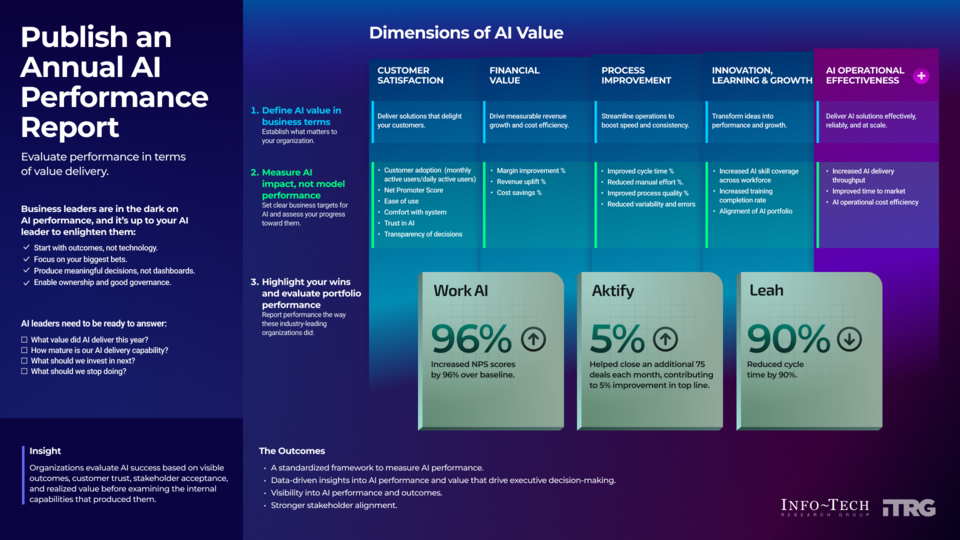
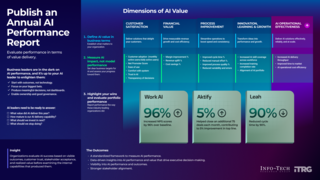
Define and measure value with Info-Tech’s AI Performance and Value Framework
Use our comprehensive performance and value framework as your starting point to assess AI value.
|
Value Dimension |
Who tends to care about these dimensions? |
|---|---|
|
Customer & Stakeholder Satisfaction Score |
Service-driven organizations, customer-facing functions |
|
Financial Value |
Most organizations, but especially those launching AI-enabled products and cost-sensitive enterprises |
|
Process Improvement |
Operations-heavy functions, shared services, IT, manufacturing, financial services |
|
Innovation, Learning & Growth |
AI transformation-led enterprises, capability-building functions |
|
AI Operational Effectiveness |
Technically mature AI organizations, digital-native firms, regulated industries, AI CoEs |
About Info-Tech
Info-Tech Research Group is the world’s fastest-growing information technology research and advisory company, proudly serving over 30,000 IT professionals.
We produce unbiased and highly relevant research to help CIOs and IT leaders make strategic, timely, and well-informed decisions. We partner closely with IT teams to provide everything they need, from actionable tools to analyst guidance, ensuring they deliver measurable results for their organizations.
What Is a Blueprint?
A blueprint is designed to be a roadmap, containing a methodology and the tools and templates you need to solve your IT problems.
Each blueprint can be accompanied by a Guided Implementation that provides you access to our world-class analysts to help you get through the project.
Need Extra Help?
Speak With An Analyst
Get the help you need in this 3-phase advisory process. You'll receive multiple touchpoints with our researchers, all included in your membership.
Guided Implementation 1: Define AI Value and Success
- Call 1: Identify the AI initiatives to include in the annual AI performance report.
- Call 2: Define the value dimensions and metrics used to measure AI outcomes across the organization.
Guided Implementation 2: Measure Your Performance
- Call 1: Collect baseline and current performance data and evaluate AI initiatives using the AI value and performance evaluation framework.
- Call 2: Validate results with initiative owners and analyze the business value realized across the defined value dimensions.
Guided Implementation 3: Standardize and Communicate Performance
- Call 1: Develop the annual AI performance report structure and summarize key insights and performance highlights.
- Call 2: Build the communication plan and prepare the report for executive review and stakeholder communication.
 Tech Trends 2025
 Define Your Digital Business Strategy
 Kick-Start IT-Led Business Innovation
 Establish a Foresight Capability
 Apply Design Thinking to Build Empathy With the Business
 Sustain and Grow the Maturity of Innovation in Your Enterprise
 Position IT to Support and Be a Leader in Open Data Initiatives
 Double Your Organization’s Effectiveness With a Digital Twin
 Develop a Use Case for Smart Contracts
 Adopt Design Thinking in Your Organization
 Accelerate Digital Transformation With a Digital Factory
 Tech Trends 2024
 2021 Tech Trends
 Implement and Mature Your User Experience Design Practice
 CIO Priorities 2022
 2022 Tech Trends
 Into the Metaverse
 Demystify Blockchain: How Can It Bring Value to Your Organization?
 2020 Tech Trend Report
 2020 CIO Priorities Report
 CIO Trend Report 2019
 CIO Trend Report 2018
 CIO Trend Report 2017
 AI and the Future of Enterprise Productivity
 Evolve Your Business Through Innovation
 Build a Platform-Based Organization
 Tech Trend Update: If Contact Tracing Then Distributed Trust
 Tech Trend Update: If Biosecurity Then Autonomous Edge
 Tech Trend Update: If Digital Ethics Then Data Equity
 Tech Trends 2023
 Formalize Your Digital Business Strategy
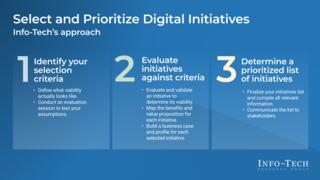 Select and Prioritize Digital Initiatives
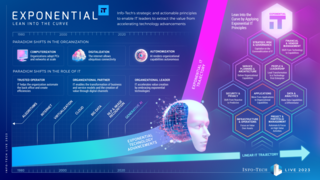 Adopt an Exponential IT Mindset
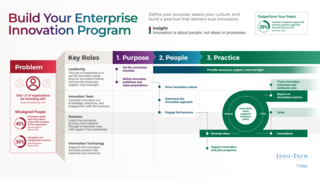 Build Your Enterprise Innovation Program
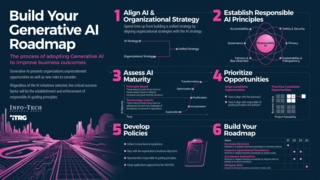 Build Your Generative AI Roadmap
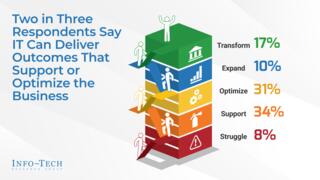 Annual CIO Survey Report 2024
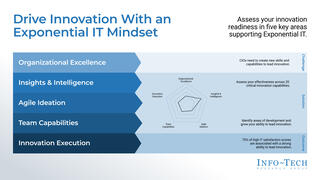 Drive Innovation With an Exponential IT Mindset
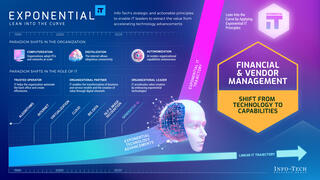 Exponential IT for Financial and Vendor Management
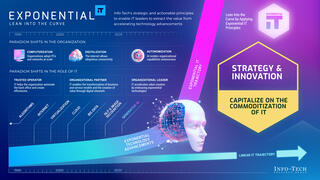 Exponential IT for Strategy, Risk, and Governance
 Exponential IT for Service Planning and Architecture
 Exponential IT for People and Leadership
 Exponential IT for Security and Privacy
 Exponential IT for Applications
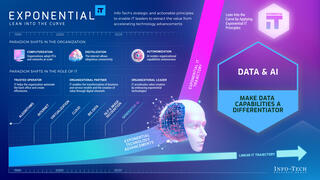 Exponential IT for Data and Analytics
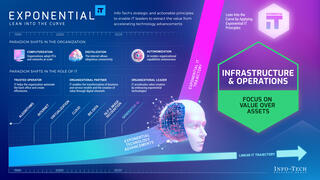 Exponential IT for Infrastructure and Operations
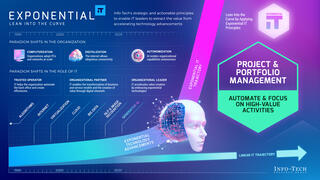 Exponential IT for Project and Portfolio Management
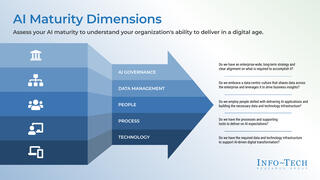 Assess Your AI Maturity
 Develop Responsible AI Guiding Principles
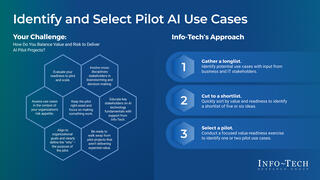 Identify and Select Pilot AI Use Cases
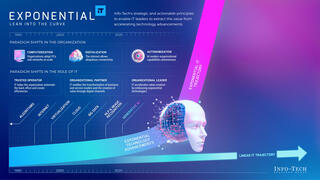 Exponential IT Keynote
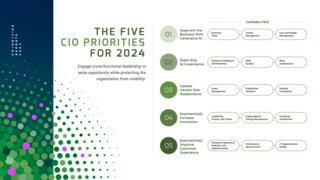 CIO Priorities 2024
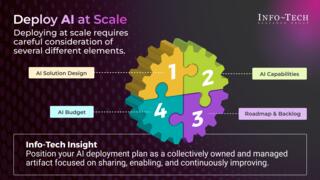 Build a Scalable AI Deployment Plan
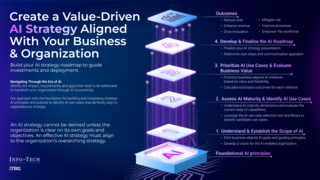 Build Your AI Strategy and Roadmap
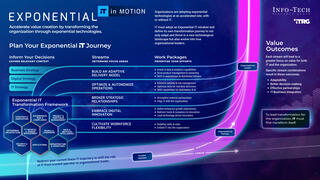 Develop an Exponential IT Roadmap
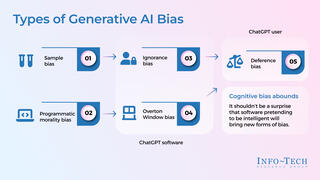 Use ChatGPT Wisely to Improve Productivity
 Build a FinOps Strategy to Enable Dynamic Cloud Cost Management
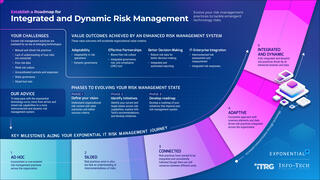 Establish a Roadmap for Integrated and Dynamic Risk Management
 Info-Tech’s Best of 2024 Mid-Year Report: AI Rewrites the Script for CIOs
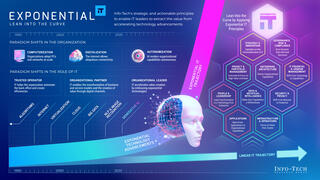 Explore the Art of the Possible for Exponential IT
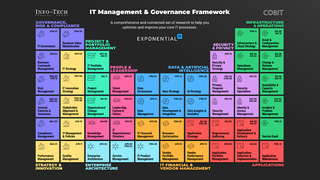 IT Management & Governance: The Next Evolution
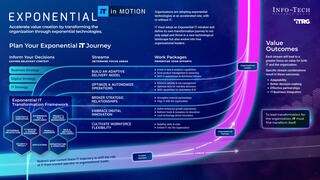 Bending the Exponential IT Curve Keynote
 Exponential IT in Motion: Transform Your Organization by Transforming IT
 AI Trends 2025
 LIVE 2024 Keynote Presentations
 LIVE 2024 Lightning Round Presentations
 CIO Priorities 2025
 Info-Tech’s Best of 2024 Report: IT Moves Into Position
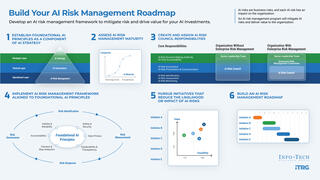 Build Your AI Risk Management Roadmap
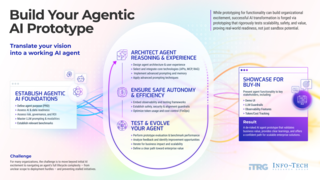 Design Your Agentic AI Prototype
 An Operational Framework for Rolling Out AI
 The AI Vendor Landscape in IT
 Run IT By the Numbers
 Building Info-Tech’s Chatbot
 Assessing the AI Ecosystem
 Bring AI Out of the Shadows
 Transform IT, Transform Everything
 Implement AI for Customer Experience
 Info-Tech’s Best of 2025 Mid-Year Report: IT Moves From Disruption to Decisive Action
 Implement an AI-Orchestrated Service Desk
 Info-Tech's All-Time Best, 2025 Edition: Change Is the Headline, Fundamentals Are the Path
 Tech Trends 2026
 The AI Playbook
 AI Trends 2026
 Info-Tech’s Best of 2025: The Year AI Stopped Being a Project and Became the Strategy
 Publish an Annual AI Performance Report
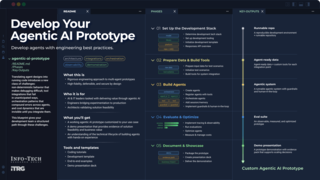 Develop Your Agentic AI Prototype
 Changing Landscape: Rethinking Vendor Decisions in the Agentic AI Era
 AI in Seven Charts
 Emerging AI Trends and Predictions From Our Global Technical Counselor Team
 Turn Customer Friction Into Agentic Opportunity
 People Change in the Face of Disruptive Technology
 Lead IT Like a Business: Every Dollar Is a Decision
 Optimize Cloud & AI Spend With Agentic FinOps
 Leadership Summit: The Ultimate Onboarding Experience 2026
 Resilience Is Not Planned – It Is Architected
 Redefine What It Means to Be CIO
 Navigating AI Agents in Service Management
 Influence Unleashed: The IT Leader’s Superpower
 The Challenge of Ethics in the Use of AI
 Revolutionize Risk Management With Agentic AI
 Introducing the Info-Tech Speakers Bureau
 Inside the Agentic Enterprise
 Agents 2.0: From Autonomy to Architecture
 Agentic IT: From Hype to Value
 Tech Trends 2027 Keynote
 Become an Exponential CIO
 Beyond the Agent: The Leadership Ecosystem for an AI-Enabled World
 Five Key Takeaways From Info-Tech LIVE 2026
 Info-Tech’s Best of 2026 Mid-Year Report
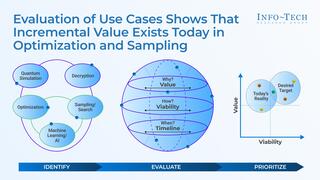 Identify and Evaluate Quantum Computing Use Cases
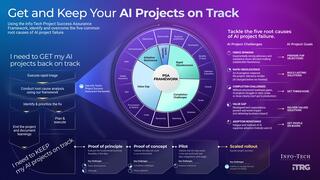 Get Your AI Projects Back on Track
 AI Adoption & Impact Study: AI in Software Development June 2026 Top 10 Insights
 AI Adoption & Impact Study: AI in the Enterprise June 2026 Top 10 Insights