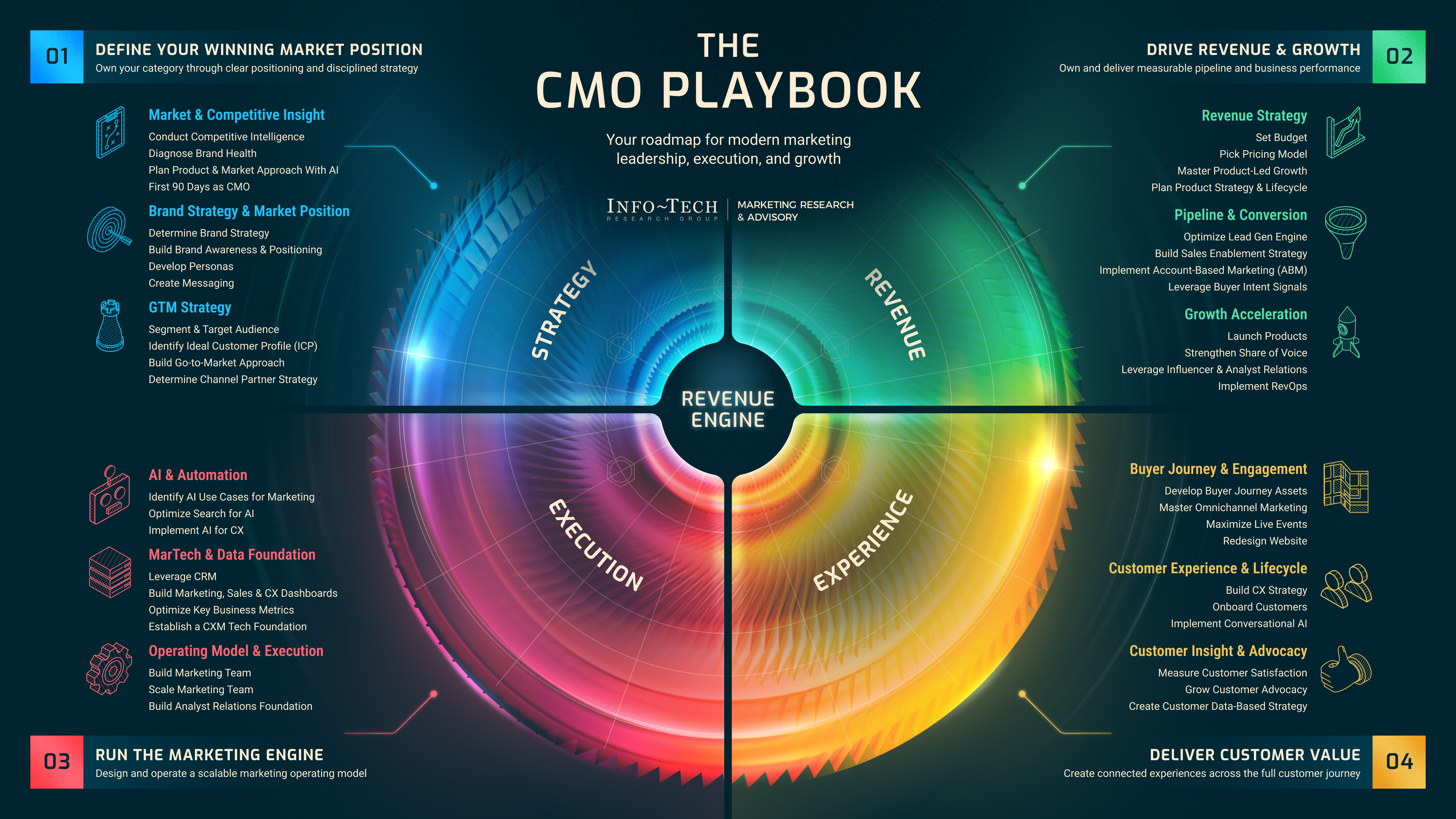
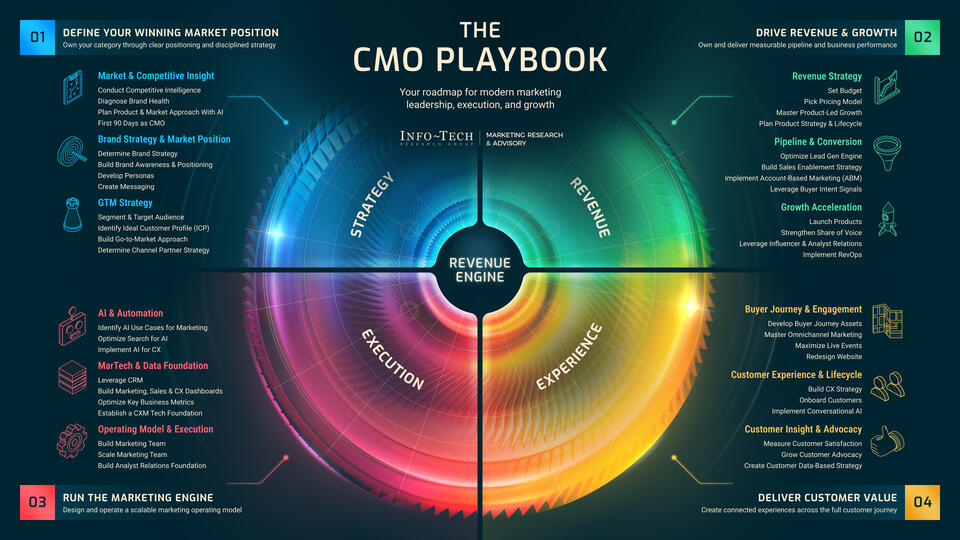
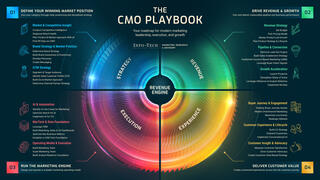
The CMO Playbook
Your roadmap for modern marketing leadership, execution, and growth.
- CMOs are increasingly accountable for revenue and growth outcomes without full control over the systems, teams, and levers that influence them.
- Pressure to prove marketing impact is intensifying as attribution models break down across fragmented, AI-influenced customer journeys.
- Leaders must balance short-term pipeline demands with long-term brand position, differentiation, and sustainable growth.
- The modern CMO mandate has expanded beyond what most marketing organizations, operating models, and measurement frameworks were designed to support.
Our Advice
Critical Insight
- The future CMO will increasingly operate as the architect of the entire revenue engine – connecting strategy, customer experience, AI, data, sales alignment, and execution into a coordinated growth system.
- Marketing effectiveness is now determined less by individual campaigns and channels, and more by how well organizations connect fragmented teams, data, technology, and customer experiences into a unified operating model.
- Many marketing organizations are still operating with structures, metrics, and operating models built for a brand-and-campaign era, while the CMO role has fundamentally evolved into a business transformation and growth leadership role.
Impact and Result
- Build a modern marketing operating model that helps you connect strategy, customer experience, execution, AI, and revenue outcomes into a measurable growth engine.
- Help you evolve from leading marketing activities to leading enterprise growth, with stronger alignment to business strategy, revenue accountability, and cross-functional decision-making.
- Give you a practical framework to reduce fragmentation, improve organizational alignment, and scale marketing impact in increasingly complex, AI-driven environments.
THE CMO PLAYBOOK
Your roadmap for modern marketing leadership, execution, and growth
“The role of the CMO has transformed faster than any other C-suite position.”
DELOITTE, 2025
The modern CMO mandate is bigger, broader, and more complex
CMOs report that the role of the chief marketing officer has fundamentally shifted in recent years. Once focused primarily on awareness and brand-building, marketing is now expected to directly drive revenue and measurable business outcomes. While this shift has elevated marketing’s strategic importance, it has also dramatically increased the complexity of the CMO role.
Traditional marketing responsibilities remain, even as new expectations continue to grow. CMOs are still expected to build differentiated brands, shape market strategy, and influence customer perception – while also driving performance across the entire customer lifecycle.
The scope of marketing continues to expand. CMOs are navigating rapid advances in AI and technology, growing pressure to prove ROI, and rising expectations for cross-functional alignment. The result is a role that is broader, more complex, and more heavily scrutinized than ever before.
“Today’s [CMO] mandate requires business generalists who can navigate creative intuition, financial accountability, and technical fluency. This is a structural shift. The definition of success in 2000 is dangerously close to irrelevance in 2025.”
DEBRA ANDREWS, FAST COMPANY, APRIL 2026
The CMO is not just the head of marketing – they are the head of the revenue engine.
CEOs and boards now expect CMOs to deliver predictable pipeline, support revenue growth, and provide clear visibility into performance. This marks a fundamental shift from CMO as brand builder to CMO as driver of the revenue engine
This shift requires a different operating model. CMOs must connect strategy to execution, align closely with Sales, Product, and Customer Success, and build systems that consistently convert market interest into revenue. Success is no longer defined by individual campaigns, but by the strength and scalability of the overall marketing engine.
“It’s very much expected that as the CMO I’m driving the book of business.”
LUCIA MARCHESE, CMO AT TEAMDYNAMIX
88%
of marketing leaders were responsible for revenue goals in 2024.
Source: Airtable, 2024.
And yet only 25% of those leaders have high visibility into marketing ROI, a decrease from the year prior (33%).
New responsibilities, higher expectations – and even greater challenges
The new CMO mandate has outpaced how most marketing organizations operate, leaving many CMOs stretched across competing demands and rising expectations. With marketing taking more responsibility for business growth, expectations for accountability, performance, and impact are heightened. CMOs must deliver more impact – with less control – in more complex and rapidly changing environments. As these pressures mount, the role is becoming increasingly difficult to sustain. It’s no wonder CMOs have the shortest tenure in the C-suite.
- Owning Revenue Without Full Control
- Proving Impact in a Broken Attribution Model
- Building and Leveraging an AI, Data & Technology Foundation
- Balancing Short-Term Performance With Long-Term Market Position
- Maintaining Strategic Focus While Managing Execution
- Aligning the Go-to-Market Engine
CMOs must show revenue impact – and that’s getting harder to do
OWNING REVENUE WITHOUT FULL CONTROL
CMOs are now accountable for pipeline, ARR, and growth outcomes but don’t fully control all the levers (sales execution, product, pricing). This creates tension between responsibility and authority, where marketing is expected to deliver business outcomes in highly interdependent systems.
PROVING IMPACT IN A BROKEN ATTRIBUTION MODEL
Attribution is becoming increasingly unreliable due to fragmented journeys, AI-influenced discovery, and zero-click behavior. CMOs are forced to make high-stakes budget and strategy decisions without clear visibility into what’s truly driving results.
“Marketing exists to generate revenue for the company… Our ability to drive that revenue means we have to have a very well-orchestrated structure of connective tissue through the funnel.”
BECCA TOTH,
CMO AT SUGARCRM
“There’s nothing that marketing really isn’t touching. Marketing raises all boats.”
MICHELLE RANDALL,
CMO AT ONSPRING
Quick delivery pressure conflicts with building sustainable growth
BALANCING SHORT-TERM PERFORMANCE WITH LONG-TERM MARKET POSITION
Pressure for immediate pipeline and revenue often comes at the expense of brand, differentiation, and category position. CMOs must continuously trade off between hitting near-term targets and building durable market advantage.
Maintaining Strategic Focus While Managing Execution
CMOs are expected to lead at the business level, shaping growth strategy and market direction, while still being pulled into execution oversight when performance is under pressure. Maintaining strategic focus while ensuring delivery remains a constant tension.
Modern CMOs must protect strategic focus while building execution models capable of delivering continuous business impact.
“Marketing today is expected to move at a sales pace, even though real impact takes time – while navigating more ideas, more stakeholders, and more noise than ever, and having to campaign internally just to execute.”
ROBERT STICKEL,
DIRECTOR OF MARKETING AT ONEPLAN
While the challenges facing CMOs are intensifying, so is the opportunity to become a central driver of growth, market position, and competitive advantage.
Future growth depends on strong use of AI, data, and technology and GTM alignment
BUILDING AND LEVERAGING AN AI, DATA & TECHNOLOGY FOUNDATION
Connected AI, data, and technologies enable faster decisions, smarter execution, and more scalable growth. CMOs have a major opportunity to connect fragmented systems into a unified growth engine that accelerates performance and revenue outcomes.
ALIGNING THE GO-TO-MARKET ENGINE (ESPECIALLY WITH SALES)
Aligned GTM teams drive stronger execution, better customer experiences, and greater revenue impact. Strengthening cohesion across marketing, sales, product, and broader GTM teams sets the foundation to drive more coordinated growth.
“Everyone focuses on the goal, and both teams want to win. What matters is the system that gets you there.”
JOHN MERRILL,
CMO AT LASERFICHE
“If everything is connected and automated, you don’t need to prove your value – it’s obvious.”
LUCIA MARCHESE,
CMO AT TEAMDYNAMIX
Reengineer marketing as a true driver of growth
Most marketing organizations get stuck in reactive execution. This supports activity but limits impact.
- GROWTH ENGINE
- STRATEGIC
- MANAGED
- TRANSACTIONAL
- AD HOC
CMOs must mature marketing to the point where it is not only executing but actively driving growth.
At higher levels of maturity:
- Marketing ROI is clear and measurable
- Strategy and execution are tightly connected, enabling consistent, repeatable performance
- Data, technology, and processes integrate into a cohesive system
- Teams operate with focus and intention, not reactivity
This is where marketing moves from supporting the business to powering it – accelerating growth and creating sustained competitive advantage.
About Info-Tech
Info-Tech Research Group is the world’s fastest-growing information technology research and advisory company, proudly serving over 30,000 IT professionals.
We produce unbiased and highly relevant research to help CIOs and IT leaders make strategic, timely, and well-informed decisions. We partner closely with IT teams to provide everything they need, from actionable tools to analyst guidance, ensuring they deliver measurable results for their organizations.
What Is a Blueprint?
A blueprint is designed to be a roadmap, containing a methodology and the tools and templates you need to solve your IT problems.
Each blueprint can be accompanied by a Guided Implementation that provides you access to our world-class analysts to help you get through the project.
Talk to an Analyst
Our analyst calls are focused on helping our members use the research we produce, and our experts will guide you to successful project completion.
Book an Analyst Call on This Topic
You can start as early as tomorrow morning. Our analysts will explain the process during your first call.
Get Advice From a Subject Matter Expert
Each call will focus on explaining the material and helping you to plan your project, interpret and analyze the results of each project step, and set the direction for your next project step.
Unlock Sample ResearchContributors
- Andrew Warden, Vice President of Marketing, Adobe
- Becca Toth, CMO, SugarAI
- Ed Breault, CMO, Malbek
- John Merrill, CMO, Laserfiche
- Lucia Marchese, CMO, TeamDynamix
- Michelle Randall, CMO, Onspring
- Robert Stickel, Director of Marketing, OnePlan
- Sunny Dhami, CMO, Ardoq
 Marketing Management Suite Software Selection Guide
 Build IT Capabilities to Enable Digital Marketing Success
 Develop Your Web Experience Management Strategy
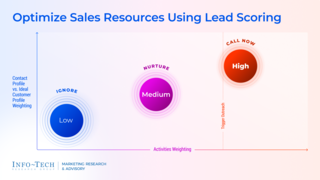 Optimize Lead Generation With Lead Scoring
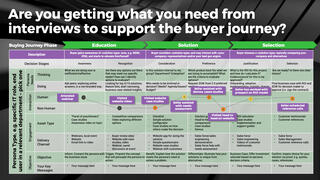 Create a Buyer Persona and Journey
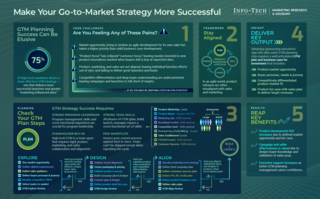 Build a More Effective Go-to-Market Strategy
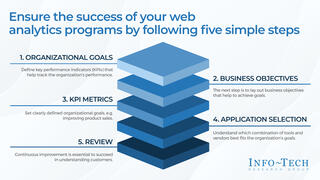 Leverage Web Analytics to Reinforce Your Web Experience Management Strategy
 2020 Applications Priorities Report
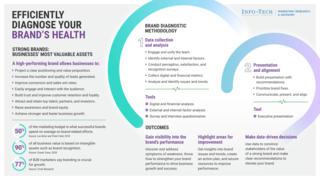 Diagnose Brand Health to Improve Business Growth
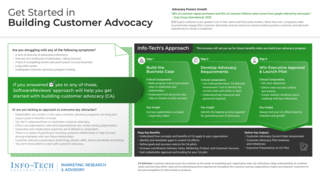 Get Started With Customer Advocacy
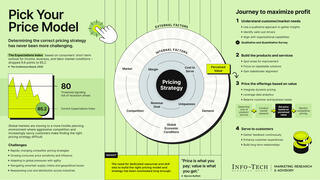 Pick Your Price Model
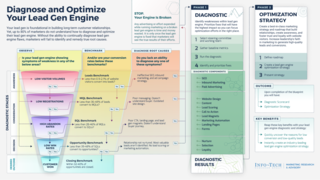 Diagnose and Optimize Your Lead Gen Engine
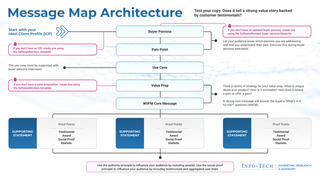 Develop the Right Message to Engage Buyers
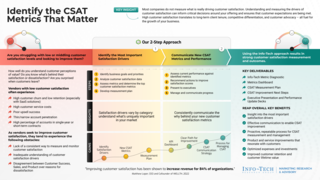 Identify the Customer Satisfaction Metrics That Matter
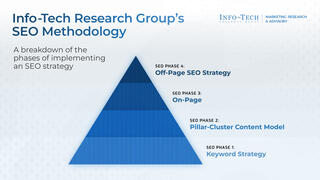 Create an Effective SEO Strategy
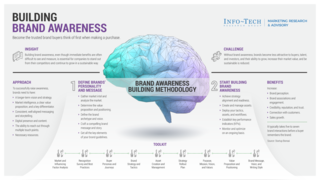 Accelerate Business Growth and Valuation by Building Brand Awareness
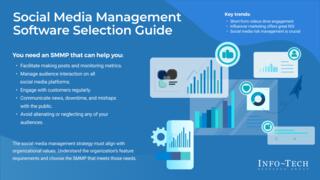 Social Media Management Software Selection Guide
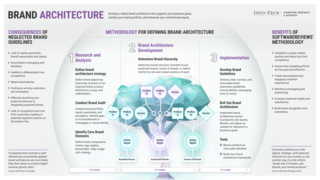 Build a More Effective Brand Architecture
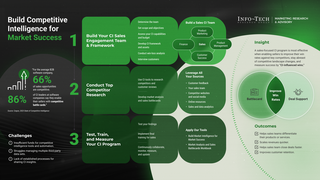 Build Competitive Intelligence for Market Success
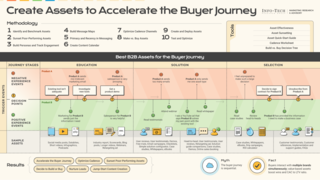 Create Assets to Accelerate the Buyer Journey
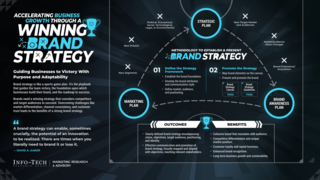 Brand Strategy: Establish and Cultivate a Flourishing Brand
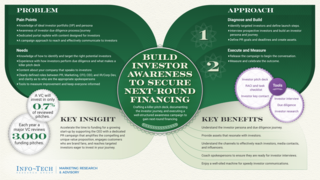 Build Investor Awareness to Secure Next-Round Financing
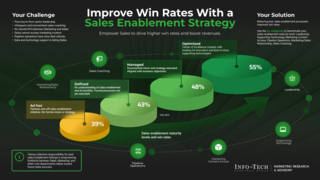 Improve Win Rates With a Sales Enablement Strategy
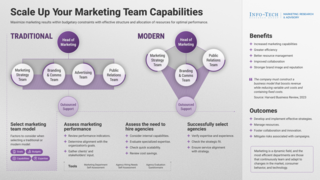 Scale Your Marketing Department
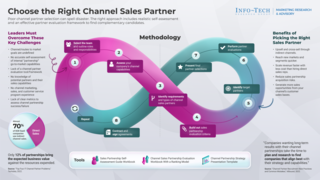 Choose the Right Channel Sales Partner
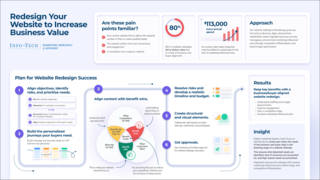 Redesign Your Website to Increase Business Value
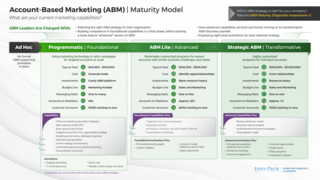 Build Your Account-Based Marketing Strategy
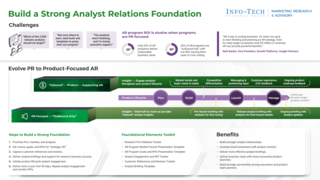 Build a Strong Analyst Relations Foundation
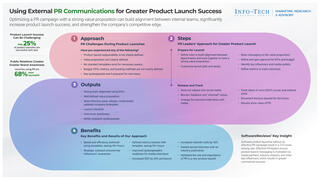 Improve External PR Communications for Greater Product Launch Success
 Turn Share of Voice Growth Into a Strategic Weapon
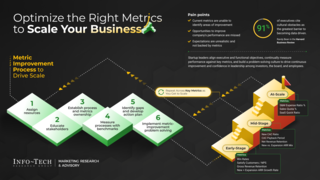 Optimize the Right Metrics to Scale Your Business
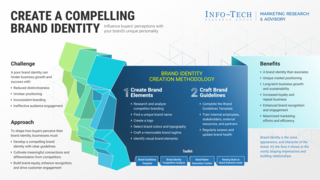 Leave a Lasting Impression With a Compelling Brand Identity
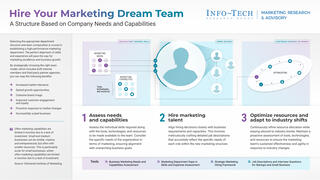 Hire Your Marketing Dream Team
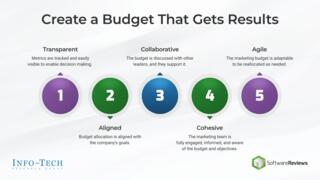 Match Your Budget to Your Market Position
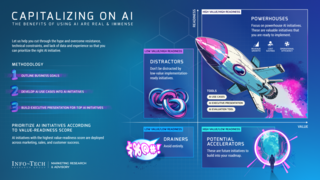 Capitalizing on AI
 Generative AI Use Cases for Marketing, Sales, and Customer Service
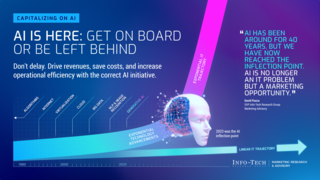 The AI Advantage for Smarter Marketing – A Primer
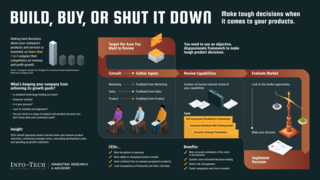 Build, Buy, or Shut It Down
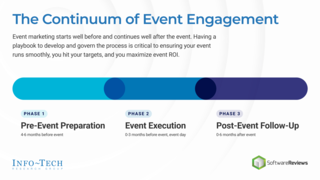 Event Activation Playbook
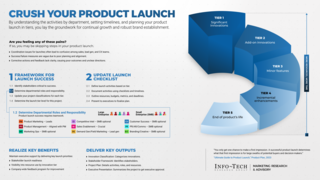 Crush Your Product Launch
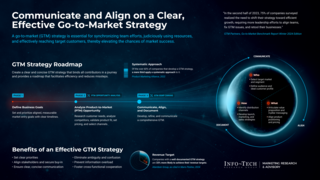 Go-to-Market Strategy on a Page
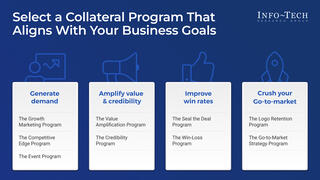 Maximize ROI on Sales and Marketing Collateral
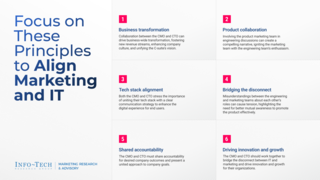 From Silos to Synergy: Create Marketing and IT Alignment
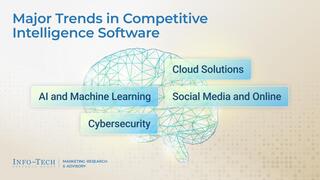 Competitive Intelligence Software Selection Guide
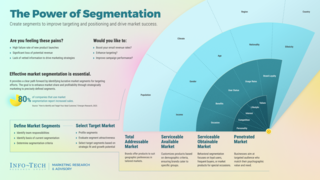 The Power of Segmentation
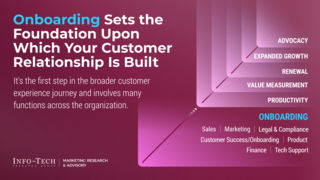 Revolutionize Your Customer Onboarding
 Search Engine Optimization Software Selection Guide
 Build Better Dashboards Across Marketing, Sales, and Customer Success
 Make the Case for RevOps
 The First 90 Days as a CMO
 Stay Relevant in the Era of AI-Powered Search
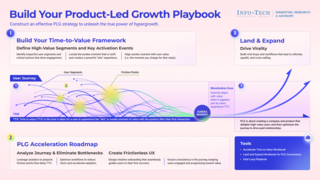 Build Your Product-Led Growth Playbook
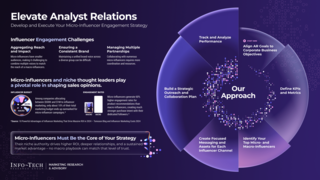 Elevate Analyst Relations
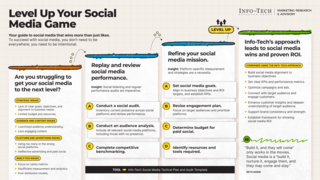 Level Up Your Social Media Game
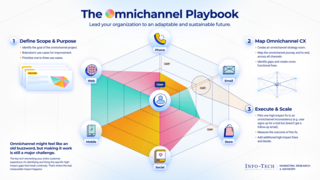 The Omnichannel Playbook
 Digital Experience Platform Selection Guide
 Software Buyer Insights 2025
 Optimize Your CX Strategy
 Drive Product & Market Planning With AI
 Board Management Software Selection Guide
 The CMO Playbook
 Position Your Brand Strategically as a Cost or Value Leader
 The Crisis Management Playbook