
Board Management Software Selection Guide
Transform boardrooms into engines of strategy, trust, and innovation.
- Boards face increasing regulatory pressure, hybrid work complexity, and rising expectations for secure, efficient governance.
- Manual, fragmented board processes create risk, inefficiency, and limited strategic visibility.
- Modern board management platforms centralize meetings, documents, approvals, and compliance with strong security.
- A structured selection approach helps organizations choose the right solution to strengthen governance and decision-making.
Our Advice
Critical Insight
- Complication: Disconnected tools, manual board packs, and email-based sharing create security risks, version-control issues, and limited visibility into compliance and risk.
- Info-Tech Insight: Align board management requirements to director priorities and use a structured, phased selection process to identify secure, AI-enabled platforms that improve governance effectiveness and strategic focus.
Impact and Result
- Apply a structured, phased approach to evaluate board management platforms based on governance, security, and usability needs.
- Leverage market insights, peer reviews, and practical tools to shortlist and select the best-fit vendor.
- Enable secure, modern board workflows that strengthen compliance, transparency, and strategic decision-making.
Member Testimonials
After each Info-Tech experience, we ask our members to quantify the real-time savings, monetary impact, and project improvements our research helped them achieve. See our top member experiences for this blueprint and what our clients have to say.
7.0/10
Overall Impact
$6,899
Average $ Saved
2
Average Days Saved
Client
Experience
Impact
$ Saved
Days Saved
Metropolitan Utilities District
Guided Implementation
7/10
$6,899
2
Board Management Software Selection Guide
Transform boardrooms into engines of strategy, trust, and innovation.
Analyst Perspective
“Modern board platforms leverage AI and secure cloud workflows to strengthen cybersecurity, streamline governance, and empower directors with transparent, data-driven decision-making.”

Boards today face rising regulatory pressures, growing stakeholder expectations, and the realities of hybrid work. Traditional workflows – such as manual packet assembly, scattered emails, and siloed communications – waste time, increase risk, and divert attention from strategic focus. Modern board platforms solve these challenges by centralizing agenda preparation, document sharing, and compliance tracking and meeting execution in a secure, cloud-native hub.
AI-driven tools, such as automated minutes, risk detection, and natural language search, simplify adoption and boost productivity. Meanwhile, encryption, permission controls, and regional data safeguards protect sensitive materials. Directors stay connected and engaged across devices, regardless of location.
Looking forward, generative AI will help boards surface risks, summarize insights across large document sets, and identify compliance gaps, while blockchain-enabled voting enhances auditability and trust.
These innovations go beyond efficiency, equipping boards with the insight and transparency needed to strengthen governance and focus on long-term strategy.
Joanne Morin Correia
Principal Research Director
Info-Tech Research Group
Executive Summary
Your Challenge
With increasing regulatory demands, dispersed teams, and rising stakeholder expectations, boards risk inefficiency and blind spots if they rely on manual processes and disconnected tools.
- Manual packet assembly and agenda preparation consume a significant amount of time.
- Siloed communications can hinder collaboration and transparency.
- These processes give limited visibility into compliance, risk, and strategic performance metrics.
Common Obstacles
The inability to streamline governance slows decision-making, creates security vulnerabilities, and limits strategic oversight.
Other obstacles include:
- Inconsistent version control and a lack of audit trails.
- Insufficient use of analytics and dashboards for real-time insights.
- Data security concerns arise when sharing sensitive materials via email or print.
Info-Tech’s Approach
By aligning your board management requirements with directors’ priorities, you can gain insights that strengthen governance, security, and strategic foresight. This blueprint will help you:
- Learn which platforms offer AI-driven features – such as automated minutes, compliance flagging, and natural language search – that save time and reduce risk.
- Gain actionable insights into board effectiveness and engagement with dashboards that support long-term strategy, compliance, and stakeholder trust.
Info-Tech Insight: Board management software are no longer just an administrative tools – they are strategic enablers that connect governance, security, and insight in one secure, cloud-native hub.
Empower your board through modernization
Today’s boards require modern tools and secure digital workflows to meet rising expectations and growing operational complexity.
- Board members are getting younger and expectations for digital security and modernization are rising.
- Traditional, manual approaches to board management (like paper packets and fragmented communications) are no longer sufficient.
- There is a growing need for secure, efficient, and modernized workflows to keep up with evolving security threats and the demands of a new generation of board members.
- Modernization and security are now essential for effective board and committee operations, driven by demographic shifts and the increasing complexity of the governance environment.
The evolution of board platforms
Birth of Digital Boardrooms
- Traditional board meetings relied on bulky paper packets and manual coordination.
- Early digital solutions aimed to simplify meeting prep and centralize records.
- The 1990s saw a push for document digitization and the development of basic compliance tools.
Rise of Specific Platforms
- Generic business tools weren’t secure or tailored for board workflows.
- Board portals like BoardEffect and Diligent emerged to meet specific governance needs.
- Tools like secure voting, e-signatures, and role-based access improved efficiency.
Cloud & Mobile Make Boards Agile
- Executives needed to collaborate anytime, anywhere – especially during travel or a crisis.
- Cloud-based platforms enabled real-time updates and mobile access.
- Cybersecurity became critical as sensitive board data moved online.
The Smart Boardroom Era
- Modern boards wanted insights, not just storage.
- Integration with GRC tools, AI-driven reports, and ESG metrics added strategic value.
- User-friendly design and competitive analytics now shape board operations.
Transform your board by modernizing your practices and workflows
Modern governance is no longer optional – pressures across the business are forcing organizations to adapt.
Regulatory Pressures
Increasing compliance demands strain board processes.
Hybrid Teams
Distributed directors require seamless, digital-first collaboration.
Stakeholder Demands
Rising expectations for transparency and accountability.
Inefficient Tools
Manual processes and disconnected systems slow productivity
Governance Risks
Outdated workflows expose organizations to compliance and oversight gaps.

Image generated by DALL-E From Next Generation Board Management, 2025
Security starts at the top
A robust board cybersecurity strategy requires identifying impacted roles, understanding the threat landscape, and protecting the most valuable assets.
Risk management involves many of the top C-suite roles
- COO, CFO, CIO/CISO, CEO, human resources director, chief legal officer/general counsel, and their assistants
- Each role faces unique risks and responsibilities during a cyber incident – from operational disruption to legal and compliance fallout
Critical Assets:
- Personally Identifiable Information (PII)
- Protected Health Information (PHI)
- Intellectual Property (IP)
- Operations & Service Delivery Platforms
- Financial Assets
- Corporate, Customer, and Employee Data
- Digital Infrastructure
Board software preparation matters
Software selection affects long-term operations.
Poor choices lead to high costs and inefficiencies.
Preparation ensures alignment with business needs.
Info-Tech’s methodology for selecting an appropriate board management solution
Phase Steps |
1. Understand Board Management Software Capabilities and Trends
|
2. Define Your Requirements
|
3. Select Your Vendor
|
Phase Outcomes |
|
|
|
Guided Implementation
What does a typical GI on this topic look like?
Phase 1
|
Phase 2
|
Phase 3
|
A Guided Implementation (GI) is a series of calls with an Info-Tech analyst to help implement our best practices in your organization.
The board management purchase process should be broken into segments:
- Create a vendor shortlist with this buyer’s guide.
- Define a structured approach to selection.
- Review the contract.
Info-Tech offers various levels of support to best suit your needs
DIY Toolkit
“Our team has already made this critical project a priority, and we have the time and capability, but some guidance along the way would be helpful.”
Guided Implementation
“Our team knows that we need to fix a process, but we need assistance to determine where to focus. Some check-ins along the way would help keep us on track.”
Workshop
“We need to hit the ground running and get this project kicked off immediately. Our team can take this over once we get a framework and strategy in place.”
Executive & Technical Counseling
“Our team and processes are maturing; however, to expedite the journey we’ll need a seasoned practitioner to coach and validate approaches, deliverables, and opportunities.”
Consulting
“Our team does not have the time or the knowledge to take this project on. We need assistance through the entirety of this project.”
Diagnostics and consistent frameworks are used throughout all five options.
Phase 1
Understand Board Management Software Capabilities and Trends
Phase 1
1.1 Define board management software
1.2 Review table stakes & differentiating capabilities
1.3 Explore market trends
This phase will walk you through the following activities:
- Establish an understanding of what board management software is.
- Define which software features are table stakes (standard) and which are vital differentiating functionalities.
- Review key trends in the software market.
This phase involves the following participants:
- Board Chair or Lead Independent Director (Executive Sponsor and Decision‑Maker)
- Corporate/Company Secretary and Board Administrator (Process Owner; Minutes, Packs, Records)
- General Counsel and Deputy/Assistant Secretary (Governance, Bylaws, Listing‑Rule Requirements)
- Committee Representation — Audit, Compensation, and Nominating/Governance Chairs or Their Delegates (Policy and Control Needs)
- CIO/CTO or Head of IT (Platform Fit, Integrations, Device Support)
Select the Right Software to Fulfill Your Critical Business Needs & Delight Your Stakeholders
Optimize Your Selection Process
Savvy leaders implement a consistent, repeatable process for software selection.
Select Software Using the Right Drivers
Understanding complex, ever-evolving application markets is essential to identify and shortlist viable contenders for your organization.
Get the Best Discount Possible
Whether selecting a simple tool or a complex system, you need the right resources to find suitable vendors, build a shortlist, and choose the best partner at the right price.
Excel With Implementation Governance
The journey doesn't end with selection: you need a cogent roadmap to unlock the full potential of your new application.
Select the Right Software to Fulfill Your Critical Business Needs & Delight Your Stakeholders
For more information visit the Software Selection Research Center
What Is Board Management Software?
Board management software is a secure, cloud-based or on-premises software that centralizes all board activities — from meeting preparation to decision tracking — helping directors collaborate efficiently, maintain compliance, and protect sensitive information.
Core Capabilities
- Agenda & Packet Management: Create and distribute digital board books in real time.
- Document Collaboration: Share, annotate, and store materials securely.
- Meeting Management: Schedule, vote, and approve resolutions online.
- Minutes & Action Tracking: Automate meeting minutes and follow-up tasks.
- Compliance & Audit Trails: Maintain records for legal and regulatory requirements.
- E-signatures & Approvals: Enable remote approvals and digital signatures.
- Security Controls: Encryption, MFA, and data residency safeguards.
See the Board Management Vendor Selection Workbook for details.
Define the participants for the selection project
Role |
Why They Are Needed |
When They Are Involved |
CISO/InfoSec Lead |
Ensure security standards: MFA, encryption, SSO, remote-wipe | Early – Define security requirements |
Privacy/Data Protection Officer |
Address legal hold, retention, and compliance | Early – Risk/compliance alignment |
Internal Audit/SOX |
Validate audit trails, control testing | Early – Ensure regulatory compliance |
Procurement/Vendor Mgmt. |
RFP, due diligence, contracting | Early-Mid – Run evaluation & negotiations |
Executive Assistants (CEO/Chair) |
Heavy users, critical for daily operations | Mid – Usability feedback |
CFO/Finance Ops |
Budget owner, approval workflows | Mid – Cost validation & impact |
CHRO/People Ops |
For onboarding, evaluations, HR workflows | Mid – Assess user/admin impact |
PMO/Change Mgmt. |
Training, rollout, adoption metrics | Mid-Late – Rollout & adoption strategy |
Investor Relations/Corp Comms |
Disclosure, announcements, regulatory cadence | Late – Communication strategy |
Corp Dev/M&A |
If VDR/integration is part of scope | As needed – Based on project scope |
External Advisors (Legal, Auditor) |
Independence, control checks | As needed – Legal/regulatory review |
Define your business requirements
Identify problems you want the software to solve.
Engage stakeholders from all departments.
Document must-have vs. nice-to-have features.
Consider your budget, timeline, and resources
-
Set realistic budget expectations.
-
Establish a timeline for research, demo, and implementation.
-
Assign a team to lead the selection process.
Phase 2
Define Your Requirements
Phase 2
2.1 Streamline requirements gathering
2.2 Build your vendor evaluation workbook
This phase will walk you through the following activities:
- Identify requirements, focusing on use cases to drive practical evaluation of prospective vendors.
- Complete the vendor evaluation workbook to document your requirements to support your evaluation process. This workbook can be used as a supplement to your RFP to drive detailed responses relevant to your requirements.
This phase involves the following participants:
- Corporate/Company Secretary and Board Administrator (Process Owner; Minutes, Packs, Records)
- General Counsel and Deputy/Assistant Secretary (Governance, Bylaws, Listing‑Rule Requirements)
- Committee representation — Audit, Compensation, and Nominating/Governance Chairs or Their Delegates (Policy and Control Needs)
- CIO/CTO or Head of IT (Platform Fit, Integrations, Device Support)
Info-Tech’s approach
Develop an inclusive and thorough approach to the RFP process.
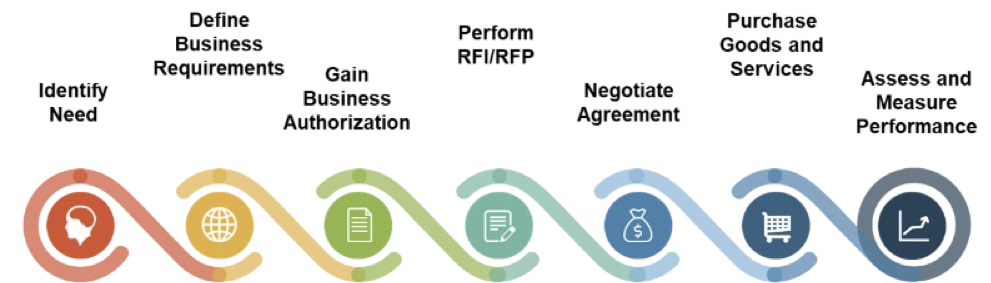
The Info-Tech difference:
- The secret to managing an RFP is to make it as manageable and as thorough as possible. The RFP process should be managed like any other aspect of business – by developing a standard process. With a process in place, you are better able to handle whatever comes your way because you know the steps you need to follow to produce a top-notch RFP.
- The business then identifies the need for more information about a product/service or determines that a purchase is required.
- A team of stakeholders from each area impacted gather all business, technical, legal, and risk requirements. What are the expectations of the vendor relationship post-RFP? How will the vendors be evaluated?
- Based on the predetermined requirements, either an RFI or an RFP is issued to vendors with a predetermined due date.
Info-Tech Insight
Review Info-Tech’s process and understand how you can prevent your organization from leaking negotiation leverage while preventing vendors from taking control of your RFP. To kick-start scripting your RFP, leverage our Board Management Vendor Selection Workbook.
Review your use cases to start your shortlist
Your Info-Tech analysts can help you narrow down the list of vendors that will meet your requirements.
Next steps will include:
- Reviewing your requirements
- Reaching out to our analysts and SoftwareReviews
- Shortlisting your vendors
- Conducting demos and detailed proposal reviews
- Selecting and contracting with a finalist!
About Info-Tech
Info-Tech Research Group is the world’s fastest-growing information technology research and advisory company, proudly serving over 30,000 IT professionals.
We produce unbiased and highly relevant research to help CIOs and IT leaders make strategic, timely, and well-informed decisions. We partner closely with IT teams to provide everything they need, from actionable tools to analyst guidance, ensuring they deliver measurable results for their organizations.
What Is a Blueprint?
A blueprint is designed to be a roadmap, containing a methodology and the tools and templates you need to solve your IT problems.
Each blueprint can be accompanied by a Guided Implementation that provides you access to our world-class analysts to help you get through the project.
Need Extra Help?
Speak With An Analyst
Get the help you need in this 3-phase advisory process. You'll receive multiple touchpoints with our researchers, all included in your membership.
Guided Implementation 1: Understand Board Management Software Capabilities and Trends
- Call 1: Scope requirements, objectives, and your specific challenges.
- Call 2: Review your documented scope and objectives against your internal interview questions, answers against resources, and budget.
- Call 3: Assess your company’s capabilities and budget. Modify or add any requirements as needed.
Guided Implementation 2: Define Your Requirements
- Call 1: Develop a research framework and best practices.
- Call 2: Review vendor analysis for testing candidates against the framework.
Guided Implementation 3: Select Your Vendor
- Call 1: Review findings from the software test to make any adjustments for selection.
- Call 2: Identify the vendor relationship between current capabilities and automation.
 Marketing Management Suite Software Selection Guide
 Build IT Capabilities to Enable Digital Marketing Success
 Develop Your Web Experience Management Strategy
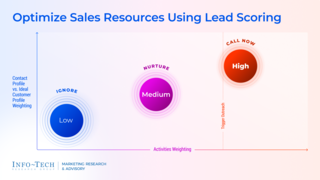 Optimize Lead Generation With Lead Scoring
 Create a Buyer Persona and Journey
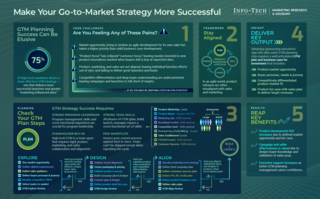 Build a More Effective Go-to-Market Strategy
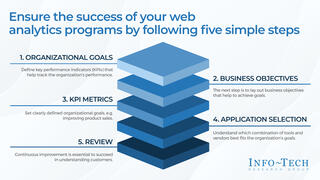 Leverage Web Analytics to Reinforce Your Web Experience Management Strategy
 2020 Applications Priorities Report
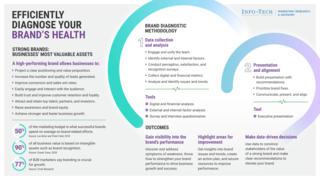 Diagnose Brand Health to Improve Business Growth
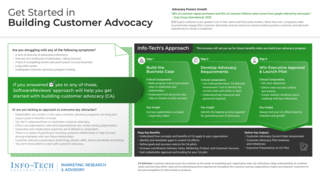 Get Started With Customer Advocacy
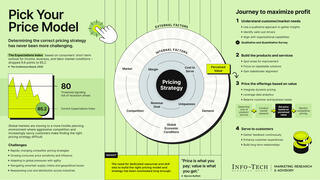 Pick Your Price Model
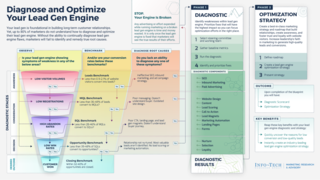 Diagnose and Optimize Your Lead Gen Engine
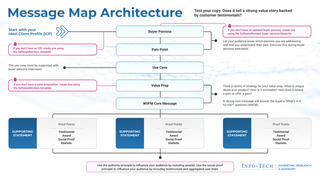 Develop the Right Message to Engage Buyers
 Identify the Customer Satisfaction Metrics That Matter
 Create an Effective SEO Strategy
 Accelerate Business Growth and Valuation by Building Brand Awareness
 Social Media Management Software Selection Guide
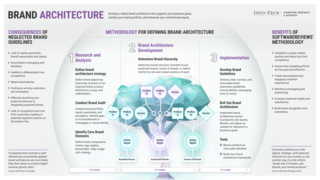 Build a More Effective Brand Architecture
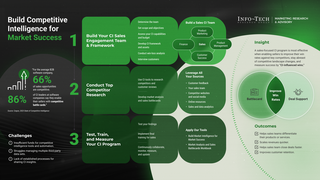 Build Competitive Intelligence for Market Success
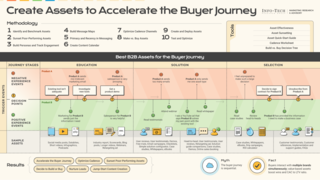 Create Assets to Accelerate the Buyer Journey
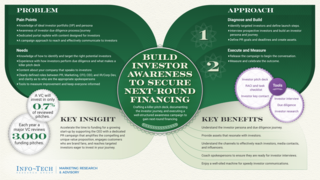 Build Investor Awareness to Secure Next-Round Financing
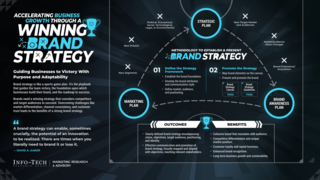 Brand Strategy: Establish and Cultivate a Flourishing Brand
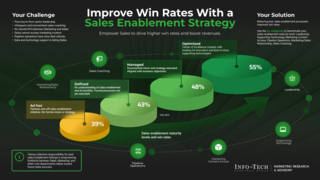 Improve Win Rates With a Sales Enablement Strategy
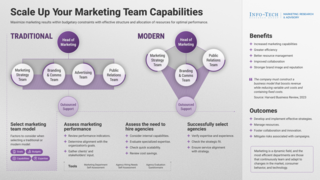 Scale Your Marketing Department
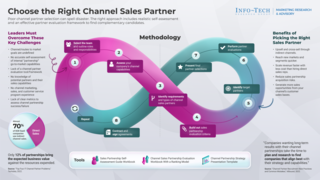 Choose the Right Channel Sales Partner
 Redesign Your Website to Increase Business Value
 Build Your Account-Based Marketing Strategy
 Build a Strong Analyst Relations Foundation
 Improve External PR Communications for Greater Product Launch Success
 Turn Share of Voice Growth Into a Strategic Weapon
 Optimize the Right Metrics to Scale Your Business
 Leave a Lasting Impression With a Compelling Brand Identity
 Hire Your Marketing Dream Team
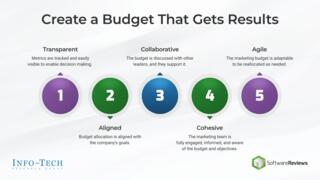 Match Your Budget to Your Market Position
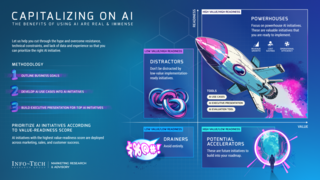 Capitalizing on AI
 Generative AI Use Cases for Marketing, Sales, and Customer Service
 The AI Advantage for Smarter Marketing – A Primer
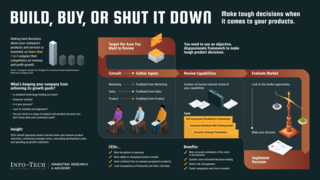 Build, Buy, or Shut It Down
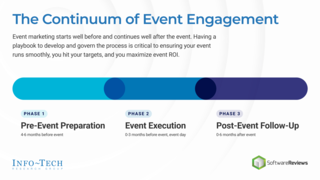 Event Activation Playbook
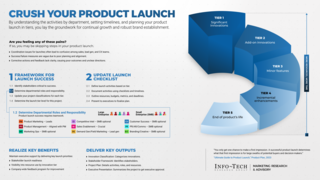 Crush Your Product Launch
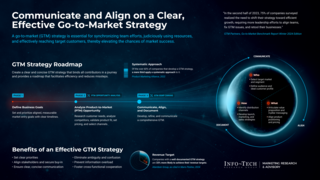 Go-to-Market Strategy on a Page
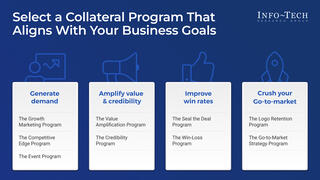 Maximize ROI on Sales and Marketing Collateral
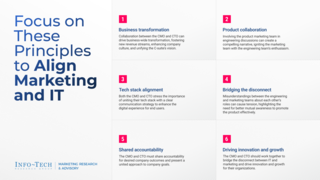 From Silos to Synergy: Create Marketing and IT Alignment
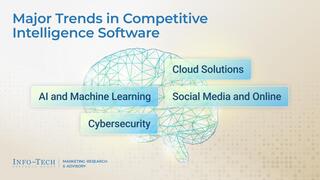 Competitive Intelligence Software Selection Guide
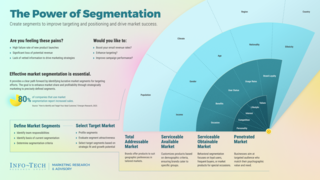 The Power of Segmentation
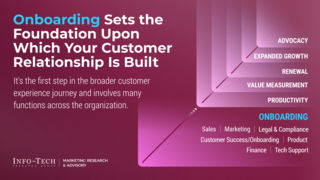 Revolutionize Your Customer Onboarding
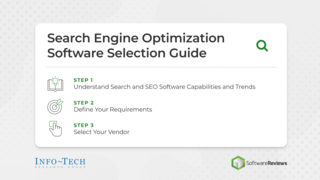 Search Engine Optimization Software Selection Guide
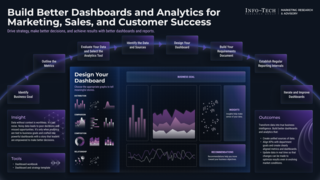 Build Better Dashboards Across Marketing, Sales, and Customer Success
 Make the Case for RevOps
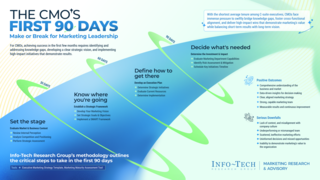 The First 90 Days as a CMO
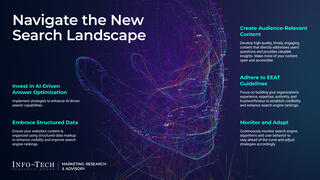 Stay Relevant in the Era of AI-Powered Search
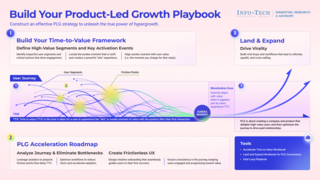 Build Your Product-Led Growth Playbook
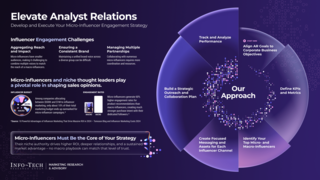 Elevate Analyst Relations
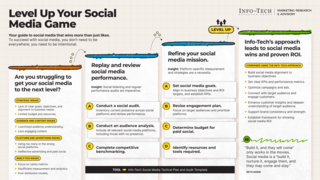 Level Up Your Social Media Game
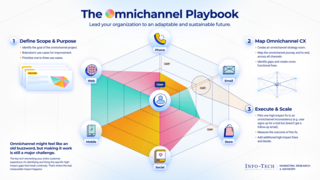 The Omnichannel Playbook
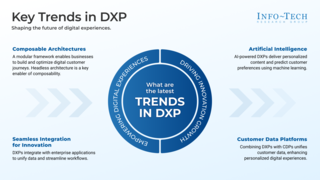 Digital Experience Platform Selection Guide
 Software Buyer Insights 2025
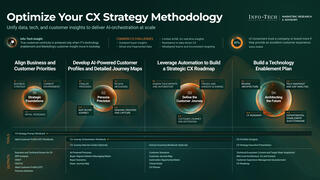 Optimize Your CX Strategy
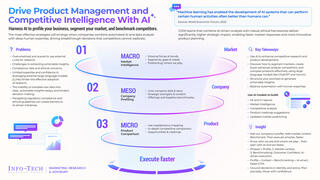 Drive Product & Market Planning With AI
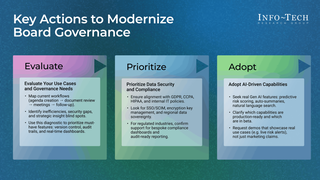 Board Management Software Selection Guide
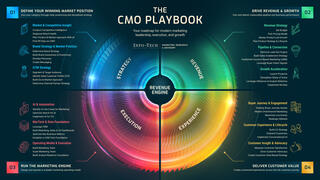 The CMO Playbook
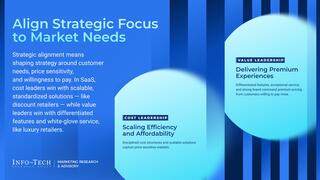 Position Your Brand Strategically as a Cost or Value Leader
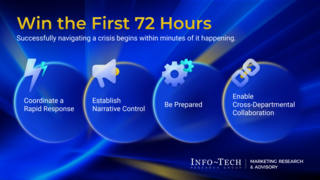 The Crisis Management Playbook
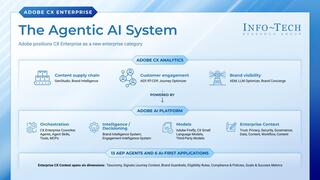 Vendor Spotlight: Adobe CX Enterprise
 Accelerate Persona & Journey Mapping With AI