
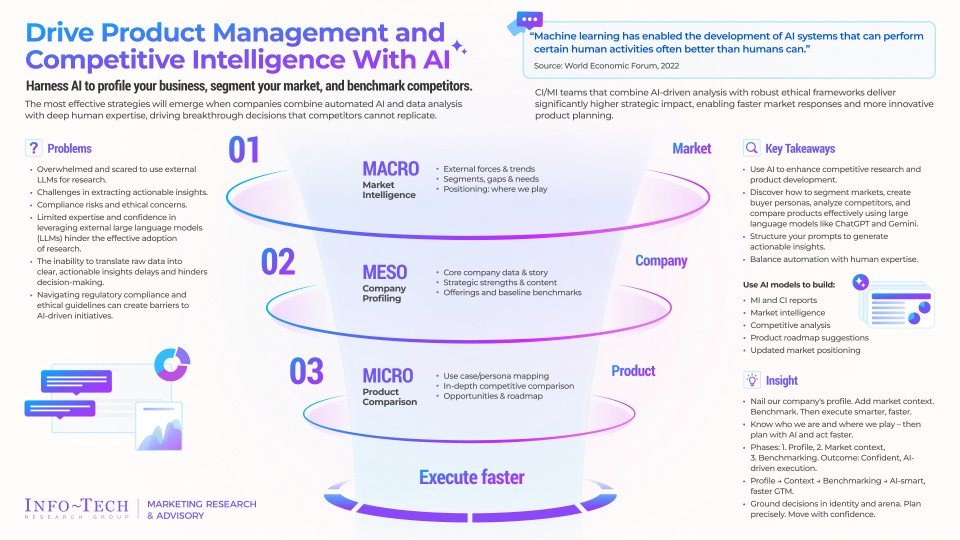
Drive Product & Market Planning With AI
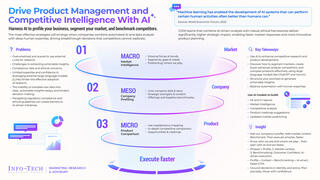
Harness AI to profile your business, segment your market, and benchmark competitors.
Despite the promise of AI, many organizations face hurdles such as:
- Feeling overwhelmed or hesitant to use external LLMs for research.
- Struggling to extract actionable insights.
- Navigating compliance risks and ethical concerns.
- Managing misalignment among teams.
Our Advice
Critical Insight
CI/MI teams that combine AI-driven analysis with robust ethical frameworks deliver significantly higher strategic impact, enabling faster market responses and more innovative product planning.
Impact and Result
The most effective strategies will emerge when companies combine automated AI and data analysis with deep human expertise, driving breakthrough decisions that competitors cannot replicate.
Drive Product & Market Planning With AI
Harness AI to profile your business, segment your market, and benchmark competitors.
Analyst perspective
Integrating AI‐driven signals into marketing, sales, and R&D pipelines enables organizations to tap vast data sets, ranging from customer behavior and usage analytics to patent filings and market trends, to identify unmet needs and emerging opportunities.
This data‐informed approach accelerates ideation, reduces development risk, and ensures that new products and launches are not just incremental improvements but genuine innovations. When complemented by robust competitive intelligence (CI) software response capabilities, this approach gives companies the agility to monitor rivals’ moves, supply chain shifts, and regulatory changes in real time. Armed with this insight, companies can prioritize features that resonate with customers while preemptively countering competitive threats, ultimately strengthening their market positioning.
Embedding ethical oversight as a core pillar of this AI and CI strategy is critical. As organizations push forward with rapid product cycles, there’s a tendency to overlook privacy, fairness, and unintended social consequences – risks that can erode consumer trust and invite regulatory scrutiny. By weaving ethical frameworks into every stage of innovation, from data sourcing to feature deployment, companies can safeguard against bias, protect user data, and uphold transparency.
This holistic approach – merging AI-fueled innovation, CI responsiveness, and ethical stewardship – is a recognized best practice because it drives sustainable growth, delivering breakthrough products, outpacing competitors, and maintaining stakeholder confidence over the long term.

Joanne Morin Correia
Principal Director, Marketing
Info-Tech Research Group
Executive summary
|
Pain Points |
Obstacles |
Info-Tech’s Approach |
|---|---|---|
|
Despite the promise of AI, many organizations face hurdles such as:
|
Barriers to effective LLM adoption include:
|
Benefits of responsible LLM integration include:
|
Info-Tech Insight: Competitive intelligence/marketing intelligence (CI/MI) teams that combine AI-driven analysis with robust ethical frameworks deliver significantly higher strategic impact, enabling faster market responses and more innovative product planning.
Challenges to AI adoption do exist
|
Teams feel overwhelmed and hesitant to use external LLMs for research. |
Companies struggle to extract actionable insights. |
Managing compliance risks and ethical concerns is complicated. |
|---|---|---|
|
Limited expertise and confidence in leveraging external LLMs hinders the effective adoption of research. |
The inability to translate raw data into clear, actionable insights delays and impedes decision-making. |
The need to ensure regulatory compliance and navigate ethical guidelines can create barriers to |
Marketing and product teams using Gen AI are seeing its effects on revenue
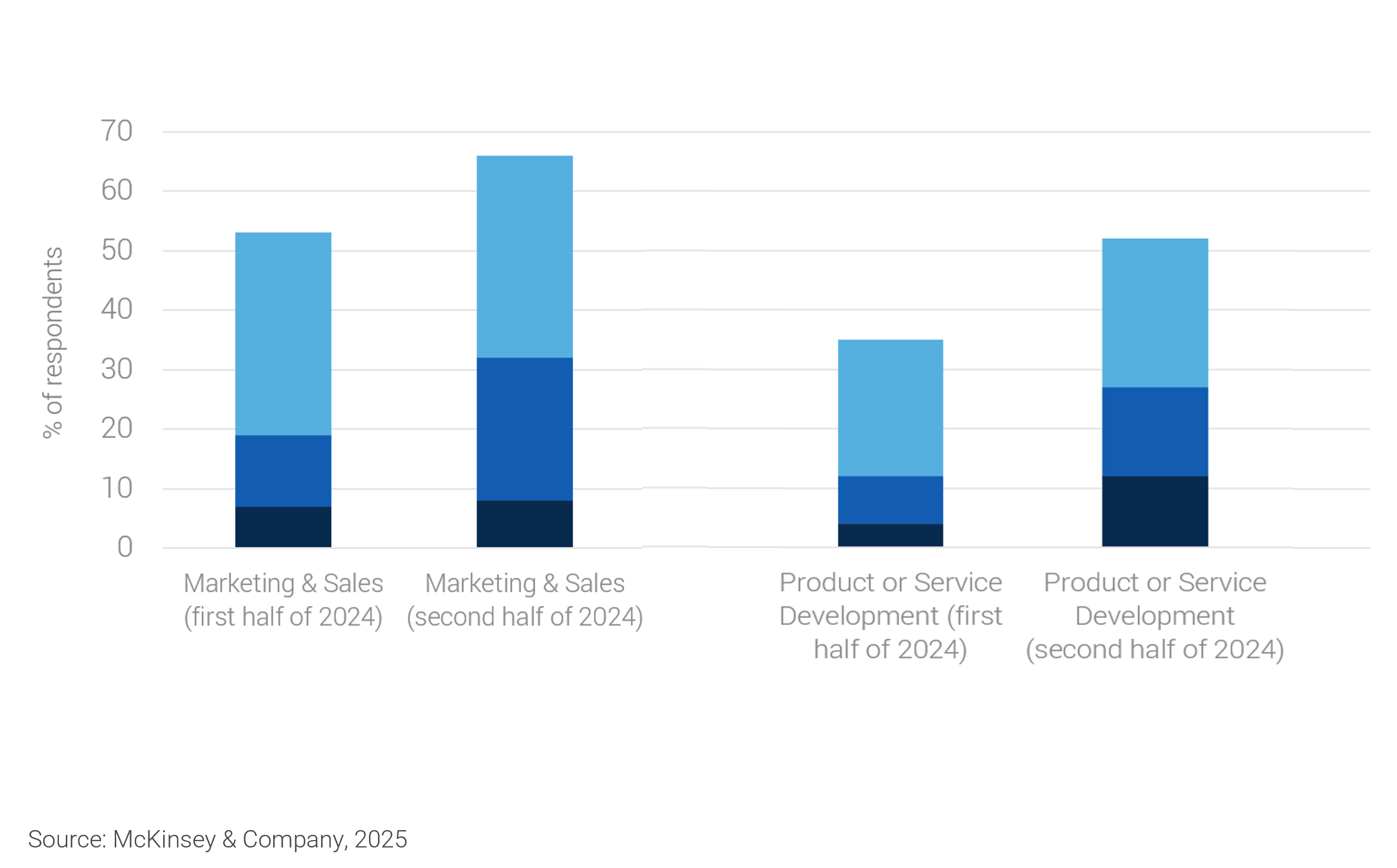
“An increasing share of respondents report value creation within the business units using generative AI.”
– McKinsey & Company, 2025
AI has reached the point where we can both analyze data and generate insights in one system
This leap has provided a tremendous opportunity for product leaders to leverage LLMs to reliably augment their market research processes.
Machine Learning
- Analyzes data to uncover trends and segment audiences.
- Powers automation, predictive analytics, and strategic insights.
Generative AI
- Enables personalization and rapid A/B testing.
- Creates content and outputs (text, images, videos, audio).
AI tactics to drive value and mitigate risks
|
Gain-Creating Tactics: |
Pain-Relieving Tactics: |
|---|---|
|
Develop an interactive testing program to help teams identify and validate key best practices against external data sources. |
Implement anonymization and data minimization practices to maintain compliance (external versus internal data usage).
Conduct periodic audits of AI systems to mitigate bias and privacy risks. |
Drive continuous product innovation with an AI‑powered lifecycle
|
Data Collection & Analysis |
AI-Driven |
Automated Quality & Personalization |
Predictive Maintenance & Support |
Continuous Improvement Loop |
|---|---|---|---|---|
|
Real-time product usage data and user behavior insights |
AI models that suggest design tweaks, predict marketing trends, and recommend new features |
Real-time anomaly detection, along with personalized designs and offerings based on user data |
Predictive alerts for production lines and chatbot-based customer support |
User interaction data continuously retrains AI models to drive ongoing product enhancements |
“Machine learning has enabled the development of AI systems that can perform certain human activities often better than humans can.”
– World Economic Forum, 2022
Use cases can span from broad to very detailed and narrow
Micro: Product & Opportunity Deep Dive
Complete feature-level comparison, understand voice of the customer, analyze green/ whitespace and differentiation, and assess ROI impact.
Meso: Segment & Company Analysis
Narrow by segment or persona, benchmark against peers, map out go-to-market tactics, and evaluate alliance and partner networks.
Macro: Market-Level Intelligence
Define the universe, identify top players, surface high-level KPIs, and spot emerging disruptors and M&As
What you look for depends on the segment and how thoroughly you want to explore it
|
Context |
Macro |
Meso |
Micro |
|
Economics |
National economy |
Region/sector |
Individual/firm level |
|
Sociology |
Societal systems |
Communities/ institutions |
Individuals/households |
|
Marketing |
Global market trends |
Market segments/ personas |
Individual customer behaviors |
|
Strategy |
Corporate strategy |
Business unit/ department |
Frontline/team level |
|
Healthcare |
National policy |
Healthcare systems/ clinics |
Patient level |
Top AI use cases for product & competitive intelligence teams
Market Research & Competitive Analysis
Product Roadmap Prioritization
Price Optimization
Customer Feedback & Sentiment Analysis
Resource Allocation & Prioritization
Timeline & Risk Predictions
Use multiple LLMs when collecting results
We recommend using multiple models to both test and validate the data output. Additionally, you can run a comparison or gap report between two reports to summarize the differences and find new fact base sourcing.

|

|
|
|
Models will behave differently and should be used to test, compare, and validate
Example: Run a ChatGPT vs. Gemini SWOT
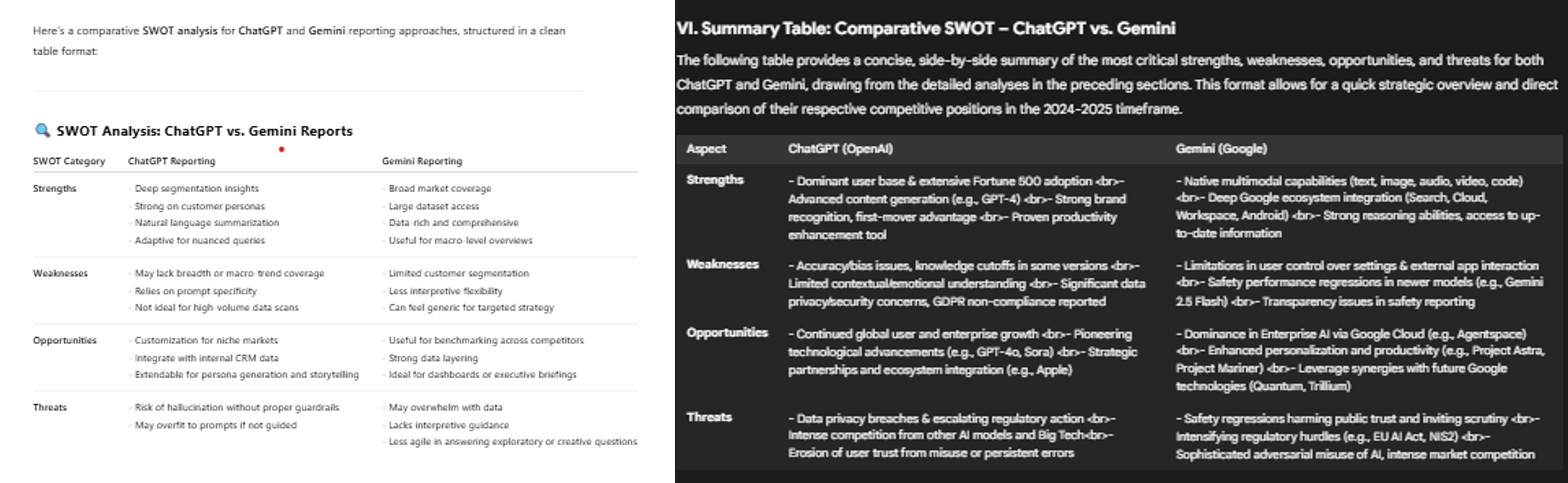
The goal is to extract valuable insights through using AI
Evidence-Backed
Provides a concise takeaway grounded in the data or sources you’ve gathered.
Actionable
Points to what you can do or investigate next.
Relevant to Your Challenge
Directly answers your framed
CI question (“What…?”).
Concise & Contextualized
Outputs no more than 1-2 bullets. Includes the “so what” and/or action to take.
Create responsible AI guiding principles
Define a responsible approach to developing, implementing, and using AI systems.
- Responsible AI guiding principles are a cornerstone for AI governance. They should guide decision-making at all levels of the organization to ensure the organization leverages the innovative potential of AI while protecting shareholder value from risk and failure.
- You will use your responsible AI guiding principles as inputs into your policies, your governance structure, and governance processes. Think of your responsible AI principles as your written constitution, which constitutes the basis for the way you’ll govern the use of AI across your organization.
- Once completed and approved, publish your principles to help staff govern themselves in their approach to the use of AI in their day-to-day roles and to help your external stakeholders understand how you govern the use of AI internally.
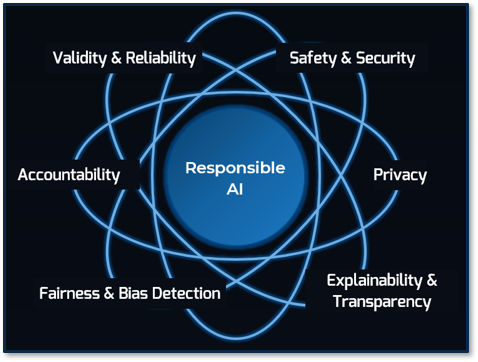
Source: Info-Tech’s Govern the Use of AI Responsibly With a Fit-for-Purpose Structure blueprint
AI issues to be aware of
|
Considerations |
Risks |
|---|---|
|
|
Key principles for establishing an AI-enabled research practice
Train your model and temper your expectations and usage of the AI outputs based on the use case
- Accountability
- Define clear ownership for AI decisions and outcomes.
- Establish governance structures to oversee AI systems.
- Fairness & Bias Mitigation
- Audit training data for representation gaps.
- Implement bias‑detection processes throughout development.
- Explainability
- Surface interpretable, defensible model outputs for stakeholders.
- Provide plain language rationales for automated decisions.
- Data Privacy & Consent
- Ensure user data is collected, stored, and used with explicit permission.
- Adopt data minimization and anonymization techniques.
- Continuous Monitoring
- Track performance drift and ethical compliance over time.
- Perform independent reviews and ethical impact assessments.
Info-Tech’s methodology to drive product and market planning with AI
|
1. Market Intelligence |
2. Company Profiling |
3. Product Comparison |
|
|
Phase Steps |
|
|
|
|
Phase Outcomes |
|
|
|
Insight summary
Deliver Significantly Higher and Faster Impact
CI/MI teams that combine AI-driven analysis with robust ethical frameworks deliver significantly higher strategic impact, enabling faster market responses and more innovative product planning.
Create a Solid Foundation
Establishing the right data sources and AI tools creates a solid foundation that can be scaled across departments.
Use Insights to Accelerate Decisions
Embedding AI insights into routine planning sessions accelerates decision-making and enhances product alignment.
Reinforce Ethical Frameworks
Reinforcing ethical frameworks ensures that this rapid innovation and market agility occur responsibly, protecting brand reputation and building long‐term stakeholder trust.
Collaborate to Build Scenarios for Wider Adoption
Using scenario-based workshops and interactive dashboards fosters cross-functional understanding and prompt wider CI adoption.
Cross-Department Usage Helps Planning
Democratizing insight usage expands the impact beyond product teams into marketing, finance, and strategic planning.

About Info-Tech
Info-Tech Research Group is the world’s fastest-growing information technology research and advisory company, proudly serving over 30,000 IT professionals.
We produce unbiased and highly relevant research to help CIOs and IT leaders make strategic, timely, and well-informed decisions. We partner closely with IT teams to provide everything they need, from actionable tools to analyst guidance, ensuring they deliver measurable results for their organizations.
What Is a Blueprint?
A blueprint is designed to be a roadmap, containing a methodology and the tools and templates you need to solve your IT problems.
Each blueprint can be accompanied by a Guided Implementation that provides you access to our world-class analysts to help you get through the project.
Need Extra Help?
Speak With An Analyst
Get the help you need in this 3-phase advisory process. You'll receive multiple touchpoints with our researchers, all included in your membership.
Guided Implementation 1: Market Intelligence
- Call 1: External forces analysis
- Call 2: Segmentation & gaps
- Call 3: Synthesis & positioning
Guided Implementation 2: Company Profiling
- Call 1: Core company data
- Call 2: Strategic context
- Call 3: Offerings & benchmarking
Guided Implementation 3: Product Comparison
- Call 1: Persona & use case mapping
- Call 2: In-depth product comparison
- Call 3: Opportunity & roadmap
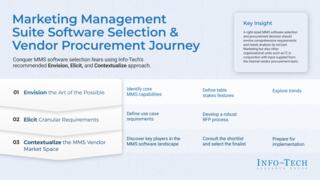 Marketing Management Suite Software Selection Guide
 Build IT Capabilities to Enable Digital Marketing Success
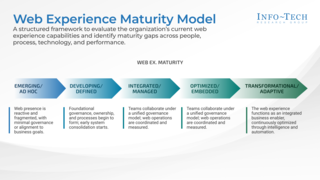 Develop Your Web Experience Management Strategy
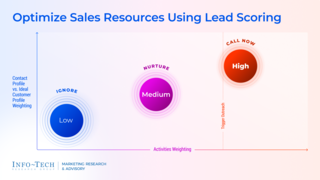 Optimize Lead Generation With Lead Scoring
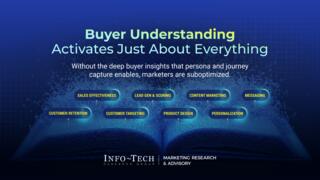 Create a Buyer Persona and Journey
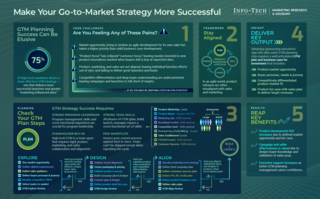 Build a More Effective Go-to-Market Strategy
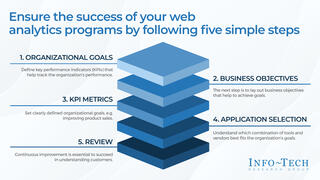 Leverage Web Analytics to Reinforce Your Web Experience Management Strategy
 2020 Applications Priorities Report
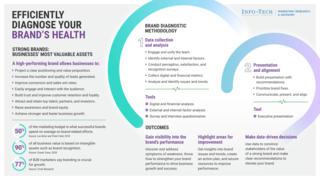 Diagnose Brand Health to Improve Business Growth
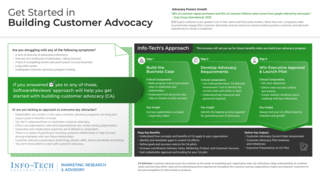 Get Started With Customer Advocacy
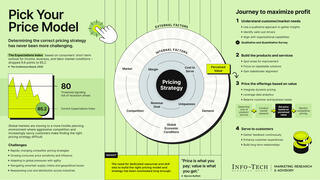 Pick Your Price Model
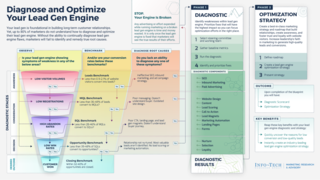 Diagnose and Optimize Your Lead Gen Engine
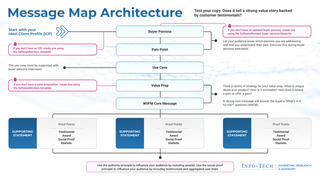 Develop the Right Message to Engage Buyers
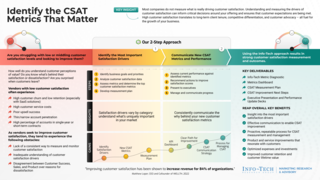 Identify the Customer Satisfaction Metrics That Matter
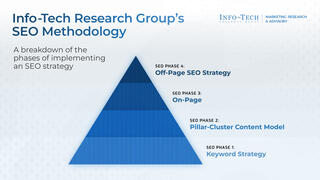 Create an Effective SEO Strategy
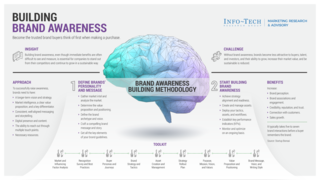 Accelerate Business Growth and Valuation by Building Brand Awareness
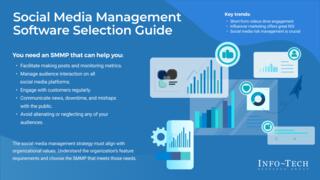 Social Media Management Software Selection Guide
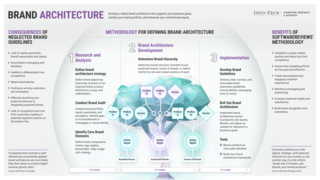 Build a More Effective Brand Architecture
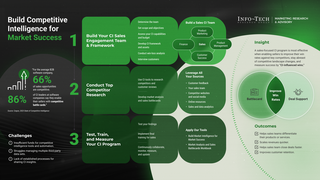 Build Competitive Intelligence for Market Success
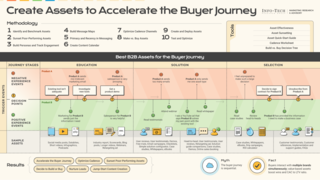 Create Assets to Accelerate the Buyer Journey
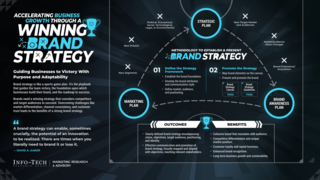 Brand Strategy: Establish and Cultivate a Flourishing Brand
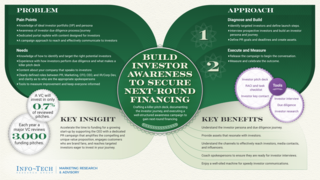 Build Investor Awareness to Secure Next-Round Financing
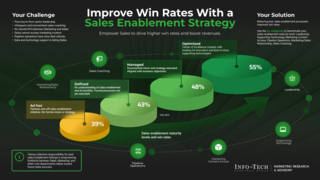 Improve Win Rates With a Sales Enablement Strategy
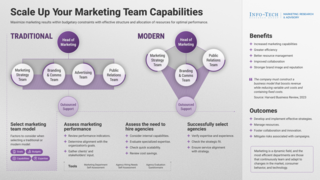 Scale Your Marketing Department
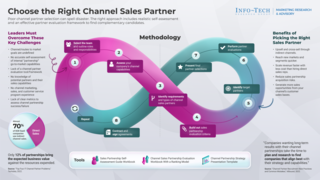 Choose the Right Channel Sales Partner
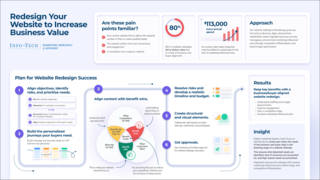 Redesign Your Website to Increase Business Value
 Build Your Account-Based Marketing Strategy
 Build a Strong Analyst Relations Foundation
 Improve External PR Communications for Greater Product Launch Success
 Turn Share of Voice Growth Into a Strategic Weapon
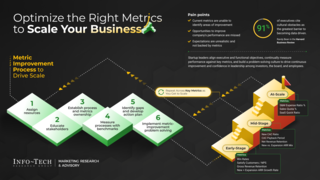 Optimize the Right Metrics to Scale Your Business
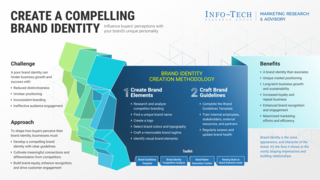 Leave a Lasting Impression With a Compelling Brand Identity
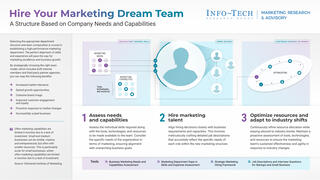 Hire Your Marketing Dream Team
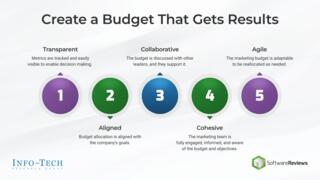 Match Your Budget to Your Market Position
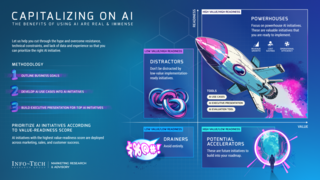 Capitalizing on AI
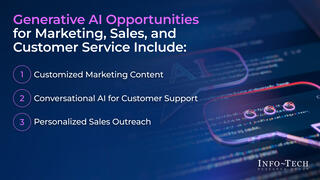 Generative AI Use Cases for Marketing, Sales, and Customer Service
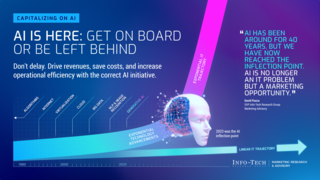 The AI Advantage for Smarter Marketing – A Primer
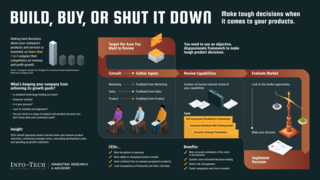 Build, Buy, or Shut It Down
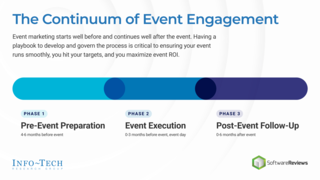 Event Activation Playbook
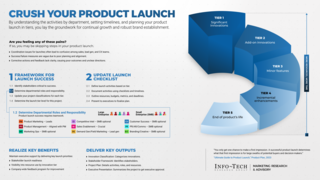 Crush Your Product Launch
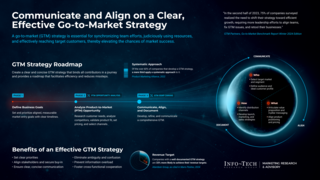 Go-to-Market Strategy on a Page
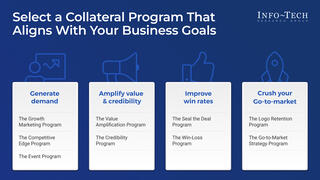 Maximize ROI on Sales and Marketing Collateral
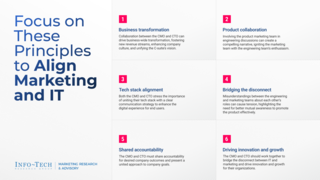 From Silos to Synergy: Create Marketing and IT Alignment
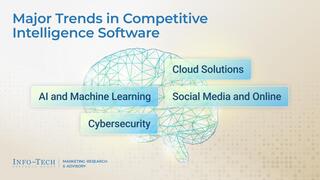 Competitive Intelligence Software Selection Guide
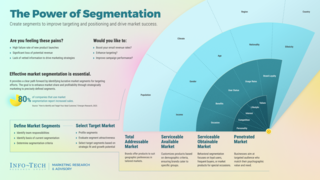 The Power of Segmentation
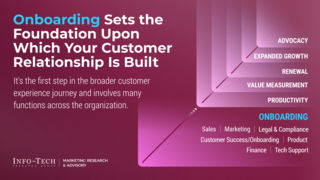 Revolutionize Your Customer Onboarding
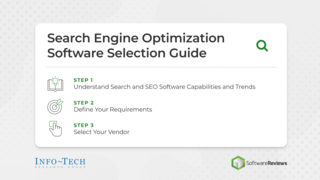 Search Engine Optimization Software Selection Guide
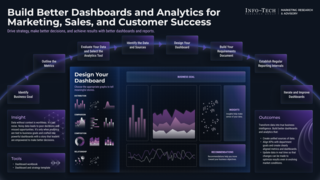 Build Better Dashboards Across Marketing, Sales, and Customer Success
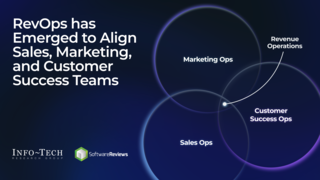 Make the Case for RevOps
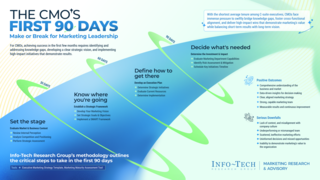 The First 90 Days as a CMO
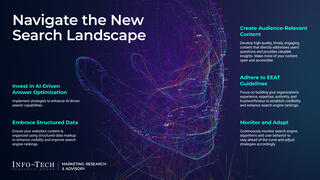 Stay Relevant in the Era of AI-Powered Search
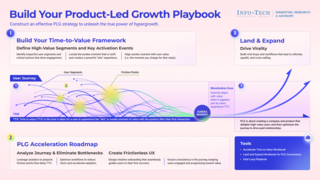 Build Your Product-Led Growth Playbook
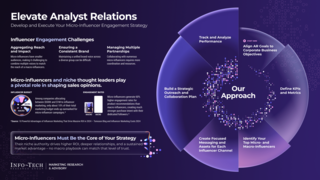 Elevate Analyst Relations
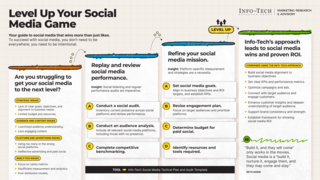 Level Up Your Social Media Game
 The Omnichannel Playbook
 Digital Experience Platform Selection Guide
 Software Buyer Insights 2025
 Optimize Your CX Strategy
 Drive Product & Market Planning With AI
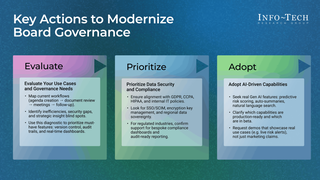 Board Management Software Selection Guide
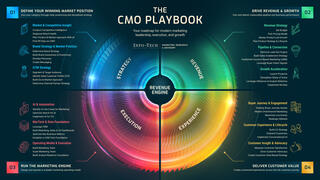 The CMO Playbook
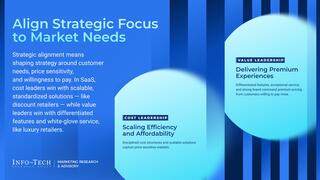 Position Your Brand Strategically as a Cost or Value Leader
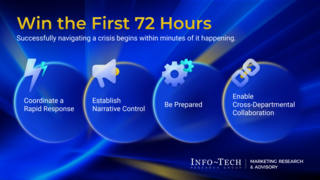 The Crisis Management Playbook
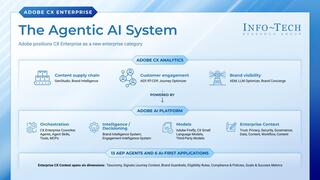 Vendor Spotlight: Adobe CX Enterprise
