Acquia Source: The Command Center Vision Anchored in Governance
Acquia Source brings CMS, DAM, web governance, Drupal hosting, and a new in-platform agentic AI layer into a single command center spanning SaaS and PaaS delivery, with the strategic bet that enterprises moving content operations into the AI era will value governed coordination and marketer-friendly Drupal alongside agentic speed. The architecture is well aligned for organizations already invested in Drupal, with broad MCP availability and bring-your-own-model support sitting on the near-term roadmap.
From a CMS to a Unified Workspace
Acquia Source CMS launched in July 2025 as a fully managed SaaS Drupal product. The more consequential moment came at Engage Denver on April 28, 2026, when Acquia repositioned Source as a digital command center and introduced Acquia AI as a native layer within it. The platform now spans six modules under a single console: CMS, DAM, Drupal hosting, governance and insights, AI, and a growing integrations layer.
The dashboard reflects this shift clearly. A chat input (“How can I help you today?”) sits at the top, with a portfolio view underneath that surfaces accessibility, content, and SEO scores across every site a team owns. In the preview Acquia walked through, that view spanned seven country sites of a single global brand. The framing is deliberate. Acquia has moved beyond positioning Source as a CMS with adjacent tools and is now offering an operating environment in which AI agents work as first-class participants alongside human team members.
Source is currently in a controlled launch with select customers, with broader availability planned. Buyers evaluating Source today are looking at an early-access experience, which is appropriate context for procurement conversations.
Drupal Canvas: A Visual Builder for Marketers
The capability inside Source most likely to change the buyer conversation for nondeveloper users is Drupal Canvas, the drag-and-drop visual page builder that shipped as Canvas 1.0 in November 2025 and was packaged into Drupal CMS 2.0 in January 2026. Acquia is a contributor to Canvas, and Source ships it as a core capability.
For two decades, the dominant objection to Drupal in this category has been that it is a developer-first CMS with significant friction for marketing teams. Canvas addresses that directly. Marketers can build pages through drag-and-drop or by prompting AI, and Canvas generates pages by reusing approved components and content types rather than producing raw HTML. Brand and governance controls stay enforced at the page-construction layer rather than being applied after the fact. Combined with the Context Control Center – a shared repository of brand guidelines, personas, and product documentation that AI agents draw from when generating content – Canvas gives marketing teams the autonomy to update pages without filing a developer ticket for every hero block change. This is one of the most commercially significant changes Acquia has made to Drupal in years, because governance without usability does not scale, and Canvas is Acquia’s answer to that challenge.
Acquia AI: Agents Built Into the Platform
Acquia AI is the layer that makes the new positioning land, and it works in two modes. The first is prompt-driven creation through named agents: Site Builder, AI Writing Assistant, and AI Web Governance Agent, with a no-code path to assemble new ones. The second mode is the one that matters most for ongoing operations: configurable background agents that customers turn on for image optimization, SEO audits, performance scans, and accessibility audits. These run continuously and surface their work in the dashboard with live progress indicators, which is how the platform makes the “AI agents as digital teammates” framing tangible rather than abstract.
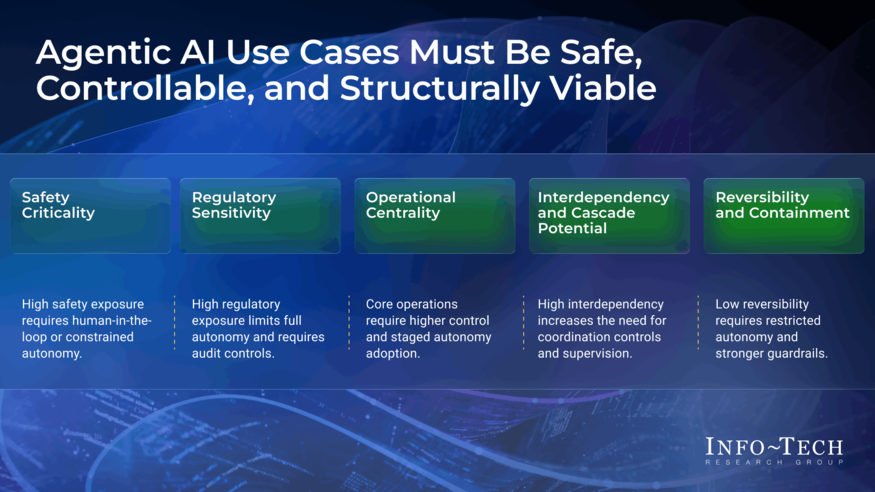
Two design choices matter more than the agent list itself. The first is that agents inherit the same role and permission model as human users; in Acquia’s framing, an agent is another team member with a defined seat and scope. The second is that high-risk AI actions cannot move into production without first passing through human review. Every decision carries an audit trail, and reviewers can approve in batches rather than one at a time. Acquia is explicit that this is not a configurable toggle. Acquia is treating governance as contractual.
This is where Acquia’s product strategy diverges meaningfully from much of the market. Many competitors treat human review as a deployment-time decision, which means it can be configured down or adjusted under operational pressure. Acquia has made it part of the platform’s architectural commitment. For CIOs, Legal Ops leaders, and chief risk officers in regulated environments, that distinction is genuinely valuable. Financial services buyers in particular have approached customer-facing agentic capabilities with more caution than other segments, and Acquia’s stance gives them a strong answer when the question reaches a risk committee.
Answer Engine Optimization Built In
The other notable strategic move is Answer Engine Optimization. Acquia is structuring content for both human and LLM consumption at the architecture level, treating AEO as part of how pages get built rather than as a separate audit step run after publication. The position is reinforced by the February 2026 OEM partnership with Conductor, which embeds Conductor’s AI search visibility tooling natively into the Acquia stack.
The strategic logic is straightforward. As ChatGPT, Perplexity, and Google AI Overviews take search share, brands will increasingly value content infrastructure that addresses LLM readability at the source rather than after the fact. It is a credible direction, and one that several other digital experience platform (DXP) vendors are pursuing in parallel. Conductor has repositioned around AEO as a category, while Adobe and Sitecore are advancing along similar lines. What Acquia gains from the Conductor partnership is access to mature AEO measurement tooling without having to build it, paired with a content model that already structures pages for governed reuse.
How Early Customers Are Using Source
The delivery model is one of the cleaner architectural distinctions in Source’s positioning. Source CMS is delivered as SaaS, while Acquia Cloud Platform underneath it remains PaaS, and both are managed through the same command center. The practical effect for buyers is that they do not have to choose between developer-led Drupal applications (with custom modules and complex backends) and SaaS-built marketing experiences. Both can live inside Source. For enterprises that have built deep Drupal infrastructure over years and also need a faster lane for marketing-led sites, that combined model is a meaningful differentiator.
Reference customers reflect the early stage of the launch. Conagra is running on Source itself. Mars, AB InBev, Bayer, UNICEF, and the University of Georgia sit in Acquia’s broader Drupal installed base, with the proportion of each customer’s footprint on Source versus the well-established Acquia Cloud Platform varying by account. The on-the-record reference Acquia leans on most visibly is Conagra, anchored in backend simplification and operational consolidation. AI velocity stories are likely to come from the early-access cohort over time as Source matures into general availability.
The more directional practitioner story comes from early-access customers using Source’s MCP integration with Claude. Broader MCP support for Claude, Cursor, GitHub Copilot, and design and build tools is announced for general availability in a future release. In a hallway conversation at Engage, an FMCG buyer described running Source through MCP from Claude. Prompt workflows configured in Claude were generating pages on Drupal and migrating content from WordPress and other CMSes onto Source. The headcount detail is the part worth pausing on: A small team was producing what would previously have required hiring additional staff. This is one of the early signals of what Source’s AI velocity claim looks like in practice. As more customers move through the controlled launch and into general availability, the evidence base will deepen.
Acquia Source in the DXP Market
The agentic DXP category has consolidated into a small group of vendors, each making a slightly different bet. Sitecore has invested in a broad portfolio of agents through SitecoreAI Agentic Studio. Kontent.ai is positioning as an agentic CMS for content automation and translation. Optimizely is building MCP server integrations focused on experimentation. Contentstack is courting headless-first buyers with a developer-oriented MCP. Adobe Experience Manager continues to operate at a different scale, with Adobe’s broader content supply chain story and a developing bring-your-own-model posture.
Acquia’s distinguishing claim is the “humans and agents” framing: a content platform whose audience explicitly includes AI agents as readers and participants alongside humans. The framing maps to a real architectural decision about how content is structured and how work is assigned. It is more than positioning. Acquia’s focus is also more specific than its competitors: It is building for organizations that want AI embedded into a governed Drupal environment, not for buyers assembling a composable stack from scratch. That focus narrows the addressable market while sharpening the value proposition for the right fit. Whether the framing becomes a durable category position will depend on how Source’s roadmap progresses across agent breadth, model flexibility, and memory persistence over the next 12 to 18 months.
Our Take
The problem Acquia Source is solving is fundamentally a coordination problem, not just an AI one. Midmarket and enterprise digital teams are managing ten or more disconnected tools for content, assets, governance, and analytics, and the friction between them has become untenable in a market where AI is compressing campaign cycles. Acquia’s read is that switching costs across systems have grown to the point where buyers will accept some best-of-breed trade-offs in exchange for a single operating layer. That read holds up well, particularly for organizations running multiple Drupal sites that have been carrying the integration and support burden themselves. The proposition is most persuasive to buyers who have already done the analysis on tool sprawl and concluded the savings are real.
The genuine value sits in three places.
First, governance. By making human-in-the-loop a nonconfigurable architectural rule and treating AI agents under the same role and permission model as human users, Acquia has turned what many competitors treat as a configurable setting into a platform-level commitment. For CIOs and Legal Ops leaders in regulated environments, that distinction matters more than feature parity on agent count. Financial services buyers have approached customer-facing agentic capabilities with more caution than other segments, and Acquia’s stance gives them a credible answer when the question reaches a risk committee.
Second, Canvas gives marketing teams real self-service for day-to-day page work without weakening Drupal’s structural governance. Marketers can build campaign pages, update hero blocks, and assemble landing pages through drag-and-drop or AI prompts. Because Canvas reuses approved components and content types rather than producing free-form HTML, brand and governance controls stay enforced as the page is built. The Context Control Center adds to this by holding shared brand guidelines and product information that AI agents draw from. What Canvas does not do is replace developers. New components, custom interactive features, and substantial structural changes still need engineering. The visual builder itself is closer to parity with Adobe and Sitecore than to a category step change. The more distinctive part is the trade-off Canvas strikes: Marketers get real autonomy for everyday work, while developers and structural governance keep ownership of the harder problems.
Third, operational simplification for organizations already running Drupal at scale. Source replaces a self-managed platform with a SaaS layer that absorbs DAM, governance, and AI agents under one roof. Conagra’s reference captures this story directly, and it is a substantive value proposition that complements the AI velocity narrative. This kind of simplification compounds across a multisite portfolio in ways that show up in run-rate cost over time, which is one of the more durable reasons buyers commit to platforms like Source.
The commercial model is unusual in that it spans both delivery layers under one command center. Source CMS is delivered as SaaS with Acquia owning the stack end to end, while Cloud Platform sits underneath as PaaS where customers retain ownership over custom Drupal applications, modules, and backends. The dual model is intentional, and it is one of the cleaner architectural distinctions Acquia draws against competitors that force buyers to pick a single delivery model. Buyers heavily invested in the SaaS experience trade some extensibility for vendor-managed velocity. On the PaaS layer, customization and root-level control look much like they always have on Acquia Cloud Platform. Buyers can mix the two across one portfolio rather than choosing between them.
A few elements of the platform are still progressing through their roadmap. Source itself is in controlled launch, with general availability still ahead. Broad MCP interoperability is announced for general availability at a future date that has not yet been specified, with Claude integration available in early-access form today. Acquia AI does not yet persist learning across chat sessions; however, Acquia has confirmed this gap is being closed, with delivery targeted for late 2026. The Acquia AI layer currently runs on AWS Bedrock with connectors to Acquia’s model, and bring-your-own-model support is one area where the model flexibility roadmap is still developing. The agentic DXP market is also moving quickly, with several vendors investing actively in agent breadth and ecosystem integrations. These items describe the natural evolution work of a controlled launch product, and Acquia has been transparent about its sequencing. The pace of execution against the MCP and BYOM roadmaps will be the variable to watch over the next 12 to 18 months.
Drupal is both an asset and a consideration. Acquia’s open-source heritage combined with Canvas positions Source as one of the most coherent agentic DXP options for organizations already aligned to Drupal. For greenfield buyers, the operational and talent profile of Drupal remains a factor to weigh alongside composable, headless-first alternatives. The Canvas demo is genuinely impressive, and the run-rate cost of operating Drupal at scale is a question worth working through carefully during the evaluation. Buyers without existing Drupal exposure are best served validating operational and engineering costs alongside the editorial experience that Canvas demos showcase.
Acquia Source is best suited for midmarket and large enterprise organizations already operating Drupal at scale, managing complex multisite portfolios, and facing internal pressure (regulatory, brand, accessibility, or legal) to govern AI rather than simply enable it. It is a particularly strong fit for higher education, healthcare, government, financial services, and large CPG portfolios, where the cost of an ungoverned AI action exceeds the cost of a slower one. Buyers with more complex requirements (deep personalization across non-Drupal channels, BYOM needs, or composable architectures already in production) will want to align with Acquia on three areas during procurement: timing of broad MCP availability, persistence of agent memory across sessions, and the model flexibility roadmap. The Conductor partnership, the AEO architecture, and Drupal Canvas stand out as platform strengths.
Acquia has the right thesis for the next phase of DXP. The next 18 months of execution against the MCP and BYOM roadmaps will determine how decisively that thesis converts into category share. The category will not be decided by who has the most agents. It will be decided by which platforms make those agents usable in environments where control is not optional, and that question is exactly where Acquia is placing its bet.