
Assess and Prioritize Agentic AI Use Cases in Transportation
Focus autonomy where it strengthens reliability, utilization, and service continuity.
Autonomy is being discussed faster than governance is being designed. Innovation teams are exploring agentic AI aggressively, while governance, risk, compliance, and operational control models remain underdeveloped.
Leaders struggle to determine where agentic AI is appropriate. Agentic AI is often framed as a general-purpose capability while CIOs need a tangible way to distinguish between high-value autonomy and high-risk overreach.
Value is easier to imagine than to prove at enterprise scale. CIOs face difficulty translating abilities of agentic AI into defensible business cases due to complexity of processes and lack of adoption readiness.
Our Advice
Critical Insight
Agentic AI use in transportation must prioritize robustness under volatility, align with safety engineering principles, and push against “fair-weather autonomy.”
Impact and Result
- Evaluate agentic AI based on resilience and reliability, not just efficiency gains.
- Prioritize improving data quality, real-time integration, and observability so that agents operate with reliable situational awareness.
- Define escalation triggers, override authority, audit trails, and accountability ownership before allowing agents to act within operational workflows.
Assess and Prioritize Agentic Use Cases in Transportation
Focus autonomy where it strengthens reliability, utilization, and service continuity.
Analyst perspective
Focus autonomy where it strengthens reliability, utilization, and service continuity.

Transportation and logistics organizations operate some of the most complex operational networks in the global economy by coordinating fleets, infrastructure, personnel, and customers across tightly coupled physical and digital environments. The sector continues to face intensifying pressures in the form of aging infrastructure, labor shortages, volatile demand patterns, stricter regulatory oversight, and rising expectations for real time service transparency, forcing transportation leaders to rethink how operational decisions are made and executed.
Advances in agentic AI are beginning to reshape how these networks can be managed. This may include autonomously adjusting schedules during disruptions, optimizing fleet and asset allocation, prioritizing maintenance interventions, coordinating terminal operations, or orchestrating customer communication during service interruptions.
The potential impact is significant. Over the next decade, many transportation networks are likely to shift from reactive control models toward adaptive coordination models in which agentic AI assists with complex, time sensitive workflows. However, transportation environments carry significant safety, regulatory, and public accountability implications. As a result, the challenge facing transportation leaders is not simply identifying where agentic AI can be applied but determining where autonomy is appropriate and where it introduces unacceptable risk.
Agentic AI will likely become embedded across transportation operations, but its adoption will follow a graduated model: early deployments in lower risk operational domains, followed by expansion into more complex decision environments as governance frameworks, oversight mechanisms, and operational confidence mature. For CIOs, the strategic question is how to introduce it in a way that improves network performance while preserving safety, accountability, and public trust.
Shreyas Shukla
Principal Research Director, Industry
Info-Tech Research Group
Executive summary
Your Challenge
Autonomy is being discussed faster than governance is being designed. Innovation teams are exploring agentic AI aggressively, while governance, risk, compliance, and operational control models remain underdeveloped.
Leaders struggle to determine where agentic AI is appropriate. Agentic AI is often framed as a general-purpose capability while CIOs need a tangible way to distinguish between high-value autonomy and high-risk overreach.
Value is easier to imagine than to prove at enterprise scale. CIOs face difficulty translating abilities of agentic AI into defensible business cases due to complexity of processes and lack of adoption readiness.
Common Obstacles
Data environments are often too fragmented to support reliable autonomy. Most organizations still operate across a mix of legacy OT, enterprise systems, control platforms, partner data feeds, and manually maintained workarounds.
Ownership of agentic AI is often fragmented across technology, operations, and innovation teams. No single function fully owns the decision framework for where and how agentic AI should be used.
Operating models still depend heavily on human judgment and informal workarounds. Most processes rely on dispatcher experience, planner judgment, manual interventions, and local knowledge that is difficult to codify.
Info-Tech’s Approach
Begin with areas where the consequences of incorrect decisions are limited and reversible, such as resource planning, spare parts positioning, or operational forecasting.
Evaluate agentic AI based on resilience and reliability, not just efficiency gains. The primary measure of success should be stability under stress rather than marginal efficiency improvements.
Prioritize improving data quality, real-time integration, and observability so that agents operate with reliable situational awareness.
Define escalation triggers, override authority, audit trails, and accountability ownership before allowing agents to act within operational workflows.
Info-Tech Insight
Agentic AI use in transportation must prioritize robustness under volatility, align with safety engineering principles, and push against “fair-weather autonomy.”
AI can help the transport and logistics industry face a growing list of challenges
Global uncertainty, continuous supply chain disruptions, increasing costs, fragmented regulatory requirements, and geopolitical conflicts are putting pressure on businesses.
Logistics has lagged other industries in digital transformation.
More than 75% of industry leaders acknowledge that their sector has been slow to embrace digital innovation.
91% of logistics firms report that their clients now demand seamless end-to-end logistics services from a single provider.
AI is becoming a game-changer for the industry.
AI-powered innovations could reduce logistics costs by 15%
AI could optimize inventory levels by 35%
AI can boost service levels by 65%
Over the next two decades, AI adoption in logistics could generate between $1.3 trillion and $2 trillion per year in economic value.
Source: “The future of logistics,” Microsoft, 2025
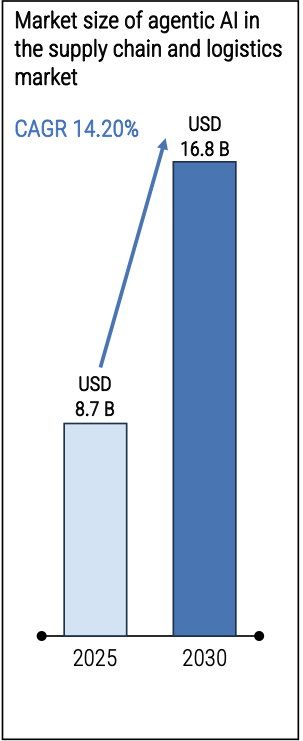
Source: Mordor Intelligence, 2025.
Your Challenge
Autonomy is being discussed faster than governance is being designed.
In many organizations, innovation teams are exploring agentic AI aggressively, while governance, risk, compliance, and operational control models remain underdeveloped. This creates tension for CIOs, who are often expected to accelerate experimentation while also protecting the enterprise from regulatory, operational, and reputational exposure. The result is that pilots move ahead without clear rules for escalation, override, auditability, or decision rights.
Leaders struggle to determine where agentic AI is appropriate.
A major challenge is that agentic AI is often framed as a general-purpose capability rather than something that must be evaluated in context. In transportation and logistics, some use cases may be structurally suitable for higher autonomy, while others should remain decision support only because of safety, regulatory, or accountability density. CIOs need a defensible way to distinguish between high-value autonomy and high-risk overreach, yet many organizations do not have a formal evaluation model for doing so.
Value is easier to imagine than to prove at enterprise scale.
Agentic AI is often promoted through compelling scenarios such as dynamic dispatch, autonomous disruption response, maintenance prioritization, or coordinated logistics planning. However, CIOs still face difficulty translating those scenarios into measurable, board-defensible business cases because benefits depend on process stability, adoption readiness, and control sufficiency, not just technical capability. This makes it hard to move from experimentation to scaled deployment without a structured framework for linking autonomy to resilience, performance, and risk-adjusted value.
Transport organizations seem to want autonomous outcomes before they have established the data quality, control mechanisms, and accountability structures required to support them safely.
Agentic AI can manage entire processes rather than isolated tasks, creating continuous loops
Key Characteristics of Agentic Systems
-
Goal-Oriented
These systems focus on optimizing specific objectives such as cost reduction, improved service levels, or sustainability targets. -
Context-Aware
They continuously monitor the entire supply network to understand interdependencies and the ripple effect of changes across the system. -
Adaptive
Agentic systems learn from outcomes and refine strategies over time, rather than relying on fixed, rule-based logic.
For example
- DHL’s route optimization agents exemplify this adaptability, continuously improving delivery efficiency by learning from historical performance across diverse conditions.
- Walmart’s inventory management agents demonstrate this capability by monitoring stock levels, forecasting regional demand fluctuations, and automatically adjusting procurement orders across thousands of products simultaneously. This autonomous decision-making compresses response times from days to minutes.
Source: Kanerika Inc. via Medium, 2025.
Common Obstacles
Data environments are often too fragmented to support reliable autonomy.
Many transport and logistics organizations still operate across a mix of legacy operational technology, enterprise systems, control platforms, partner data feeds, and manually maintained workarounds. While these environments may be sufficient for dashboards or human-led decisions, they are often not mature enough for agents that must interpret conditions and act in near real time. For CIOs, one of the biggest implementation barriers is not model performance alone, but whether the underlying data and integration environment is trustworthy enough for delegated autonomy.
Ownership of agentic AI is often fragmented across technology, operations, and innovation teams.
In many organizations, no single function fully owns the decision framework for where and how agentic AI should be used. Innovation teams may push pilots, operations teams focus on continuity, and risk or compliance teams intervene late rather than shaping design upfront. This fragmentation slows resolution because CIOs cannot easily align technical feasibility, operational appropriateness, and governance accountability into one decision model.
Operating models still depend heavily on human judgment and informal workarounds.
Many core transport and logistics processes rely not only on formal systems, but also on dispatcher experience, planner judgment, manual interventions, and local knowledge that is difficult to codify. This is a major obstacle because agentic AI performs best where decision logic, escalation paths, and process boundaries are sufficiently explicit. When the real operating model lives partly outside the system, organizations struggle to define what exactly an agent should do, when it should defer, and how its actions should be evaluated.
CIOs are operating in a space where standards, peer benchmarks, and proven operating models are still emerging.
Info-Tech’s Approach
Begin with areas where the consequences of incorrect decisions are limited and reversible, such as resource planning, spare parts positioning, or operational forecasting.
CIOs should deliberately introduce agentic AI first in operational domains where incorrect decisions are easier to detect, isolate, and reverse. This allows organizations to validate the reliability of agents, understand their behavior under real conditions, and build operational trust before expanding autonomy into more sensitive decision nodes.
Evaluate agentic AI based on resilience and reliability, not just efficiency gains. The primary measure of success should be stability under stress rather than marginal efficiency improvements.
CIOs should evaluate agentic AI systems based on how they behave during operational stress scenarios rather than during ideal operating conditions. Examples of stress conditions include severe weather events, sudden demand surges, infrastructure failures, port congestion, equipment breakdowns, or network capacity constraints. An agent that performs well in steady-state optimization but fails to respond appropriately during disruptions may actually reduce overall operational resilience.
Prioritize improving data quality, real-time integration, and observability so that agents operate with reliable situational awareness.
CIOs should prioritize improving data quality by addressing inconsistencies in operational master data, asset identifiers, and event reporting and then enable real-time or near real-time integration between operational systems such as fleet management platforms, dispatch control systems, enterprise resource planning systems, and maintenance platforms.
Define escalation triggers and override authority, audit trails, and accountability ownership before allowing agents to act within operational workflows.
CIOs should define explicit escalation triggers that determine when autonomous decision-making must defer to human oversight. These triggers may include unexpected operational conditions, incomplete or conflicting data inputs, deviation from predefined performance thresholds, or safety-related events.
CIOs should expand agentic AI only where operational control is stronger than operational risk.
Agentic AI has the potential to transform supply chain from linear processes into dynamic, self-adjusting networks
Key Applications of Agentic AI in Supply Chain
-
Demand Forecasting and Adaptive Planning
When AI agents detect unexpected demand shifts, they autonomously modify production schedules and inventory allocations across the network, creating truly responsive supply planning. -
Autonomous Inventory Optimization
Inventory agents dynamically balance conflicting objectives like capital efficiency and service levels across complex networks. They preemptively redistribute stock between locations based on emerging patterns, converting inventory policies into self-adjusting systems. -
Real-Time Route and Logistics Management
Logistics agents optimize delivery routes by integrating real-time data from multiple sources while coordinating with warehouse operations. When disruptions occur, they dynamically reroute fleets and adjust priorities without waiting for human intervention. -
Supplier Risk Assessment and Mitigation
Risk management agents monitor global supplier networks, analyzing news, financial indicators, and geopolitical events to identify potential disruptions. They initiate contingency plans automatically when detecting elevated risk, shifting orders or adjusting safety stocks. -
Dynamic Procurement and Negotiation
Procurement agents evaluate market conditions and supplier performance to optimize purchasing decisions, conducting automated negotiations that consider factors beyond price — including lead times, quality, and sustainability.
Source: Kanerika Inc. via Medium, 2025
Agentic AI promises significant benefits to the transport industry
Benefits of Agentic AI
-
Faster Decision-Making
Agentic AI transforms decision velocity by compressing decision cycles from days to minutes. These systems continuously monitor conditions and act immediately when needed, eliminating delays inherent in human-centered workflows. -
Reduced Operational Costs
By optimizing across multiple dimensions simultaneously, agentic systems identify efficiency opportunities invisible to conventional approaches. They minimize transportation costs through intelligent consolidation, reduce inventory carrying costs with precise stocking, and lower administrative expenses by automating routine decisions. -
Enhanced Agility and Responsiveness
Agentic AI adapts instantly to changing conditions rather than following rigid plans. This flexibility allows organizations to capitalize on unexpected opportunities and mitigate emerging threats without disruptive replanning cycles, creating resilience in volatile markets. -
Better Risk Management
Agentic systems excel at detecting subtle risk indicators by processing vast amounts of data across the supply network. They identify potentially disruptive patterns early and implement mitigation strategies before problems escalate. -
End-to-End Supply Chain Visibility
Agentic AI creates unprecedented transparency by connecting previously siloed functions and data sources. This holistic visibility enables truly integrated decisions that optimize the entire supply chain rather than suboptimizing individual components.
Source: Kanerika Inc. via Medium, 2025
Modernize Transportation Operations Using High-Impact Agentic AI Use Cases
Focus autonomy where it strengthens reliability, utilization, and service continuity.
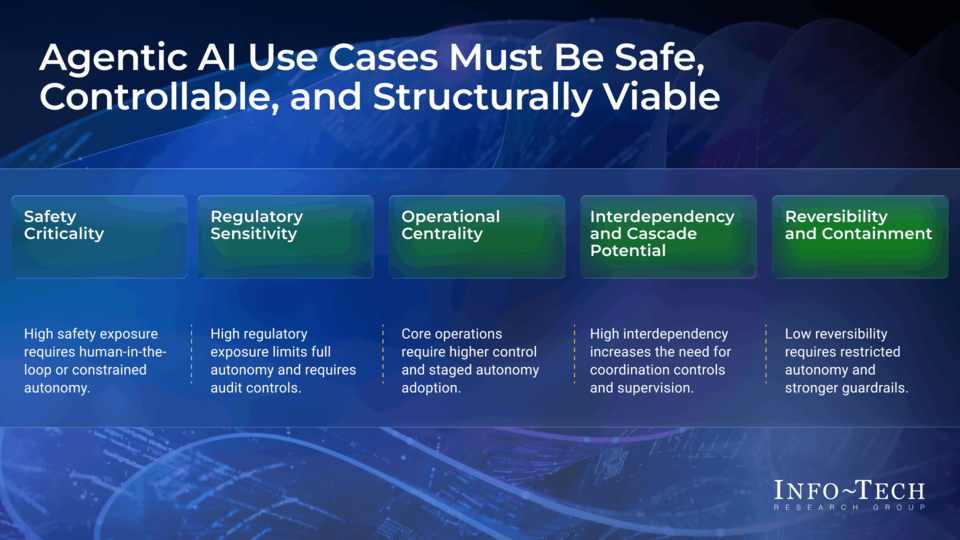
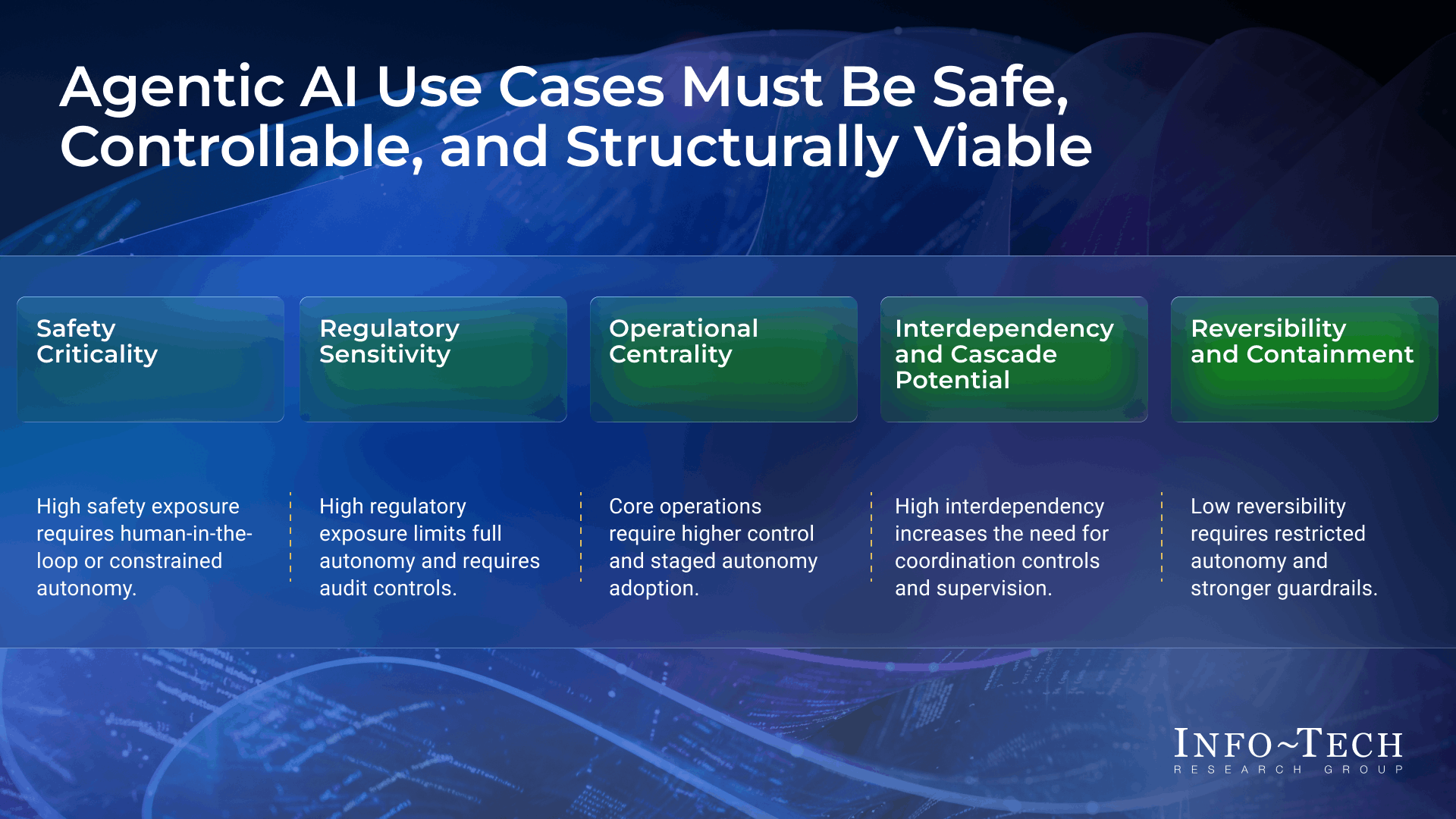
Ensure that use cases are safe, controllable, and structurally viable.
-
Oversight
Establish oversight to ensure AI decisions are structured, defensible, and outcome-driven. -
Viability
Eliminate unsafe or unscalable use cases before evaluating value. -
Value
Anchor every use case in a clear and primary source of business value. -
Impact
Quantify the expected value of each use case before prioritization. -
Feasibility
Validate whether the organization is ready to implement the use case successfully. -
Priority
Sequence the right use cases into a phased, executable adoption plan.
Info-Tech’s methodology for adopting agentic AI for transport workflows
Phase Steps |
1. Establish familiarity
|
2. Understand criteria
|
3. Evaluate use cases
|
4. Define value
|
5. Prioritize deployment
|
Phase Outcomes |
Gain a shared understanding of agentic AI and where it could create value in the organization.Align on the organization’s value chain, the six value drivers, and the concept of agent autonomy. This creates a common vocabulary and ensures that all stakeholders evaluate opportunities through the same operational and strategic lens. |
Gain clarity on how use cases will be evaluated and prioritized.Understand the scoring logic used in the tool, including how business impact and implementation feasibility are assessed. This ensures that use case evaluation is structured, comparable, and grounded in consistent criteria rather than subjective opinions. |
Shortlist realistic agentic AI opportunities.Identify candidate use cases across the organization’s value stream and narrow them to a manageable evaluation set. The result is a curated list of opportunities that reflect real operational challenges and are suitable for structured prioritization. |
Translate each use case into a clearly defined agent concept with measurable value.Assign value drivers, autonomy levels, and operational roles to each use case. This step ensures that opportunities are no longer abstract ideas but clearly defined agent capabilities with identifiable value and implementation characteristics. |
Establish a prioritized roadmap of agentic AI initiatives.Map use cases on the impact versus feasibility matrix and identify the most practical starting points for deployment. The result is a phased implementation roadmap that balances value creation with organizational readiness and operational risk. |
Each step of this blueprint is accompanied by supporting deliverables to help you accomplish your goals.
Agentic AI Use Case Tool
The tool helps CIOs evaluate where agentic AI should be applied across core transportation and logistics operations.
By systematically evaluating operational value, risk exposure, and governance readiness, the tool enables CIOs to identify where autonomy is appropriate, where it should remain constrained, and how adoption should be sequenced across the enterprise.
You get a:
Ready-to-use list of high-value AI use cases to support roadmap design, funding discussions, and implementation planning.
Outcomes
Gain a clear view of which use cases should be explored first.
Justify where autonomy should be introduced and where it must remain constrained due to safety, regulatory, or operational considerations.
Produce a practical sequence of pilots and deployments that align autonomy initiatives with your operational priorities and governance requirements.
Blueprint benefits
IT Benefits
- Align initiatives with priorities. The framework and tool give IT teams a structured method to evaluate where agentic AI should be introduced across systems such as TMS, WMS, fleet platforms, and analytics environments.
- Prioritize initiatives based on readiness and maturity. The blueprint highlights which use cases are technically feasible given current data quality and system capabilities.
- Improve governance and risk management. Assess safety exposure, regulatory implications, and system interdependencies before introducing agentic capabilities.
- Strengthen technology foundations. Reveal gaps in data quality, real-time data flows, monitoring, and auditability that must be addressed before autonomous deployment.
- Create a roadmap for agentic capabilities. Sequence deployments across enterprise platforms rather than implementing isolated pilots that cannot scale.
- Provide defensible evaluation criteria. The tool produces structured analysis linking risk, control readiness, and value to each use case.
- Promote resilient system design. Evaluate autonomy through resilience and operational stability rather than purely technical capability.
Business Benefits
- Align leaders on real value. Gain a clear view of where agentic AI can improve operations such as route optimization, fleet scheduling, fulfillment execution, and customer service management.
- Focus on high-impact improvements. Concentrate on initiatives that improve reliability, utilization, delivery performance, and cost efficiency.
- Reduce risk. Benefit from early identification of use cases where autonomy could introduce exposure.
- Improve decision quality. Respond faster to disruptions and improve service performance.
- Enable phased adoption. Gain a practical roadmap for introducing agentic AI across planning, logistics coordination, fleet operations, and delivery execution.
- Strengthen decision-making. Gain transparent business cases that connect agentic AI initiatives to measurable outcomes.
- Improve reliability and resilience. Prioritize autonomy that stabilizes operations during disruption, strengthening service continuity and customer satisfaction.
Insight summary
Agentic AI use in transportation must prioritize robustness under volatility, align with safety engineering principles and push against “fair-weather autonomy.”
Transportation systems operate under highly variable conditions such as weather disruptions, infrastructure failures, demand shocks, and regulatory constraints. Agentic AI should be designed to maintain stable and predictable behavior under these volatile conditions rather than performing well only during normal operations.
Focus autonomy where it strengthens reliability, utilization, and service continuity.
Transport organizations seem to want autonomous outcomes before they have established the data quality, control mechanisms, and accountability structures required to support them safely.
Many organizations pursue agentic AI to automate planning, dispatch, or operational coordination without first establishing reliable data pipelines, monitoring mechanisms, and clear decision accountability. Without these foundations, autonomous agents may act on incomplete or inconsistent operational signals, creating unintended consequences across tightly coupled transportation networks. Before scaling autonomy, CIOs must ensure that data reliability, control frameworks, and governance ownership are firmly in place.
CIOs are operating in a space where standards, peer benchmarks, and proven operating models are still emerging.
Unlike established enterprise technologies, agentic AI in transportation lacks widely accepted implementation frameworks, regulatory guidance, and peer benchmarks. As a result, CIOs must make strategic decisions about autonomy, governance, and risk management without the benefit of mature industry playbooks. This increases the importance of disciplined evaluation frameworks and cautious sequencing of early deployments.
CIOs should expand agentic AI only where operational control is stronger than operational risk.
Autonomous decision-making should be introduced only in environments where data reliability, monitoring capabilities, and governance controls are strong enough to manage potential failures. In transportation systems, small decision errors can propagate across fleets, schedules, customers, and regulatory processes. CIOs must therefore prioritize use cases where consequences are limited, errors are reversible, and human operators can intervene quickly if conditions deviate from expected behavior.
Measure the value of this blueprint
How can you measure the value of following Info-Tech’s approach?
The average IT consulting rate in the United States is $100 to $250 per hour (MOR, 2026).
The cost and effort involved in undertaking an AI use case selection and prioritization exercise varies depending on the size and scope of the project. The average price of a well-designed and executed AI use case selection exercise ranges from US$24,000 to US$40,000 at the lower end (assuming a two-member team charging the hourly average of US$100).
With Info-Tech Resources |
Without Info-Tech Resources |
||||||||||||||||||||||||||||
|
|
This blueprint will accelerate your agentic AI use case prioritization exercise.
We include all the guidance, tools, and templates you need to implement this program successfully.
Reach out to advisory services for assistance as you work through the blueprint or request a workshop engagement and let us do the heavy lifting.
Info-Tech offers various levels of support to best suit your needs
DIY Toolkit
“Our team has already made this critical project a priority, and we have the time and capability, but some guidance along the way would be helpful.”
Guided Implementation
“Our team knows that we need to fix a process, but we need assistance to determine where to focus. Some check-ins along the way would help keep us on track.”
Workshop
“We need to hit the ground running and get this project kicked off immediately. Our team has the ability to take this over once we get a framework and strategy in place.”
Executive & Technical Counseling
“Our team and processes are maturing; however, to expedite the journey we’ll need a seasoned practitioner to coach and validate approaches, deliverables, and opportunities.”
Consulting
“Our team does not have the time or the knowledge to take this project on. We need assistance through the entirety of this project.”
Diagnostics and consistent frameworks are used throughout all five options.
Guided Implementation
Take the right actions to advance your AI agenda.
Phase 1
|
Phase 2
|
Phase 3
|
Phase 4
|
Phase 5
|
A Guided Implementation (GI) is a series of calls with an Info-Tech analyst to help implement our best practices in your organization.
A typical GI is 6 to 10 calls over the course of 4 to 6 months.
Workshop Overview
Contact your account representative for more information. workshops@infotech.com 1-888-670-8889
Day 1Phases: 1 and 2 |
Day 2Phases: 3 and 4 |
Day 3Phases: 5 |
|
Activities |
|
|
|
Deliverables |
|
|
|
Metrics |
Focus on
|
Focus on
|
Focus on
|
Text – Activity done in Tool
Text – Facilitated information sharing
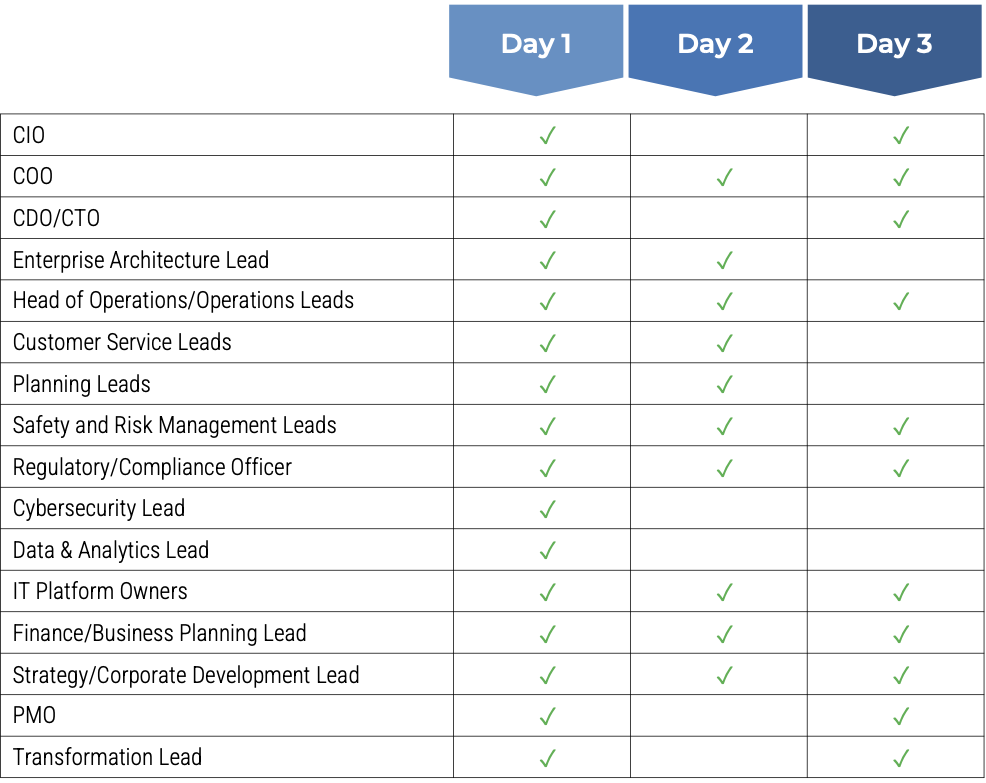
Recommended workshop participants
About Info-Tech
Info-Tech Research Group is the world’s fastest-growing information technology research and advisory company, proudly serving over 30,000 IT professionals.
We produce unbiased and highly relevant research to help CIOs and IT leaders make strategic, timely, and well-informed decisions. We partner closely with IT teams to provide everything they need, from actionable tools to analyst guidance, ensuring they deliver measurable results for their organizations.
What Is a Blueprint?
A blueprint is designed to be a roadmap, containing a methodology and the tools and templates you need to solve your IT problems.
Each blueprint can be accompanied by a Guided Implementation that provides you access to our world-class analysts to help you get through the project.
Need Extra Help?
Speak With An Analyst
Get the help you need in this 5-phase advisory process. You'll receive multiple touchpoints with our researchers, all included in your membership.
Guided Implementation 1: Build a Shared Understanding of Agentic AI, Value Drivers, and the Organizational Value Chain
- Call 1: Review the capability map/value stream map.
- Call 2: Identify domains where agentic AI may create value.
Guided Implementation 2: Establish a Structured Approach for Evaluating Use Cases Using the Tool
- Call 1: Understand agentic AI use cases across value stream domains.
- Call 2: Define the decision boundaries and expected operational outcomes.
Guided Implementation 3: Refine Candidate Use Cases to Produce a Realistic Set of Opportunities for Evaluation
- Call 1: Evaluate fitment and risk scenarios.
Guided Implementation 4: Define Use Cases With Specified Value Drivers, Autonomy Levels, and Operational Roles
- Call 1: Estimate value for each use case using metrics.
Guided Implementation 5: Prioritize Practical Opportunities and Define a Phased Roadmap for Implementation
- Call 1: Prioritize use cases by balancing value, risk, and readiness.
- Call 2: Develop a sequenced adoption roadmap.
Contributors
- Michael Chang, Director of Logistics, Canadian Recycling and Scrap Processing Company
- Kartik R, Customer Success Manager, Global SaaS Company
- Two Anonymous Contributors