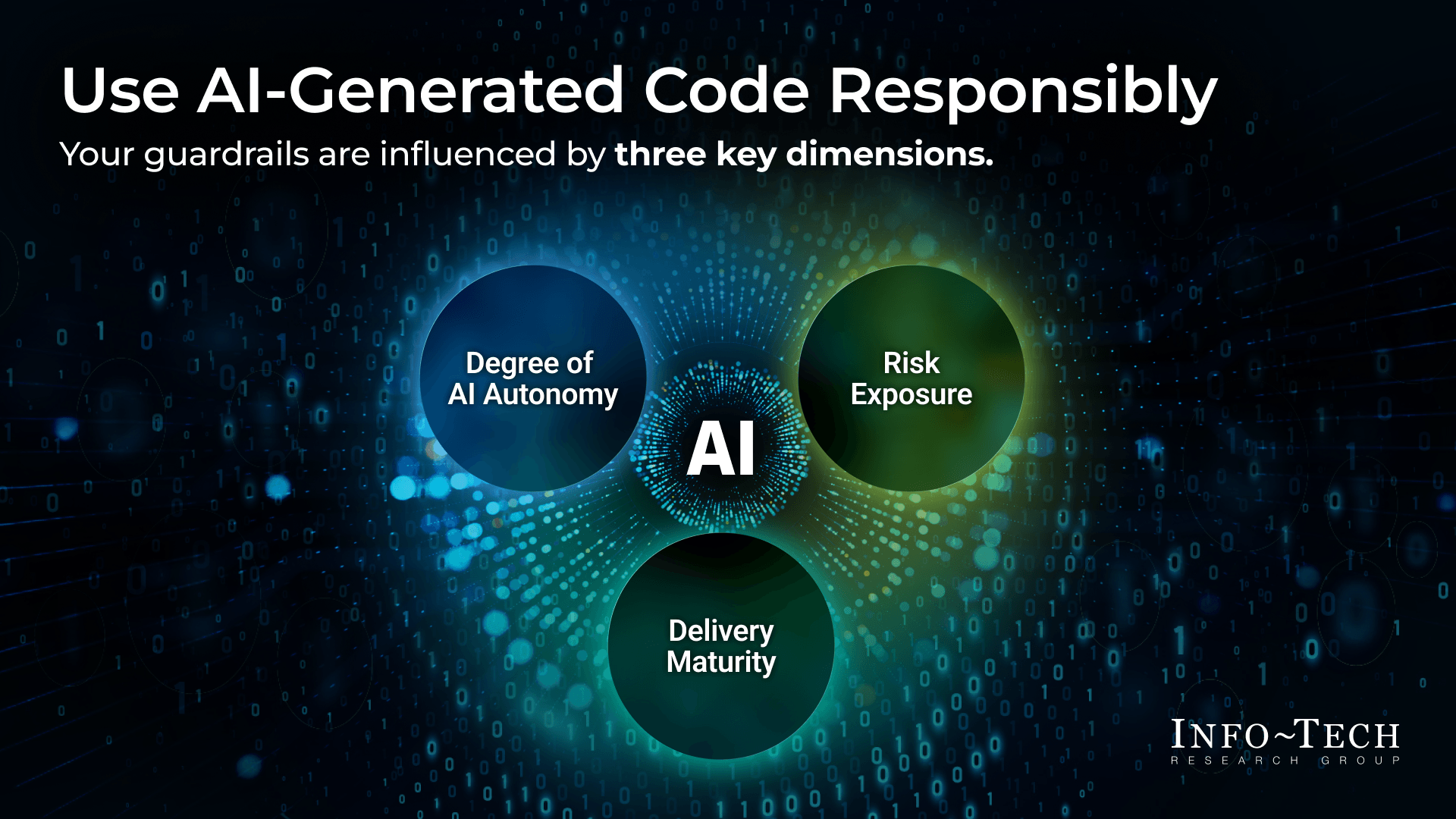
Defend Against Defects and Technical Debt in Your AI-Generated Code
Establish guardrails that keep AI‑generated code understandable, maintainable, and production‑ready.
AI-generated code accelerates software delivery but can also accelerate the spread of defects and technical debt across the software development lifecycle (SDLC). Development teams need governance standards and human accountability to ensure AI-assisted development remains secure, maintainable, and aligned with business objectives. Our research helps organizations operationalize AI-generated code responsibly by embedding guardrails directly into development workflows.
Organizations are under growing pressure to increase developer productivity and delivery with AI-generated code. But unmanaged adoption creates quality and security issues that surface only during production. For development teams, the challenge is balancing faster development with disciplined oversight that supports long-term maintainability.
1. Define the problem before using AI.
AI writes code fast but does not understand business context, constraints, or trade-offs. When the intent is unclear, AI optimizes for the wrong outcome and does not solve the real problem. Start with a clear problem definition so AI solves the work your team is accountable for.
2. Embed guardrails directly into development workflows.
Without validation, AI tools may produce unnecessary complexity and hidden risks. Weak prompting practices increase technical debt and operational risk over time. Reinforce prompt engineering standards and code review into your workflows to reduce defects and rework.
3. Keep humans accountable for AI-assisted development.
AI-generated code introduces new categories of errors because the technology lacks understanding of long-term operational impact. Maintain strong human oversight and measurable controls to ensure AI-assisted development does not compromise maintainability or security.
Use this step-by-step framework to put guardrails around your AI-generated code.
This research offers a practical framework, accompanied by an AI Code Quality Starter Kit, to help organizations establish clear guardrails for the responsible use of AI-generated code.
- Establish tool usage by defining AI scope across the development process and the motivation for its use.
- Define your necessary guardrails by establishing prompting standards and practices.
- Roadmap your development milestones by setting objectives and success metrics using a Now, Next, Later plan.
About Info-Tech
Info-Tech Research Group is the world’s fastest-growing information technology research and advisory company, proudly serving over 30,000 IT professionals.
We produce unbiased and highly relevant research to help CIOs and IT leaders make strategic, timely, and well-informed decisions. We partner closely with IT teams to provide everything they need, from actionable tools to analyst guidance, ensuring they deliver measurable results for their organizations.
What Is a Blueprint?
A blueprint is designed to be a roadmap, containing a methodology and the tools and templates you need to solve your IT problems.
Each blueprint can be accompanied by a Guided Implementation that provides you access to our world-class analysts to help you get through the project.
Need Extra Help?
Speak With An Analyst
Get the help you need in this 3-phase advisory process. You'll receive multiple touchpoints with our researchers, all included in your membership.
Guided Implementation 1: Establish Tool Usage
- Call 1: Discuss selected code generation tools and use cases.
- Call 2: Scope out exact tool usage throughout the SDLC and clarify overall motivations.
Guided Implementation 2: Define Your Necessary Guardrails
- Call 1: Conduct an audit of the SDLC, identifying high-risk steps.
- Call 2: Review results of SDLC audit and identify potential guardrails to implement.
- Call 3: Define implementation process and lay out exact guardrails.
Guided Implementation 3: Roadmap Your Development Milestones
- Call 1: Define long-term goals and success metrics and create a roadmap.
- Call 2: Review progress of implementation of necessary guardrails.
Contributors
- Nicky Pike, Field CTO, Coder
- Alexander Chisholm, Software Developer II, 7D Surgical
- 1 Anonymous contributor
 Mature and Scale Product Ownership
 Evolve Your Software Development Lifecycle Into a Solution Delivery Lifecycle
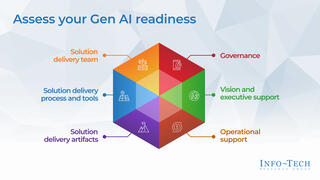 Adopt Generative AI in Solution Delivery
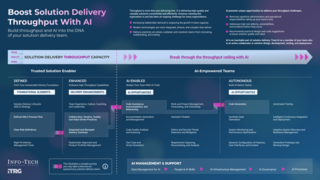 Boost Solution Delivery Throughput With AI
 Estimate Software Delivery With Confidence
 Select and Use SDLC Metrics Effectively
 Improve Application Development Throughput
 Spread Best Practices With an Agile Center of Excellence
 Perform an Agile Skills Assessment
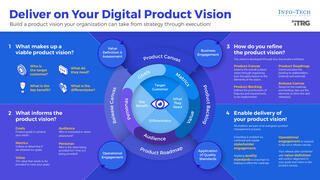 Deliver on Your Digital Product Vision
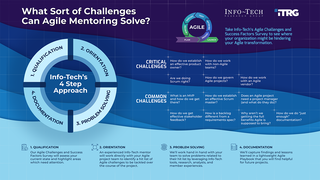 Mentoring for Agile Teams
 Implement DevOps Practices That Work
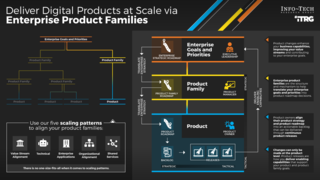 Deliver Digital Products at Scale
 Enhance Your Solution Architecture Practices
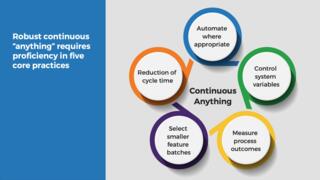 Define a Release Management Process to Deliver Lasting Value
 2020 Applications Priorities Report
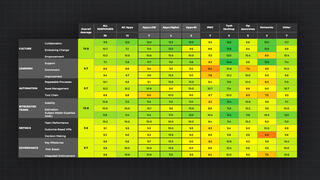 Agile Readiness Assessment Survey
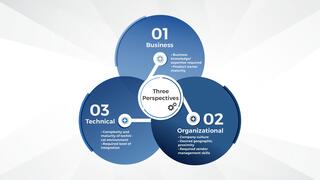 Define a Sourcing Strategy for Your Development Team
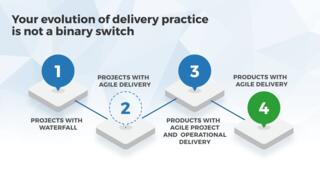 Define the Role of Project Management in Agile and Product-Centric Delivery
 Implement a Transformative IVR Experience That Empowers Your Customers
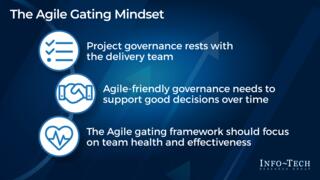 Create an Agile-Friendly Project Gating and Governance Approach
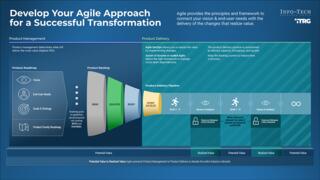 Develop Your Agile Approach for a Successful Transformation
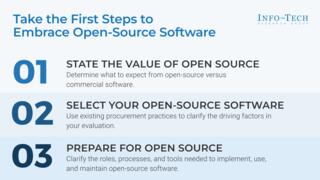 Take the First Steps to Embrace Open-Source Software
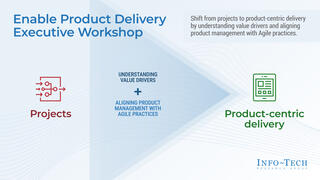 Enable Product Delivery – Executive Leadership Workshop
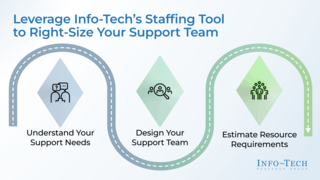 Right-Size Your Enterprise Application Support Team
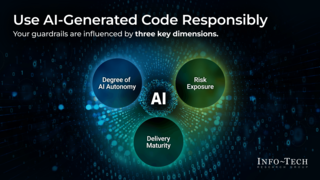 Defend Against Defects and Technical Debt in Your AI-Generated Code
 Master Systematic Application Replacement With a Fit-for-Purpose Plan