Detect Shadow AI and Unauthorized AI Agents
Scope your exposure, direct detection effort where it matters, and govern what you find.
Though agentic AI use is rising rapidly, adoption has prioritized productivity and use case discovery over security. Now, CISOs face growing concerns that agents will access and share unauthorized data, exhibit out-of-scope behavior, or go completely undetected in the organization’s environment. This research helps security leaders retake control by scoping which types of shadow AI and unsanctioned agents are worth looking for, so detection and containment resources can be invested where they matter most.
AI agents may remain invisible to standard security tooling, yet not all unauthorized AI agents may be dangerous. This raises uncertainty about which types of agents present meaningful risk in your environment – and how much time, skills, and tooling to invest in their detection.
1. Prioritize shadow AI detection efforts based on risk.
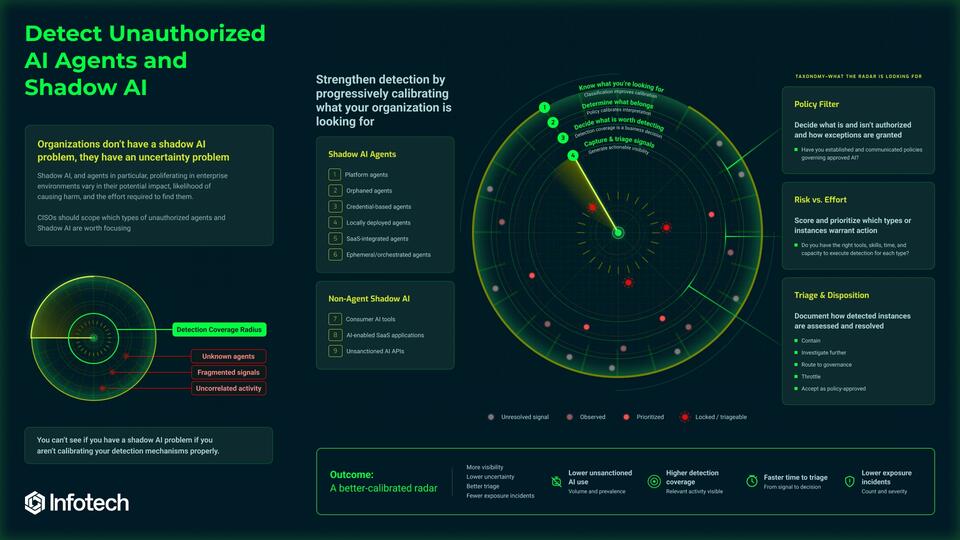
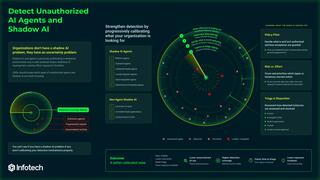
The problem at most organizations isn’t shadow AI; it’s uncertainty. The shadow AI and unauthorized agents proliferating in enterprise environments vary in terms of potential impact, likelihood to cause harm, and effort required to find them. Instead of treating them all the same, scope which types are worth focusing detection efforts on and make an informed decision when something is found.
2. Look beyond legitimate credentials.
Detection isn’t always technically impossible, but it can be difficult because agents may use legitimate credentials. Taking the right approach entails looking for machine-like identities that are performing delegated work without registration.
3. Avoid undocumented exceptions.
Every defer and accept decision must be documented. If you defer detection of a type of AI agent, accept the risk of not detecting it, or determine the agent is already covered by policy, be sure to record the reason and a trigger for revisiting.
Use this step-by-step research to reduce the risk of incidents from unauthorized agents or shadow AI tools.
Our framework provides CISOs with a practical methodology to determine which AI agents represent meaningful risk, assess how much effort is worth devoting to their detection, and create a response plan to follow. Use this step-by-step approach to:
- Scope exposure. Understand the visibility gap and complete exposure scoping assessment.
- Plan detection. Assess detection feasibility, select detection approach per type, and identify tooling gaps.
- Triage and respond. Assess detected instances, assign disposition, and follow response path.
About Info-Tech
Info-Tech Research Group is the world’s fastest-growing information technology research and advisory company, proudly serving over 30,000 IT professionals.
We produce unbiased and highly relevant research to help CIOs and IT leaders make strategic, timely, and well-informed decisions. We partner closely with IT teams to provide everything they need, from actionable tools to analyst guidance, ensuring they deliver measurable results for their organizations.
What Is a Blueprint?
A blueprint is designed to be a roadmap, containing a methodology and the tools and templates you need to solve your IT problems.
Each blueprint can be accompanied by a Guided Implementation that provides you access to our world-class analysts to help you get through the project.
Need Extra Help?
Speak With An Analyst
Get the help you need in this 3-phase advisory process. You'll receive multiple touchpoints with our researchers, all included in your membership.
Guided Implementation 1: Scope Exposure
- Call 1: Scope requirements, objectives, and your specific challenges.
- Call 2: Complete exposure scoping.
Guided Implementation 2: Plan Detection
- Call 1: Assess detection feasibility and select detection approach.
Guided Implementation 3: Triage and Respond
- Call 1: Review triage and response protocol.
 Assess and Manage Security Risks
 Assess Your Cybersecurity Insurance Policy
 Achieve Digital Resilience by Managing Digital Risk
 Prevent Data Loss Across Cloud and Hybrid Environments
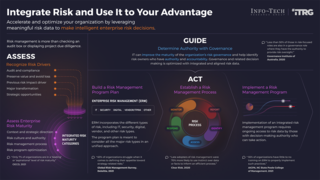 Build an IT Risk Management Program
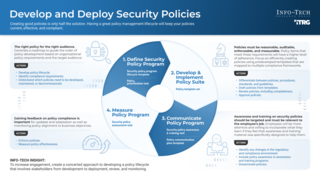 Develop and Deploy Security Policies
 Fast Track Your GDPR Compliance Efforts
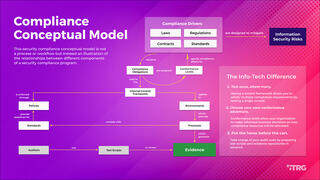 Build a Security Compliance Program
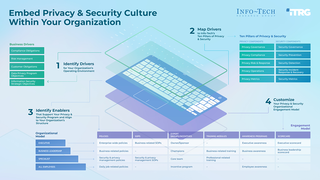 Embed Privacy and Security Culture Within Your Organization
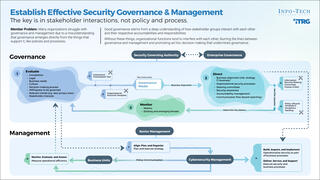 Establish Effective Security Governance & Management
 Improve Security Governance With a Security Steering Committee
 Develop Necessary Documentation for GDPR Compliance
 Reduce and Manage Your Organization’s Insider Threat Risk
 Satisfy Customer Requirements for Information Security
 Master M&A Cybersecurity Due Diligence
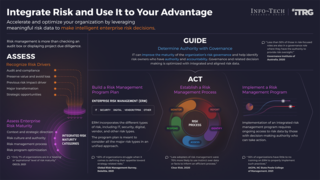 Integrate IT Risk Into Enterprise Risk
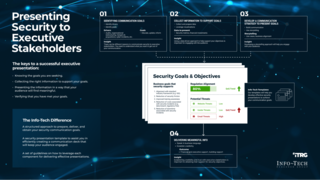 Present Security to Executive Stakeholders
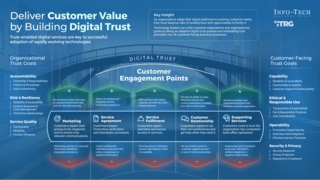 Deliver Customer Value by Building Digital Trust
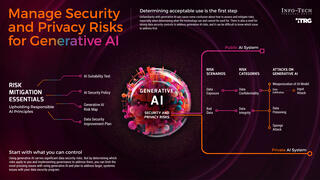 Address Security and Privacy Risks for Generative AI
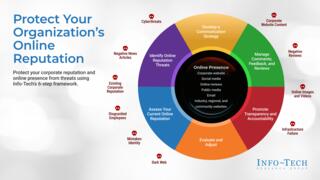 Protect Your Organization's Online Reputation
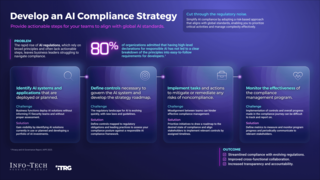 Develop an AI Compliance Strategy
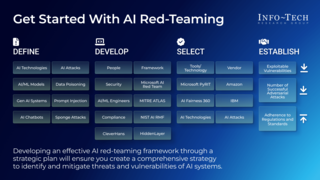 Get Started With AI Red-Teaming
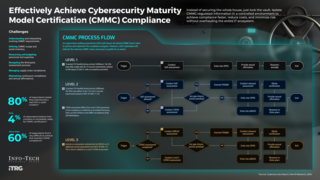 Achieve CMMC Compliance Effectively
 Building Info-Tech’s Chatbot
 Building the Road to Governing Digital Intelligence
 An Operational Framework for Rolling Out AI
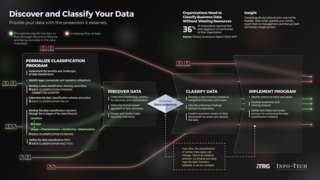 Discover and Classify Your Data
 Defend Against Deepfake Cyberattacks
 Assess Your CMMC Readiness
 Detect Shadow AI and Unauthorized AI Agents