Vendor Spotlight: Salesforce Agentforce Service
Deliver strong customer care with Salesforce Agentforce Service.
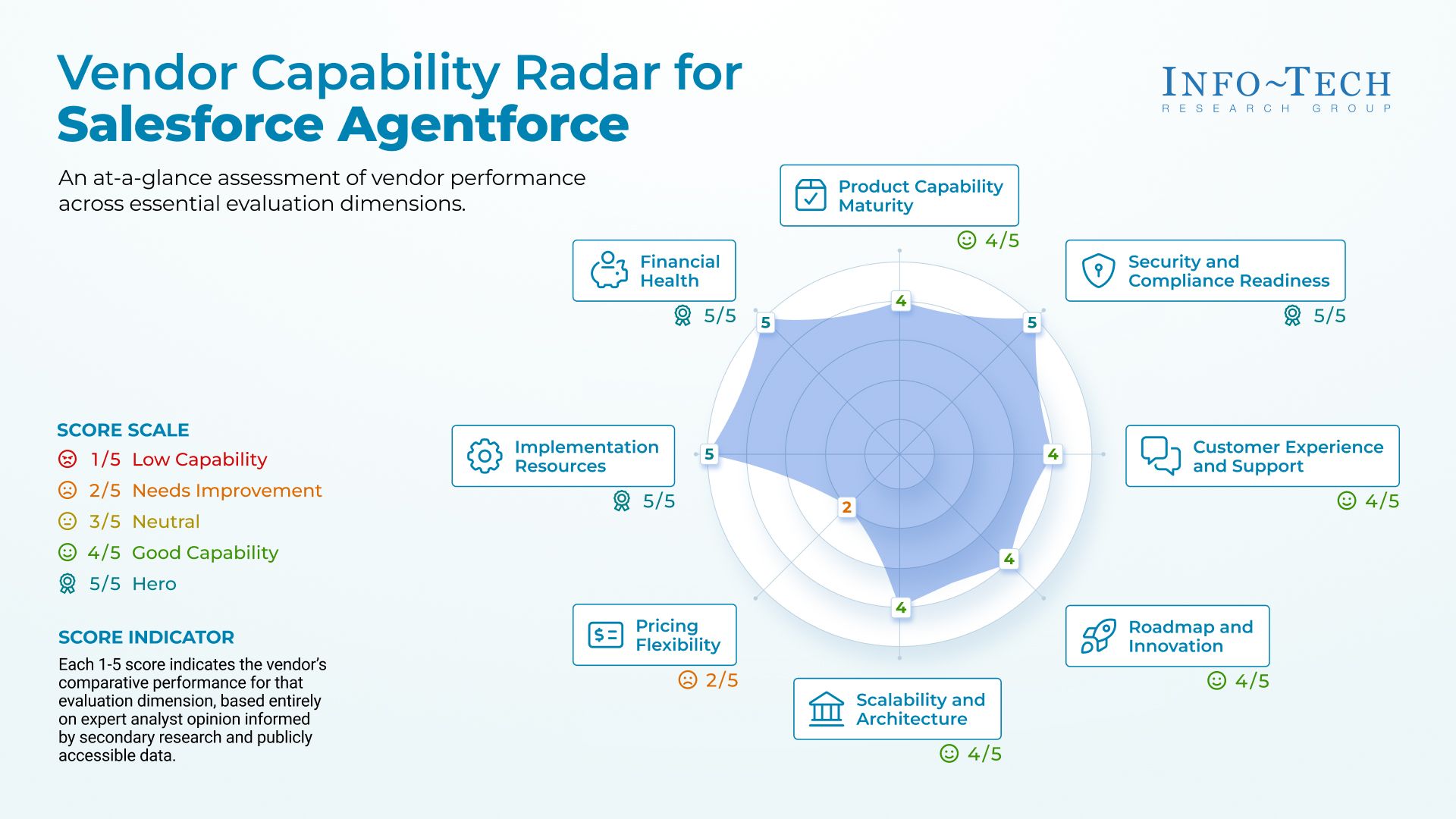
AI-driven service automation is compelling, but enterprise adoption of Salesforce Agentforce demands more than feature enthusiasm. While Salesforce positions Agentforce as a shift toward agentic execution, licensing layers, cross-cloud dependencies, and unclear total costs obscure what successful adoption requires. Our research provides CIOs and technology decision-makers with an evidence-based evaluation that frames Agentforce through enterprise priorities such as operational reality, commercial structure, and architectural fit.
A disciplined assessment of Agentforce looks beyond polished AI demonstrations. CIOs and technology decision-makers must evaluate the platform across product depth, security, commercial structure, implementation readiness, financial health, and architectural fit before committing to its agentic roadmap.
1. Weigh agentic AI capability against ROI timelines.
Agentforce delivers credible agentic AI, but organizations may need lengthy pilots and significant change management before measurable ROI materializes. Stage investment around realistic adoption timelines and the operational lift required.
2. Recognize Salesforce as a safe bet within its lane.
Salesforce remains a market leader with proven scalability, security, and a deep partner ecosystem, though its cloud-only posture limits its fit for hybrid and on-premises footprints. For cloud-aligned enterprises, Agentforce is a defensible long-term customer service platform.
3. Pilot agentic service before going all in.
Adopting autonomous agents without governance and data privacy guardrails risks misusing customer data and overspending on capability the organization is not ready to absorb. Establish enterprise governance rules and run scoped pilots before scaling agentic capability into the live customer service ecosystem.
Use this vendor spotlight to evaluate Salesforce Agentforce Service.
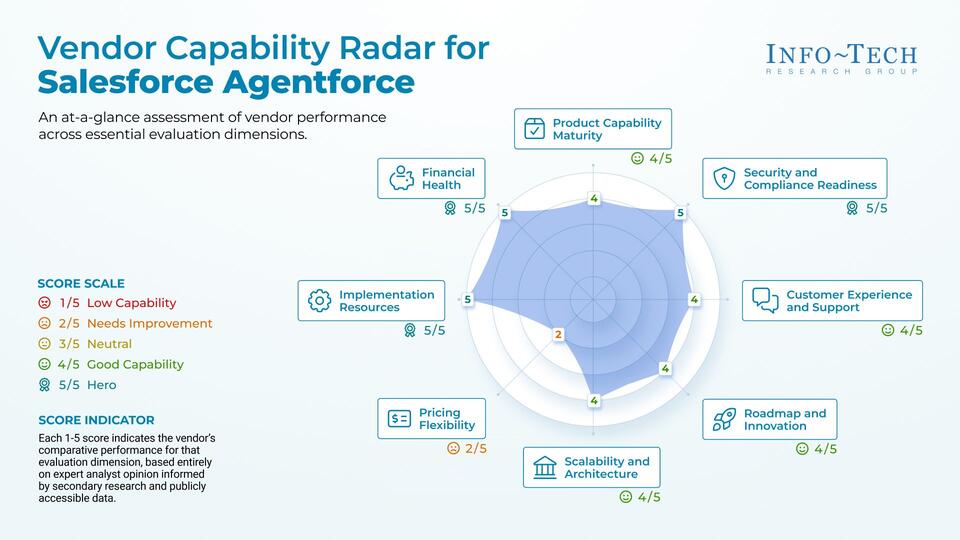
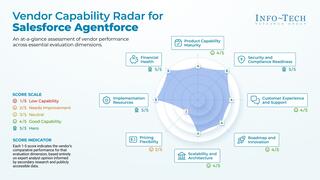
The research scores Salesforce Agentforce across eight evaluation dimensions, combining analyst rationale, financial signals, SWOT analysis, and embedded SoftwareReviews data. Move beyond vendor-led narratives to evidence-based decisions on whether to adopt, maintain, migrate to, or expand the platform.
- Understand the Agentforce platform by mapping product capabilities, agentic AI features, and product roadmap.
- Test technical and operational fit by examining security and compliance, scalability and architecture, and customer experience signals.
- Assess commercial viability by weighing pricing flexibility, Salesforce's financial health, and implementation resources before committing.
Vendor Spotlight: Salesforce Agentforce Service
Deliver strong customer care with Salesforce Agentforce Service.
Analyst Perspective
See vendors for who they are and choose confidently. Agentforce decisions should balance innovation ambition with operational reality, commercial structure, and long-term architectural fit.

For CIOs and technology decision-makers, the question is whether Agentforce’s autonomous agentic capabilities merit confidence across core enterprise criteria: product depth, roadmap credibility, pricing flexibility, customer satisfaction, implementation maturity, and long-term viability. AI-driven service automation is compelling, but enterprise adoption demands more than feature enthusiasm.
Salesforce positions Agentforce as a shift toward agentic execution. That ambition carries architectural, financial, and governance implications. Organizations that focus narrowly on feature demonstrations may overlook licensing complexity, cross-cloud dependencies, and operational readiness requirements.
Evaluate how Agentforce aligns with your business processes, data maturity, and internal governance model. Assess the strength of the partner ecosystem, the realism of the roadmap, and the sustainability of the commercial model. Vendor selection at this level is a strategic commitment that extends well beyond the service desk. Vendor marketing will draw you to the glitz and glamour of features, but increasingly feature-focused selection leads to poor decision-making.
When organizations conduct disciplined, evidence-based evaluation, they move from reacting to innovation narratives to making durable platform decisions aligned with enterprise priorities. You need Salesforce to show how its culture, service, and product align with solving your use cases and business problems.
Jehaan Nanavaty
Senior Advisory Analyst, Research Innovation
Info-Tech Research Group
Executive Summary
Your Challenge
Organizations are under increasing pressure to maintain a clear, current view of evolving market patterns and industry trends. The potential of autonomous agents is significant, but thoughtful decisions require looking beyond the initial promise. You need a clear understanding of how Agentforce fits within your service model, data environment, governance practices, and long-term investment strategy.
Taking the time to assess alignment across architecture, pricing, and operational readiness will help ensure that innovation translates into sustainable value for your organization.
Common Obstacles
Salesforce’s Agentforce narrative emphasizes transformation and autonomy, which can make it difficult to separate real operational value from roadmap ambition. The broader Salesforce ecosystem adds complexity, from licensing layers to cross-cloud dependencies.
You may find yourself navigating polished AI demonstrations while still lacking clear visibility into total cost, implementation effort, and long-term architectural implications. Without structured evaluation, feature enthusiasm can overshadow enterprise reality.
Info-Tech’s Approach
We apply a structured, criteria-driven assessment to identify and spotlight vendors that deliver the most credible, relevant, and forward-looking capabilities.
Our approach prioritizes synthesis over aggregation, distilling vendor inputs into clear, actionable guidance that directly supports your strategic vendor sourcing and software procurement priorities. Thus, enabling your teams to stay focused on decision-making rather than information vetting and ensuring you maintain a proactive, well-informed view of evolving market patterns and industry trends.
Info-Tech Insight
Salesforce advertises strong agentic capabilities with its Agentforce product range. However, changing pricing models and questions on when ROI will be achieved require clients to act with cautious optimism.
Vendor Snapshot
Meet the Vendor: No Fluff, Just the Facts
Headquarters
San Francisco, California, USA
Target Verticals
Flexible across enterprise clients in diverse industries
Target Customer Size Profile
Enterprise-level clients, with 500+ employees
Vendor |
Salesforce |
Established Date |
1999 |
Key Executives |
CEO – Marc Benioff |
No. of Employees |
~76,000 |
Website URL |
www.salesforce.com |
history
2025
Agentforce 360 Platform Launched
2023
Einstein GPT Launched
2020
Slack Acquisition
2019
Tableau Acquisition
2016
Salesforce Einstein AI Announced
2015
Salesforce Lightning Launched
2009
Chatter Launched
2006
AppExchange Launches
2004
IPO (NYSE: CRM)
1999
Salesforce founded
FINANCIAL SUMMARY: salesforce
Quarterly Sales
(Q4 FY2026)
$11.2 Billion
Target Achievement: 102%
Change Over Last Year: 12%
Earnings per Share $3.81
Target Achievement: 125%
Change Over Last Year: 37%
Agentforce ARR $800 Million
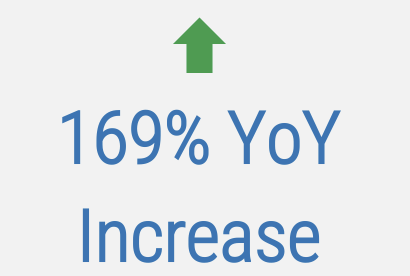
Annual Recurring Revenue (ARR)
20.1% Increase in GAAP Operating Margin
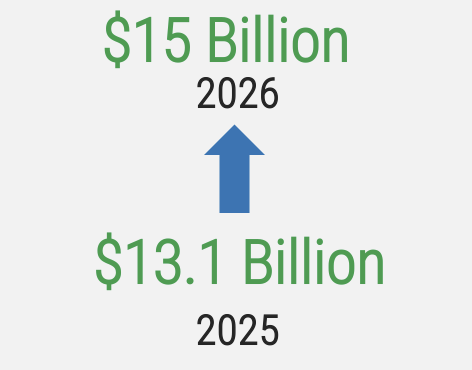
FY26 GAAP Operating Margin
13.3% YOY Increase in Operating Cash Flow
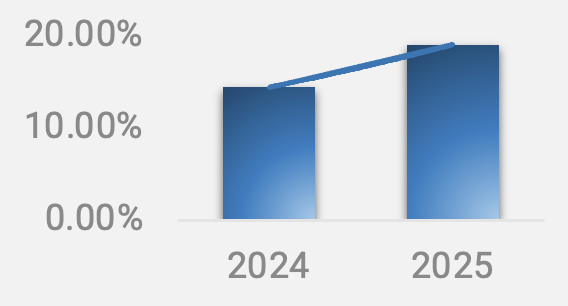
Cash Flow
Info-Tech Insight
Salesforce’s financial profile indicates an enterprise vendor prioritizing margin expansion and operational efficiency over aggressive top-line growth. This signals reduced viability risk and sustained investment capacity, though innovation momentum will increasingly depend on execution rather than expansion-driven scale.
Fiscal Revenue Growth (YoY)
FY 2023: 11%
FY 2024: 9%
FY 2025: 10%
16%
YoY Remaining Performance Obligation Increase
200%
AI-Related ARR Growth (Agentforce + Data Cloud)
13%
Subscription + Support Revenue Increase
Flagship product overview
Agentforce: salesforce
AI Agents
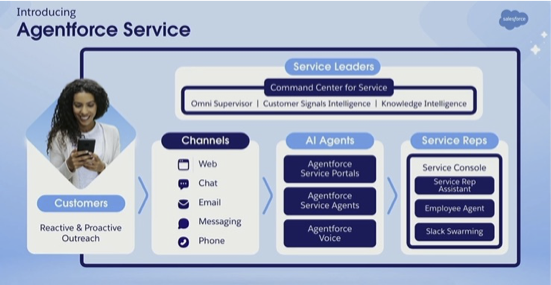
Autonomously resolves service (and other) requests using trusted workflows.
Omnichannel Case Handling
Unified support across email, chat, messaging, voice, and digital channels from a single console.
Real-Time Data Integration
Agents access CRM, customer history, and enterprise data via Salesforce Data Cloud.
Service Analytics & Insights
Built-in reporting and AI-driven insights to optimize resolution time and service performance.
Trust & Governance Controls
Built-in guardrails for AI behavior compliance, auditability, and data security.
Scalable Cloud Platform
Enterprise-grade reliability, security, and scalability on Salesforce platform.
Workflow Automation
Automates case routing, escalations, approvals, and follow-ups.
Low-Code Configuration
Admins configure AI agents, workflows, and policies using declarative tools.
Product Portfolio Map
salesforce
Source
Free Suite
- $0/user/month
- 2 User Licenses
- Lead, Account, Contact, and Opportunity Management
- Connected Slack Conversations
- Simple Email Marketing
Starter Suite
- $25/user/month
- Lead, Account, Contact, and Opportunity Management
- Dynamic Email Marketing and Analytics
- Built-In Sales Flows and Lead Routing
- Connected Slack Conversations
Pro Suite
- $100/user/month
- Everything in Starter plus Enhanced, Real-Time Chat
- Greater Customization and Automation
- Sales Quoting and Forecasting
- Access to AppExchange
All prices in US$
Product Portfolio Map
salesforce
Source
Enterprise Suite
- $175/user/month
- Lead, Account, Contact, and Opportunity Management, Connected Slack Conversations, Email Marketing
- Real-Time Chat, Sales Quoting and Forecasting, Access to AppExchange
- AI for Customer Service
- Self-Service Help Center
- Workflow Automation
Unlimited
- $350/user/month
- Everything in Enterprise plus Chat & Bots
- Salesforce Knowledge
- Premier Success Plan and Full Sandbox
Agentforce 1 Service
- $550/user/month
- Everything in Unlimited, plus Full Suite of AI
- Unmetered Agentforce Usage for Employees
- Tableau Next: Real-Time Customer Sentiment at Your Fingertips
- 1M Flex Credits & 2.5M Data Cloud Credits per Org. Every Year
All prices in US$
Ideal Customer Persona #1
Defining Key Buyer Attributes
Large multinational enterprise operating high-volume, multichannel customer service environments. Requires centralized governance, automation at scale, SLA enforcement, and advanced analytics to manage global support operations efficiently.
Primary Target Roles
Global Head of Customer Service
VP, Customer Experience (CX)
Chief Operations Officer
Enterprise Service COE Leaderships
Industry Segmentation Strengths
Strong presence in Financial Services, Telecommunications, Healthcare, and Technology enterprises with complex service environments.
Philips
Barclays
Telus
Ideal Customer Persona #2
Defining Key Buyer Attributes
Subscription-based or platform-driven company managing high volumes of digital support interactions. Focused on automation, AI-assisted service, customer retention, and scalable self-service environments.
Primary Target Roles
CIO/CTO
VP, Customer Success
VP, Support Operations
Industry Segmentation Strengths
Strong presence in SaaS, Cloud Infrastructure Providers, FinTech, Cybersecurity, and e-Commerce platforms with customer lifecycle management complexity.
Citrix
AWS
ADP
Spotify
About Info-Tech
Info-Tech Research Group is the world’s fastest-growing information technology research and advisory company, proudly serving over 30,000 IT professionals.
We produce unbiased and highly relevant research to help CIOs and IT leaders make strategic, timely, and well-informed decisions. We partner closely with IT teams to provide everything they need, from actionable tools to analyst guidance, ensuring they deliver measurable results for their organizations.
What Is a Blueprint?
A blueprint is designed to be a roadmap, containing a methodology and the tools and templates you need to solve your IT problems.
Each blueprint can be accompanied by a Guided Implementation that provides you access to our world-class analysts to help you get through the project.
Talk to an Analyst
Our analyst calls are focused on helping our members use the research we produce, and our experts will guide you to successful project completion.
Book an Analyst Call on This Topic
You can start as early as tomorrow morning. Our analysts will explain the process during your first call.
Get Advice From a Subject Matter Expert
Each call will focus on explaining the material and helping you to plan your project, interpret and analyze the results of each project step, and set the direction for your next project step.
Unlock Sample ResearchContributors
- David Richardson, Head of Commercial Systems, Info-Tech Research Group
- Travis Hillpot, Principal Advisory Director, Info-Tech Research Group
- Thomas Randall, Research Lead, Info-Tech Research Group
 Build Your Enterprise Application Implementation Playbook
 Master Contract Review and Negotiation for Software Agreements
 Negotiate SaaS Agreements That Are Built to Last
 Governance and Management of Enterprise Software Implementation
 Select Software With the Right Satisfaction Drivers in Mind
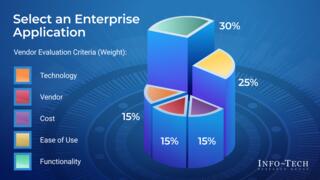 Select an Enterprise Application
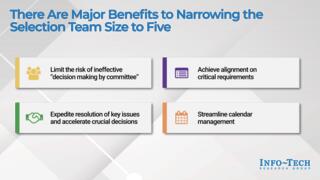 Optimize Your Software Selection Process: Why 5 and 30 Are the Magic Numbers
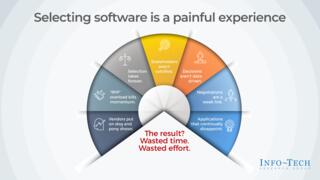 The Rapid Application Selection Framework
 Get the Best Discount Possible With a Data-Driven Negotiation Approach
 Craft a Customer-Driven Market Strategy With Unbiased Data
 Switching Software Vendors Overwhelmingly Drives Increased Satisfaction
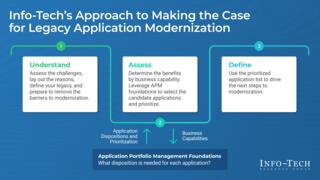 Make the Case for Legacy Application Modernization
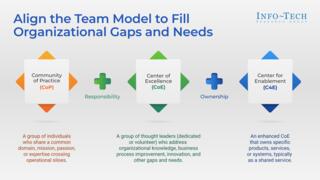 Empower Solution Delivery With the Right CoP, CoE, and C4E Model
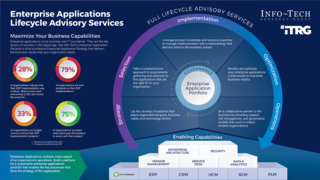 Enterprise Application Change: It's All About Business Capabilities
 2020 Applications Priorities Report
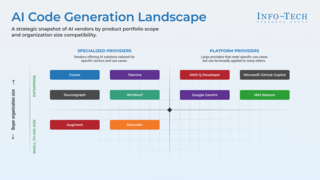 AI-Assisted Code Generation Tools
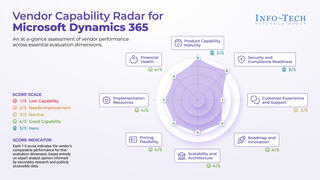 Vendor Spotlight: Microsoft Dynamics 365
 Vendor Spotlight: Salesforce Agentforce Service
 Vendor Spotlight: Microsoft Fabric
 Vendor Spotlight: Salesforce Marketing Cloud
 Vendor Spotlight: VMware Alternatives