
Develop a Plan to Overcome Your Microsoft Power Apps Challenges
Address key challenges before adopting a wide-scale transformation.
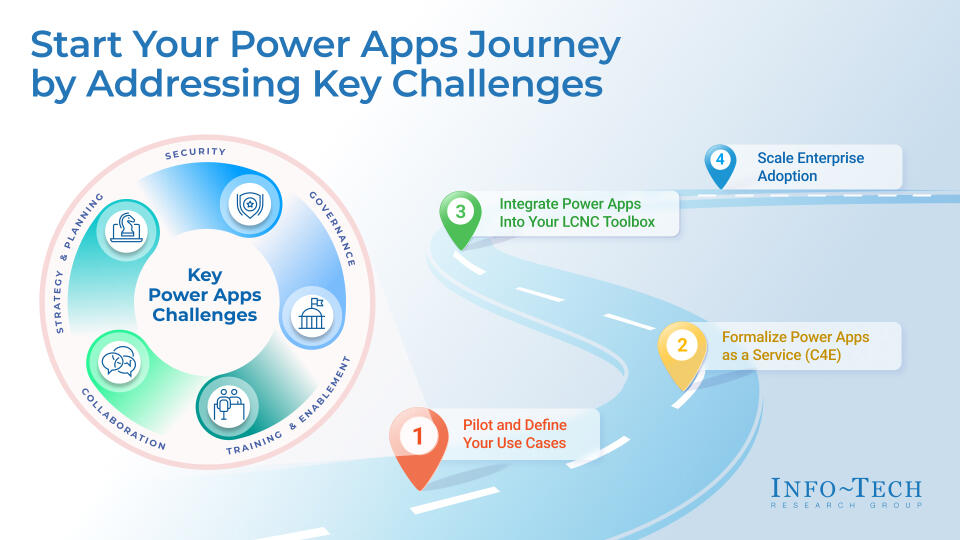
Low-code/no-code (LCNC) solutions like Microsoft Power Apps have made application development more accessible than ever. While users can create business applications without help from developers or IT, this DIY process can lead to insecure applications, a lack of compliance, poor data modeling, and performance glitches. Use this four-step research framework to properly address these critical issues before scaling Power Apps across your organization.
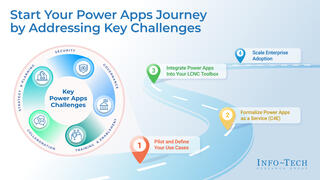
Most applications teams lack a clear, actionable strategy for adopting Power Apps. If non-developers use Power Apps without sufficient onboarding and training, issues can emerge around app sprawl, shadow IT, and app lifecycle management. Learn how to address key LCNC challenges: security, governance, training and enablement, collaboration, and strategy/planning. Then unlock the full potential of Power Apps with a clear roadmap for secure, sustainable, successful adoption.
1. The best things about Power Apps are also the worst.
The best attributes of Power Apps – especially ease of use and rapid development speed – could also inadvertently be the worst things about it. The platform’s DIY simplicity may tempt teams to skip critical steps regarding security, governance, and compliance.
2. Getting full value from LCNC isn’t like flipping a switch.
Power Apps and other LCNC solutions are so quick and easy to use that teams might expect to see benefits flow from them overnight. In reality, organizations can’t maximize the value of these platforms unless they take time to develop a strategy and prepare their teams for LCNC adoption first.
3. Make sure Power Apps users understand IT’s challenges.
Clients and end users may love the shiny new features created so easily with Power Apps. But IT teams must ensure these new apps don’t cause integration, security, or performance problems with end products. Make sure non-IT users of Power Apps understand these IT concerns and implications before they start using the platform.
Use this framework to craft a clear Power Apps strategy that works for all your stakeholders.
This research, accompanied by practical survey and workbook, is designed to help your organization chart a strategic path to Microsoft Power Apps adoption and support.
- Review your current Power Apps vision. Discuss what you’ve built and what you’d like to build.
- Identify which key challenges affect your team the most. Complete Info-Tech’s Power Apps Key Challenges Survey.
- Create a plan to address these key challenges. Define a "now, next, later" plan and leverage additional Info-Tech resources.
Develop a Plan to Overcome Your Microsoft Power Apps Challenges
Address key challenges before adopting a wide-scale transformation.
Analyst Perspective
Do your due diligence before committing to a large-scale Power Apps transformation.
The best thing about Microsoft Power Apps is that it's a highly scalable, easy-to-use platform with powerful capabilities for rapid app development.
Ironically, that's also the worst thing - its simplicity often tempts teams to skip critical steps in the process.
All too often, Power Apps is treated like a "cheat code," enabling less experienced developers to ship apps quickly; however, this speed can lead to insecure applications, poor data modeling, a lack of compliance, and performance issues.
To truly unlock Power Apps' potential, organizations need a strong foundation. That means addressing governance and security, investing in training and enablement, and fostering collaboration across roles. It also requires aligning everything through a clear strategy. Tackling these areas before scaling will ensure your Power Apps initiative is secure, sustainable, and successful.

Caleb Pittman
Research Specialist, Applications Delivery and Management
Info-Tech Research Group
Executive summary
Your Challenge
- Because Power Apps shifts development to end users, traditional software delivery processes are inadequate for safe management.
- Applications teams lack a clear, actionable strategy for adopting Power Apps.
- Isolated app development does not naturally lead to coordinated, enterprise-wide adoption.
Common Obstacles
- Governance gaps can lead to app sprawl, security risks, and Shadow IT.
- Ownership and continuity are often overlooked. When developers leave, apps can become orphaned unless proper environment segmentation and service accounts are in place.
- While Power Apps is accessible to non-developers, without proper onboarding, teams may produce inefficient or insecure apps that require rework.
Info-Tech's Approach
- Review your current Power Apps vision. Discuss what you've built and what you'd like to build.
- Identify which key challenges affect your team the most. Complete Info-Tech's Power Apps Key Challenges Survey.
- Create a plan to address these key challenges; define a Now, Next, Later plan, and leverage other pieces of Info-Tech's research.
Info-Tech Insight
Microsoft Power Apps empowers teams to build apps quickly with minimal coding, making it accessible even for non-developers. However, this ease of use can lead teams to overlook critical aspects of the development lifecycle. Building up a Power Apps suite without first addressing governance, security, and training challenges can be harmful. Taking the time to address these challenges ensures that your Power Apps initiative will be secure, sustainable, and successful.
Info-Tech's methodology to Overcome Your Microsoft Power Apps Challenges
| 1. Build your foundation for Power Apps | |
|---|---|
| Phase Steps |
|
| Phase Outcomes |
|
Step 1.1
Understand your Power Apps current state
Activities
1.1.1 Determine the current state of your Power Apps practice
This step involves the following participants:
- IT leaders
- Power Platform developers
- IT administrators
- Product owners
- Business analysts
Outcomes of this step
- A consolidated, stakeholder-aligned summary of your organization’s Power Apps landscape
Step 1.1 > Step 1.2 > Step 1.3 > Step 1.4
Front-end development is shifting to end users and business teams
Power Apps is an easy way for groups to get started with low-code/no-code (LCNC) applications.
Info-Tech research shows that 90% of CxOs think that IT Innovation should contribute to improved business processes.
Source: CxO-CIO Alignment Diagnostic, 2024-2025; N=382 CXOs
36% of organizations stated that their application development throughput is somewhat ineffective or not effective.
31% of organizations stated that their application development quality is somewhat ineffective or not effective.
Source: Info-Tech's Management & Governance, 2024-2025; N=181
By 2026, 70% of new applications will be built on low-code/no-code platforms.
Source: colorwhistle, 2026
LCNC offers great benefits for teams
The key benefit is accelerated time to market
29% of organizations see low-code development as 41-60% faster than traditional development.
27% stated 21-40% faster development compared to 5% who see low-code development as equal to or slower than traditional development.
Source: Creatio, 2021
What are the other benefits?
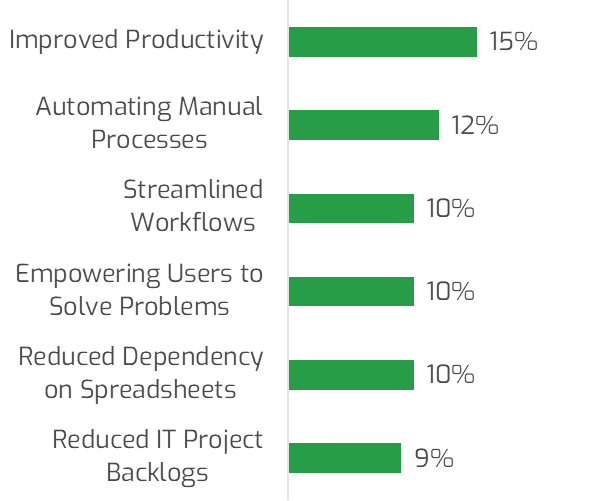
Source: TechRepublic, 2021
Info-Tech Insight
Microsoft Power Apps and other LCNC solutions offer significant advantages over traditional development approaches. However, realizing these benefits takes time - it is not as simple as flipping a switch. To maximize the value of any LCNC solution, organizations must first ensure that their teams are fully prepared for adoption.
What are the reasons for adopting low-code?
Protect against technology churn
Accelerate digital innovation
Create solutions quickly
Reduce dependency on developers
Source: DronaHQ, 2021
Let Power Apps fuel your digital transformation
For organizations in the Microsoft ecosystem, Power Apps can be an important tool in shaping your digital transformation.
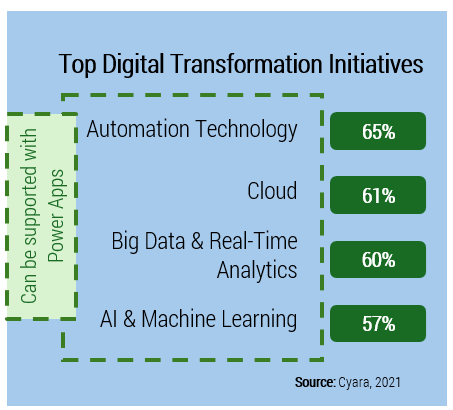
- Power Apps empowers business users and IT teams to rapidly build and deploy custom applications, streamlining workflows and automating manual processes without the need for extensive coding expertise.
- By integrating with cloud services, AI, and data analytics, Power Apps enables organizations to modernize legacy systems, improve data-driven decision-making, and accelerate innovation across departments.
- The platform supports scalable governance and security frameworks, ensuring that digital transformation initiatives remain compliant, sustainable, and aligned with organizational strategy.
- Power Apps fosters collaboration between IT and business teams, breaking down silos and enabling cross-functional solutions that drive operational efficiency and business agility.
Discover use cases for Power Apps
Low- and no-code have increased in popularity in recent years. Microsoft Power Apps holds the number two spot, behind Salesforce, in Info-Tech's Software Reviews: Low-Code Development Tools category (as of November 2025).
Extensive LCNC Use Cases
17% of organizations are planning or using LCNC to automate workflows, 15% to create new apps, and 15% to speed up development time
(TechRepublic, 2021).
Extendable & Scalable
LCNC solutions are extendable and adaptable with out-of-the-box connectors or customizable REST APIs.
Operational Change Acceptance
LCNC is a notable option to Shadow IT, given its centralized administration capabilities and compatibility with existing systems.
Seamless Deployment
Built-in automated tests ensure compatibility with the target environment.
Hands-Off Operational Support
AI and machine learning are often used to reconfigure or load balance the system as needed.
What Else?
1.1.1 Determine the current state of your Power Apps practice
15-30 minutes
- Download Info-Tech's Power Apps Workbook to help facilitate this and future activities.
- Gather the appropriate stakeholders to discuss the current state of your organization's Power Apps implementation.
- Have a team member facilitate the session.
- Discuss the following and list all answers in your Power Apps Workbook. Add additional questions as you see fit.
- What have we built?
- What are we trying to build?
- What specific problems are we trying to solve by using Power Apps?
- Do we have a defined strategy for scaling up our Power Apps solution?
- Are we prepared for Power Apps?
Download the Power Apps Workbook
| Participants |
|---|
|
| Output |
|
About Info-Tech
Info-Tech Research Group is the world’s fastest-growing information technology research and advisory company, proudly serving over 30,000 IT professionals.
We produce unbiased and highly relevant research to help CIOs and IT leaders make strategic, timely, and well-informed decisions. We partner closely with IT teams to provide everything they need, from actionable tools to analyst guidance, ensuring they deliver measurable results for their organizations.
What Is a Blueprint?
A blueprint is designed to be a roadmap, containing a methodology and the tools and templates you need to solve your IT problems.
Each blueprint can be accompanied by a Guided Implementation that provides you access to our world-class analysts to help you get through the project.
Talk to an Analyst
Our analyst calls are focused on helping our members use the research we produce, and our experts will guide you to successful project completion.
Book an Analyst Call on This Topic
You can start as early as tomorrow morning. Our analysts will explain the process during your first call.
Get Advice From a Subject Matter Expert
Each call will focus on explaining the material and helping you to plan your project, interpret and analyze the results of each project step, and set the direction for your next project step.
Unlock Sample ResearchContributors
- Aloqik Gupta, Business Intelligence Specialist, Trudell Medical Limited
- Mohit Arora, Enterprise Business Analyst/Product Owner, DAC
- Tariku Hailu, Sr. MS365 SharePoint Developer, ATCS
 Applications Priorities 2025
 Rationalize Your Application Portfolio
 Extend Agile Practices Beyond IT
 Integrate Portfolios to Create Exceptional Customer Value
 Automate Your Software Delivery Lifecycle
 Build Your BizDevOps Playbook
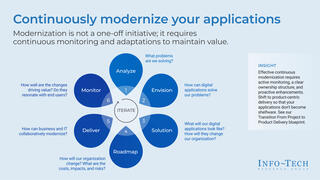 Modernize Your Applications
 Embrace Business-Managed Applications
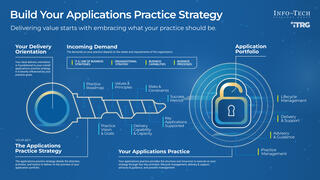 Build Your Applications Practice Strategy
 Review Your Application Strategy
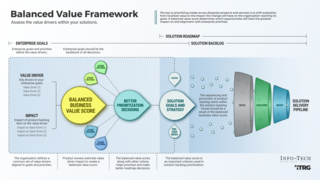 Assess the Value Drivers Within Your Solutions
 2020 Applications Priorities Report
 Applications Priorities 2022
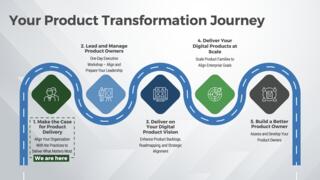 Make the Case for Product Delivery
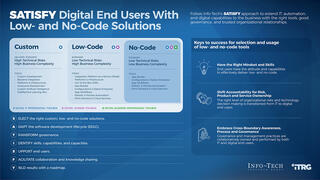 Satisfy Digital End Users With Low- and No-Code
 Select a Sourcing Partner for Your Development Team
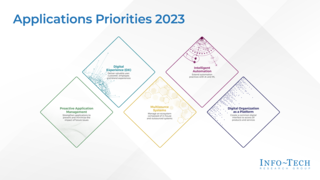 Applications Priorities 2023
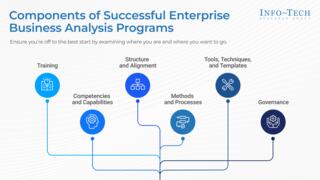 Make the Case for Enterprise Business Analysis
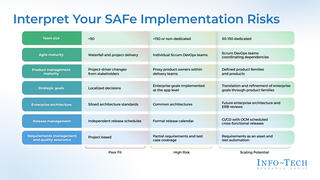 Decide if You Are Ready for SAFe
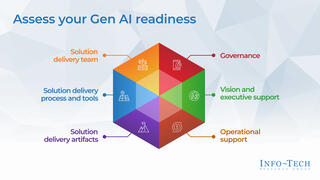 Adopt Generative AI in Solution Delivery
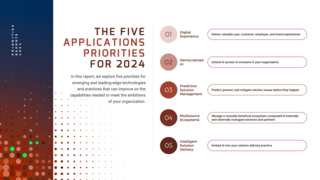 Applications Priorities 2024
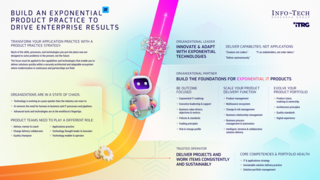 Build Your Exponential IT Product Practice
 Insights Into Software Selection 2025
 Stay Relevant in the Era of AI-Powered Search
 Transform IT, Transform Everything
 Building Info-Tech’s Chatbot
 Assessing the AI Ecosystem
 Building the Road to Governing Digital Intelligence
 Bring AI Out of the Shadows
 The AI Vendor Landscape in IT
 An Operational Framework for Rolling Out AI
 Applications Priorities 2026
 Develop a Plan to Overcome Your Microsoft Power Apps Challenges
