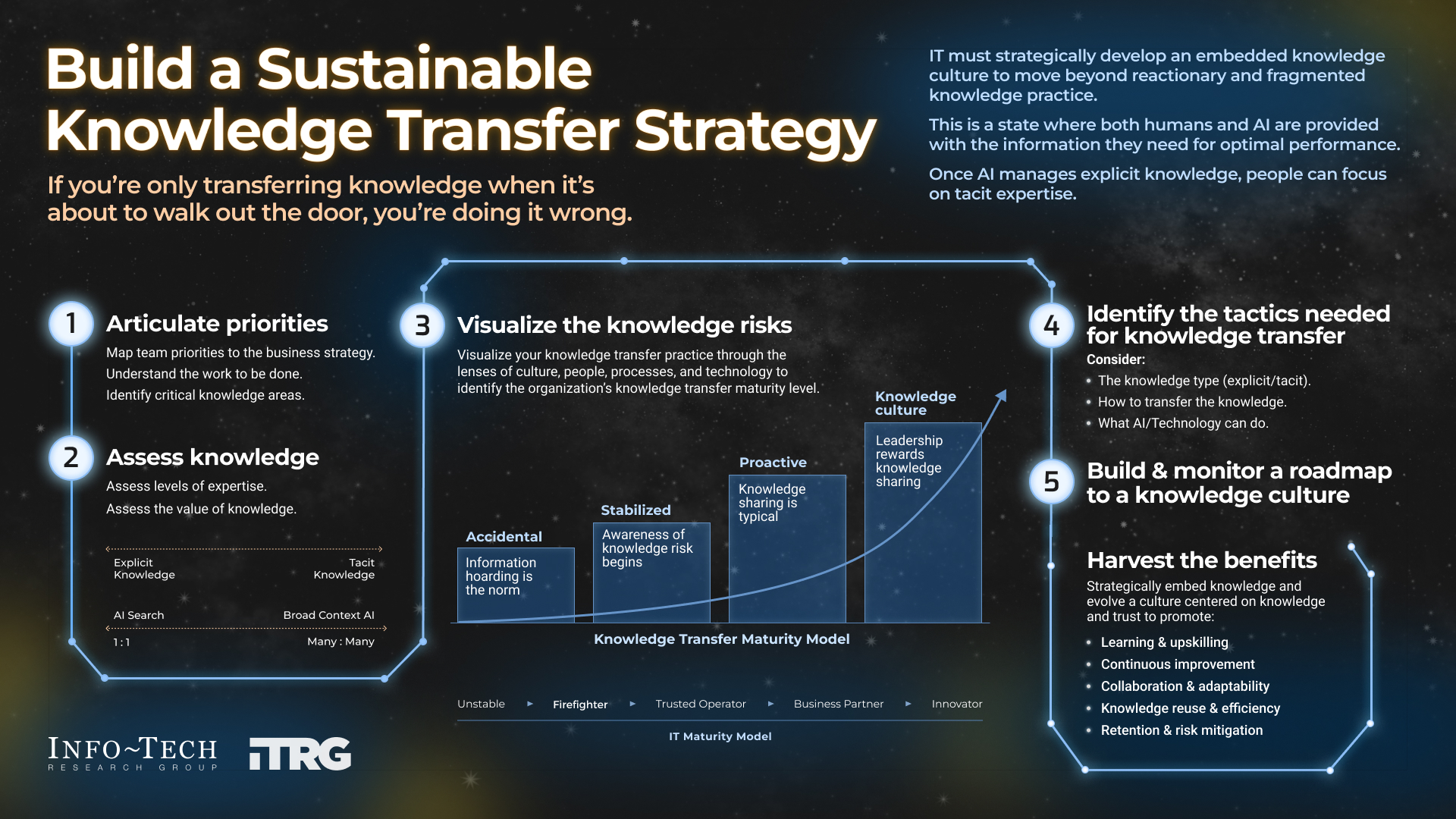
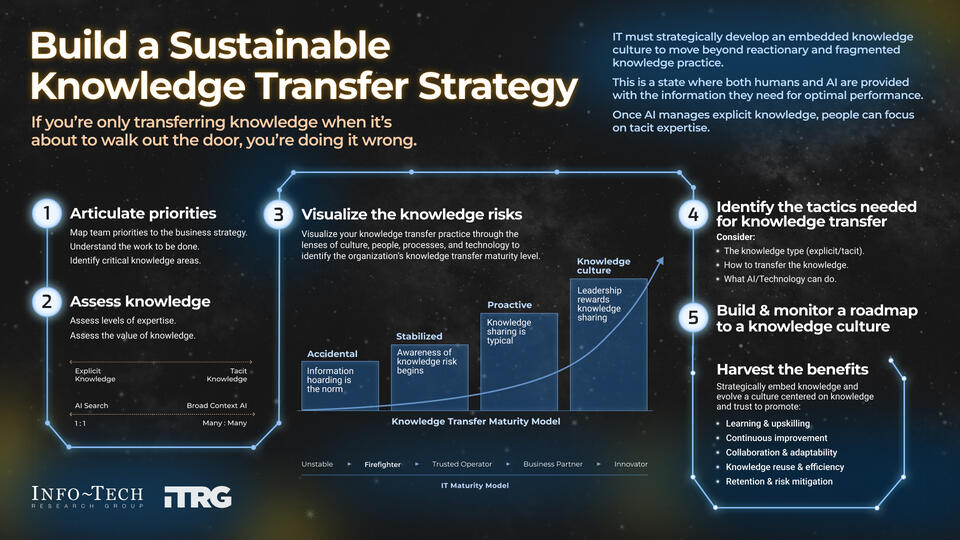
Build a Sustainable Knowledge Transfer Strategy
Transfer IT knowledge before it’s gone.
When it comes to knowledge transfer in IT, employee exits aren’t the only risk – critical know-how can be lost every time teams, roles, or work shifts. Onboarding slows, continuity is lost, and time is wasted searching for or rebuilding what already exists. This blueprint helps IT leaders identify their highest-risk knowledge areas, choose the right transfer tactics – including where AI can help – and build a practical roadmap to sustain knowledge transfer over time.
Knowledge transfer in IT is often treated as just a “nice-to-have,” but protecting institutional knowledge and collective expertise is increasingly critical to managing workforce changes, supporting innovation, and staying competitive. Reimagining knowledge transfer for a modern IT organization means moving beyond ad hoc document handoffs to a dynamic, AI-augmented framework that ensures critical knowledge remains accessible and business continuity is proactively secured.
1. Make knowledge a strategic capability.
IT must develop an embedded knowledge culture to move beyond reactionary and fragmented knowledge practices. This is a state where both humans and AI have the information they need for optimal performance. Once AI manages explicit knowledge, people can focus on tacit expertise.
2. Don’t wait until knowledge is walking out the door.
Transferring knowledge only when an employee leaves the team overlooks the tacit “how and why” of knowledge that rarely makes it into last-minute documentation. Shift from reactive, document-heavy handoffs to a process that is woven into daily workflows and culture – using digital tools including AI where it fits.
3. Capture knowledge in real time.
The most efficient way to transfer knowledge is to capture it when it’s created via tools that are integrated into daily workflows, not documentation after the fact. Embedding this transfer into day-to-day work enables dynamic knowledge capture and a continuous knowledge flow that makes critical information and context easier to find and reuse.
Use this step-by-step research to build your knowledge transfer roadmap
Follow our structured four-phase framework, featuring practical tools, guides, and templates to identify what knowledge matters most to you, assess where you’re exposed, and apply the right mix of knowledge transfer tactics.
- Align priorities to strategy: Identify and prioritize the knowledge areas that matter most to your organization and IT objectives.
- Assess knowledge risk: Assess knowledge coverage in your teams and identify risks and priorities.
- Plan the transfer: Build knowledge-area transfer plans, select the right mix of tactics to capture both explicit and tacit knowledge, and understand opportunities to use AI.
- Operationalize and sustain: Translate the plan into an actionable roadmap with initiatives, owners, and timelines to embed knowledge transfer into day-to-day work.
Member Testimonials
After each Info-Tech experience, we ask our members to quantify the real-time savings, monetary impact, and project improvements our research helped them achieve. See our top member experiences for this blueprint and what our clients have to say.
9.7/10
Overall Impact
$8,100
Average $ Saved
5
Average Days Saved
Client
Experience
Impact
$ Saved
Days Saved
Cook Group Incorporated
Guided Implementation
10/10
$4,139
5
Easy to work with, understood what we were trying to achieve and led us through the right research.
Virginia Lottery
Guided Implementation
9/10
$2,483
6
Bay Cove Human Services Inc.
Workshop
10/10
$17,680
4
It was all good. The workshop gave us a very usable methodology for identifying and collecting information regarding key employees who may present... Read More
Alabama Department of Labor (ADOL)
Workshop
10/10
$13,700
20
Bill is fantastic, we have had him as our instructor twice now, and both times he's been exceptional to work with. Having a well-built plan in hand... Read More
Canada Border Services Agency
Workshop
10/10
$25,000
23
eGov Jamaica Ltd.
Guided Implementation
8/10
$1,259
5
The Analyst was very knowledgeable and prepared for the session and provided information and tool which we could readily see how they can assist in... Read More
Saskatchewan Blue Cross
Guided Implementation
9/10
$10,000
2
Amanda provided high level guidelines, with some concreate suggestions.
Spencer's Air Conditioning & Appliance, Inc.
Guided Implementation
9/10
N/A
N/A
Since this was a coaching session on how to manage a transition plan, it is hard to put a time or dollar value on the session. However, I took sev... Read More
Knowledge Management
By the end of this course, learners will be able to design, assess, and implement a scalable knowledge transfer strategy that protects critical institutional knowledge, embeds transfer into daily workflows, and supports long-term IT resilience and innovation.
By the end of this course, learners will be able to:
1. Analyze knowledge transfer maturity and identify critical gaps in their organization.
2. Identify and prioritize critical knowledge areas using structured importance criteria.
3. Assess knowledge risks across both individuals and knowledge areas.
4. Build knowledge transfer plans with tactics matched to the type of knowledge involved.
5. Implement a knowledge culture roadmap with clear sequencing, ownership, and accountability.
6. Evaluate knowledge transfer progress using metrics and a continuous refresh cadence.
All of our Info-Tech Academy courses have closed captioning available. To turn this function on, click on the C.C. in the bottom right corner of the video screen and click "English" on the options that pop up.
- Course Modules: 5
- Estimated Completion Time: 3 hours
Workshop: Build a Sustainable Knowledge Transfer Strategy
Workshops offer an easy way to accelerate your project. If you are unable to do the project yourself, and a Guided Implementation isn't enough, we offer low-cost delivery of our project workshops. We take you through every phase of your project and ensure that you have a roadmap in place to complete your project successfully.
Module 1: Define the Current and Target State
The Purpose
Establish the strategic context, goals, assess maturity and identify key metrics.
Key Benefits Achieved
Strategic context, goals, maturity, and key metrics identified.
Activities
Outputs
Create strategic alignment
- Strategic perspective summary
Determine current maturity level & identify gaps
- Organizational benefits and current pain points of knowledge transfer
Identify knowledge transfer metrics
- Metrics for knowledge transfer
Module 2: Identify Knowledge Priorities
The Purpose
Identify & prioritize critical knowledge areas and assess risks.
Key Benefits Achieved
Critical knowledge areas and assess risks. identified and prioritized.
Activities
Outputs
Use major workflow to determine knowledge areas
- Prioritized knowledge area risks
Apply IVALUE principles & weightings to determine knowledge impact
- Inventory of knowledge levels in each knowledge area
Map team members to knowledge areas & assess levels of expertise
- Action plan for risk mitigation
Analyze & flag at-risk areas
Discuss urgency & impact
Module 3: Build Knowledge Transfer Plans
The Purpose
Develop actionable transfer plans and select transfer tactics.
Key Benefits Achieved
Actionable transfer plans and select transfer tactics developed.
Activities
Outputs
Align on assessments and actions
- Knowledge area transfer plans
Document knowledge items for prioritized knowledge areas
- List of knowledge receivers
Finalize knowledge receivers
- Selected transfer tactics
Select transfer tactics
Module 4: Define the Knowledge Transfer Roadmap
The Purpose
Draft & finalize the knowledge transfer roadmap by assigning owners, timelines & dependencies. Also, plan for continuous improvement.
Key Benefits Achieved
Knowledge transfer roadmap drafted and finalized.
Activities
Outputs
Prioritize the sequence of initiatives
- Finalized knowledge transfer roadmap
Complete the project roadmap
- Communication deck for stakeholders
Prepare your communication presentation
- Summary of next steps
Build a Sustainable Knowledge Transfer Strategy
Transfer IT knowledge before it’s gone.
Analyst Perspective
Reimagine knowledge transfer for a modern IT organization.

Knowledge transfer tends to be thought of as a “nice to have” for IT organizations, but it is more critical than ever for organizations to manage workforce changes, innovate, and remain competitive. In today’s tech landscape institutional knowledge and collective expertise are as valuable as the systems we build. But we overlook the value of taking the time to curate knowledge and expertise while working and it ends up buried in inboxes and notes or walking out the door with talent.
On top of that, standard methods of training and surfacing knowledge miss the mark and leave about 70% of critical decision-making and knowledge untapped (Pontefract, 2025). This is because:
- Documentation and formal instructions are prioritized over gaining context through experience.
- Digital and AI tools are underused, and surface patterns or informal expertise is hidden in daily operations.
- There is a lack of mechanisms to embed knowledge into daily workflows.
Reimagine knowledge transfer for a modern IT organization. Move beyond spreadsheets and document handoffs to deliver a dynamic, AI-augmented framework that ensures critical knowledge stays within the organization, and business continuity is proactively secured.
Heather Leier-Murray
Research Director, CIO
Info-Tech Research Group
Executive Summary
Your Challenge | Common Obstacles | Info-Tech’s Approach |
|---|---|---|
Institutional knowledge and collective expertise are as valuable as the systems we build. But it’s difficult to sustain proactive knowledge transfer with the ongoing disruptions we’re experiencing in IT. You need to:
|
| To overcome these obstacles, focus on creating a structured but flexible framework or knowledge transfer. Align priorities, leverage the right tactics, and embed knowledge transfer into the day-to-day to ensure continuity and growth.
|
Info-Tech Insight
Knowledge is a strategic capability to integrate, develop, and disseminate across both human teams and artificial intelligence, rather than a passive asset to store. Use AI to manage explicit knowledge so people can focus on tacit expertise.
Your challenge
This research is designed to help organizations who are facing these challenges:
- In today's digital workplace, knowledge is dispersed among systems such as SharePoint, Slack, Google Drive, and email, making it difficult for employees to locate the necessary information fast. This fragmentation results in redundant work, missed insights, and an overreliance on informal information sharing.
- As hybrid work becomes more common and the speed of business accelerates, businesses require faster and more dependable access to institutional knowledge.
- This has sparked increased interest in AI-powered knowledge management technologies that promise to reveal relevant information intelligently and contextually. The rise of generative AI has further increased the urgency, with many expecting it can overcome the limits of existing knowledge management systems.
Over 90% of organizations either lack a formal knowledge transfer program or are not adequately prepared to implement one.
(Source: Deloitte, 2021)
Common obstacles
Why IT organizations struggle to retain critical knowledge
- One-size-fits-all knowledge transfer makes it difficult to align with organizational goals and can lead to wasted efforts. Tailoring knowledge transfer and methods to differences in roles, processes, and priorities improves retention.
- Without clear prioritization there is the risk of spending time on transferring low-value knowledge while critical expertise remains with the holder. This gap results in fragmented efforts and missed opportunities to protect business-critical knowledge.
- Explicit knowledge can be codified easily, while tacit knowledge can’t. Treating both types of knowledge the same leads to failure. Neglecting tacit knowledge because it’s difficult to capture and transfer leads to significant performance risks, often being cited as the top reason for project delays and quality issues.
- The lack of dedicated time for knowledge transfer and cultural barriers like knowledge hoarding exacerbate the problem. Knowledge hoarding, specifically, can lead to decreased productivity and innovation, and reduces morale.
90% of respondents in a knowledge management study rated behavioral approaches (tacit knowledge transfer) as essential for sustaining competitive advantage
Source: Egbu, n.d.
Institutional knowledge is a competitive advantage
Institutional knowledge is collective expertise, understanding, information, and insights unique to an organization.
Institutional knowledge accumulates over time through employee experience and is vital for an organization’s operational efficiency, decision-making, and ability to adapt to change. It represents the unique way a company functions and thrives.
- The value of an organization has less to do with its fixed assets and more to do with intangible assets including employee knowledge and capability.
- Organizations need to invest in building a knowledge culture to embed capturing and sharing of knowledge into the way of working.
83% of organizations view knowledge as a critical asset.
(Source: Keevee, 2025)
Four critical ways ineffective knowledge practices undermine strategy:
- Inefficiency due to “reinventing the wheel.”
- Reduced capacity to innovate.
- Loss of competitive advantage.
- Increased vulnerability due to lack of understanding risk.
But how you spend time is holding you back
Employees are stuck in maintenance and admin and searching for information to do their job effectively.
71% of employee time is spent on maintenance (40%) and admin – meetings, emails, and other administrative tasks (31%).
Source: Info-Tech Staffing Diagnostic N=789 organizations between 2019-01-01 and 2025-01-01
42% percent of employees that spend over an hour per day searching for information to do their job.
Source: Keevee, 2025
There’s no time left to innovate. After admin and operational duties, employees have only 8% of their working time left for new initiatives and innovation. There is a better way.
Info-Tech Insight
Organizations that treat knowledge transfer as part of automation, onboarding, and decision-making pipelines, not as a standalone task, scale faster and lose less over time.
Effective knowledge transfer equals more effective work
25% The increase in productivity due to effective knowledge transfer.
Source: Vasile Crudu, 2025
34% The reduction in onboarding time for new employees.
Source: Vasile Crudu, 2025
Strong knowledge culture organizations report 35% higher innovation rates.
Source: Keevee, 2025
Forward thinking organizations use knowledge transfer to drive innovation
IT knowledge transfer is a process that, at its most basic level, ensures that essential IT knowledge and capabilities don’t leave the organization – and at its most sophisticated level, drives innovation and customer satisfaction.
Knowledge Transfer Risks: | Knowledge Transfer Opportunities: |
|---|---|
|
|
Capture both explicit and tacit knowledge
Explicit | Tacit |
|---|---|
|
|
Types of explicit knowledge | Types of tacit knowledge | ||
|---|---|---|---|
Information
| Process
| Skills
| Expertise
|
Examples: reading music, building a bike, knowing the alphabet, watching a YouTube video on karate. | Examples: playing the piano, riding a bike, reading or speaking a language, earning a black belt in karate. | ||
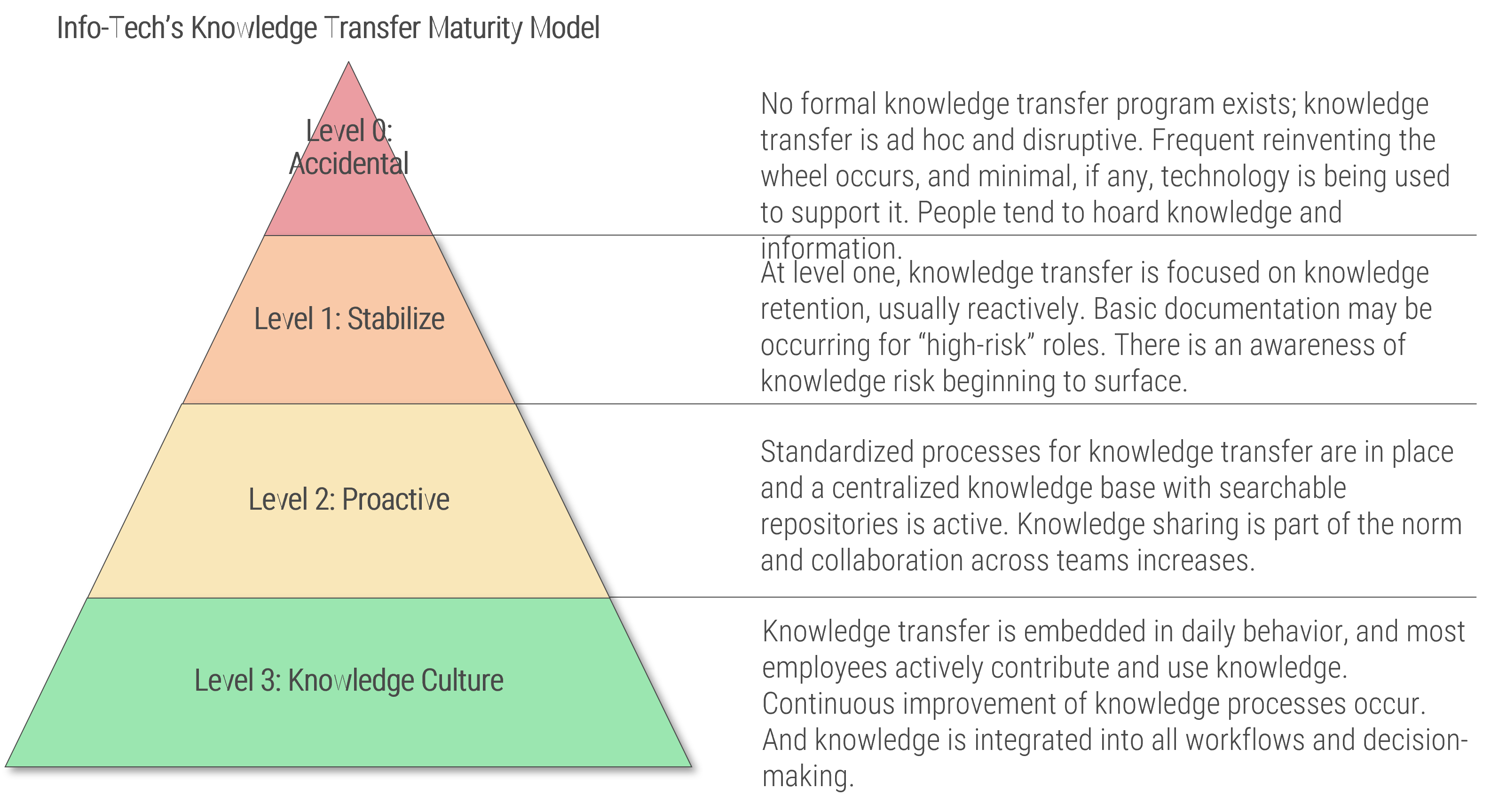
Mature knowledge transfer is part of your day-to-day, not an event
Knowledge culture is a strategic imperative
Old thinking about knowledge transfer is preventing CIOs from focusing on valuable knowledge related priorities to future-proof the workforce and drive innovation.
“Old” Mindset
“Capture knowledge before people leave.”
“Knowledge loss is a risk we must mitigate.”
“Identifying critical roles and people is key.”
“New” Mindset
“Knowledge transfer is a continuous, inclusive practice that benefits everyone.”
“A knowledge culture builds resilience, agility, and collective intelligence.”
“Everyone is a knowledge holder and a knowledge sharer, regardless of role or tenure.”
“Identify the critical knowledge that impacts organizational success.”
Info-Tech’s 2025 CIO Priorities report supports the need for the shift from the old to the new knowledge transfer mindset with the following priorities:
- Shift from managing information to cultivating high-quality knowledge
- Break down silos -- the path to AI value is paved in knowledge.
- Support a culture of continuous learning and knowledge sharing – it is essential to future-proof the workforce and drive innovation.

Executive Brief Case Study
INDUSTRY: Energy
SOURCE: GRC Cybersecurity, Senior Analyst, Anonymous Organization
Prioritizing critical knowledge rather than individual roles at risk leads to decreased onboarding time.
The organization was faced with limited knowledge traceability, fragmented ownership, and a lack of process stewardship. Understanding the potential for employee transitions in the future and slow to productivity onboarding, they realized they needed to shift from episodic to sustainable knowledge transfer in a formalized knowledge management system.
The cybersecurity team initiated the pilot and then transitioned a full IT organization roll out to the project management office to simplify adoption for downstream teams. To ensure traceability and accessibility, GRC was designated the ongoing process owner. Key actions included:
- Prioritizing documentation of critical processes based on business impact rather than individual retirement risk.
- Capturing about 80% of SOPs, especially focusing on those relevant to onboarding new team members.
- Creating a central repository to support emergency knowledge transfer response and programmatic knowledge.
- Embedding knowledge management principles into the culture with a mindset shift from reliance on critical individuals to prioritization of critical knowledge.
Results
The result is a more resilient, scalable, and culturally embedded knowledge transfer process that supports both continuity and onboarding, while allowing managers and teams to understand not just what is done but how and why.
Insight summary
Overarching insight
IT must strategically develop an embedded knowledge culture to move beyond reactionary and fragmented knowledge practice. This is a state where both humans and AI are provided with the information they need for optimal performance. Once AI manages explicit knowledge, people can focus on tacit expertise.
Capture knowledge when it’s created.
The most efficient way to transfer knowledge is to capture it when it’s created, via AI tools integrated into daily workflows, not after-the-fact documentation.
Knowledge transfer helps you scale faster.
Organizations that treat knowledge transfer as part of automation, onboarding, and decision-making pipelines, not as a standalone task, scale faster and lose less over time.
Move beyond documents.
Don’t wait until knowledge is walking out the door to capture it. Shift from reactive, document heavy handoffs to a strategic, AI-powered process woven into daily workflows and culture. Use digital tools to continuously surface, structure, and share knowledge, beyond static documentation.
Embed knowledge culture
Pair technical solutions with cultural enablers to normalize knowledge sharing and make knowledge accessible in workflows.
Info-Tech’s Methodology to Build a Sustainable Knowledge Transfer Strategy
1. Initiate knowledge transfer priorities | 2. Assess knowledge risks | 3. Design transfer plans | 4. Implement the knowledge culture roadmap | |
|---|---|---|---|---|
Phase Steps |
|
|
|
|
Phase Outcomes |
|
|
|
|
Blueprint deliverables
Each step of this blueprint is accompanied by supporting deliverables to help you accomplish your goals:
Knowledge Transfer Tactics Library
Select the right transfer tactic for the type of knowledge and understand how to enhance traditional methods with AI.
Knowledge Area Transfer Plan
Select the right transfer tactic.
Critical Knowledge Identifier
This practical tool helps you evaluate and determine what knowledge is most critical to the success of the organization.
Knowledge Roadmap Presentation
Document your roadmap to make it easy to communicate.
Key deliverable:
Knowledge Assessment & Action Plan
This is a practical guide for taking inventory of critical knowledge areas and assessing individual level of expertise. Use this tool to identify and prioritize knowledge areas and plan to mitigate knowledge risks.
Blueprint benefits
IT Benefits | Business Benefits |
|---|---|
|
|
Info-Tech offers various levels of support to best suit your needs
| DIY Toolkit | Guided Implementation | Workshop | Consulting |
|---|---|---|---|
| "Our team has already made this critical project a priority, and we have the time and capability, but some guidance along the way would be helpful." | "Our team knows that we need to fix a process, but we need assistance to determine where to focus. Some check-ins along the way would help keep us on track." | "We need to hit the ground running and get this project kicked off immediately. Our team has the ability to take this over once we get a framework and strategy in place." | "Our team does not have the time or the knowledge to take this project on. We need assistance through the entirety of this project." |
Diagnostics and consistent frameworks are used throughout all four options.
Guided Implementation
| Phase 1 | Phase 2 | Phase 3 | Phase 4 |
|---|---|---|---|
Call #1: Scope requirements, objectives, and your specific challenges. | Call #2: Assess current maturity & metrics. Call #3: Review knowledge area groupings. | Call #4: Review knowledge assessment map & discuss potential risks. Call #5: Review critical knowledge area transfer plan templates. Call #6: Discuss transfer tactics. Call #7: Discuss roadmap initiatives. | Call #8: Identify and prioritize initiatives & next steps. |
A Guided Implementation (GI) is a series of calls with an Info-Tech analyst to help implement our best practices in your organization.
A typical GI is 8 to 12 calls over the course of 4 to 6 months.
About Info-Tech
Info-Tech Research Group is the world’s fastest-growing information technology research and advisory company, proudly serving over 30,000 IT professionals.
We produce unbiased and highly relevant research to help CIOs and IT leaders make strategic, timely, and well-informed decisions. We partner closely with IT teams to provide everything they need, from actionable tools to analyst guidance, ensuring they deliver measurable results for their organizations.
What Is a Blueprint?
A blueprint is designed to be a roadmap, containing a methodology and the tools and templates you need to solve your IT problems.
Each blueprint can be accompanied by a Guided Implementation that provides you access to our world-class analysts to help you get through the project.
Need Extra Help?
Speak With An Analyst
Get the help you need in this 4-phase advisory process. You'll receive multiple touchpoints with our researchers, all included in your membership.
Guided Implementation 1: Initiate knowledge transfer priorities
- Call 1: Scope requirements, objectives, and your specific challenges.
Guided Implementation 2: Assess knowledge risks
- Call 1: Assess current maturity & metrics.
- Call 2: Review knowledge area groupings.
Guided Implementation 3: Build knowledge transfer plans
- Call 1: Review knowledge assessment map & discuss potential risks.
- Call 2: Review critical knowledge area transfer plan templates.
Guided Implementation 4: Implement the knowledge culture roadmap
- Call 1: Discuss transfer tactics.
- Call 2: Discuss roadmap initiatives.
- Call 3: Identify and prioritize initiatives & next steps.
Contributors
- 3 anonymous contributors
 Drive Adoption and Sustain Transformational Change
 Build an Annual IT Talent Strategy
 Lead Staff through Change
 Build an IT Succession Plan
 Build a Sustainable Knowledge Transfer Strategy
 2020 IT Talent Trend Report
 Pandemic Preparation – The People Playbook
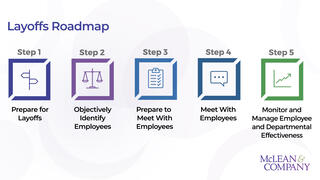 The Complete Manual for Layoffs
 Streamline Your Workforce During a Pandemic
 2021 IT Talent Trend Report
 IT Diversity & Inclusion Tactics
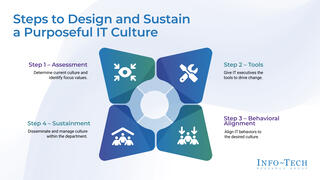 Design and Sustain a Purposeful IT Culture
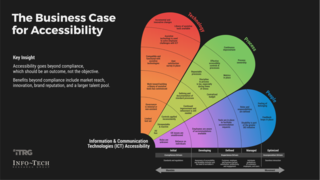 The Accessibility Business Case for IT
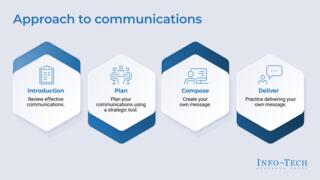 Communicate Any IT Initiative
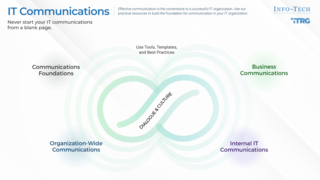 Effective IT Communications
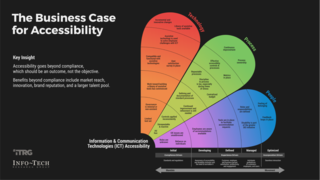 Initiate Digital Accessibility for IT
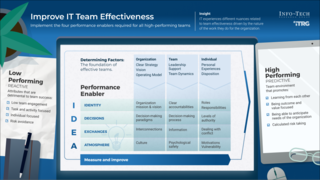 Improve IT Team Effectiveness
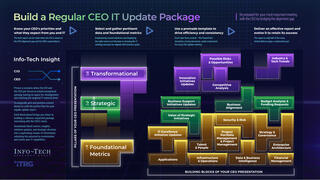 Build a Regular CEO IT Update Package
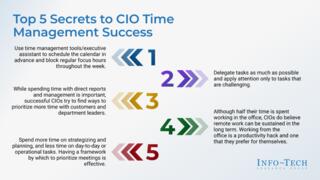 CIO Time Study
 IT Talent Trends 2024
 Crack the Code to Successful Transformation Management
 Chart Your Path: From Enterprise Architect to the Next CIO
 Reputation Equals Revenue: Why Reputation Matters to IT as a Professional Service
 Strengthening the CIO Brand: From Perception to Reality
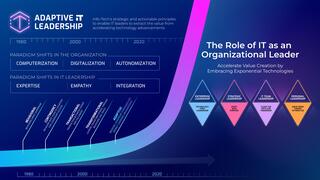 Adaptive IT Leadership
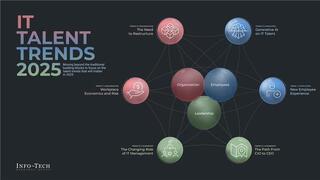 IT Talent Trends 2025
 Adaptive IT Leadership Keynote
 Leading People Change in the Face of Disruptive Technology
 The Race to Develop Talent
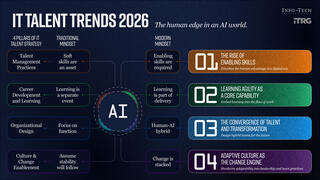 IT Talent Trends 2026