Client Challenge
- Sports organizations often operate across multiple entities (team, venue, partners), each owning different systems and experiences, making unified decision-making difficult.
- Core fan, operational, and commercial systems (ticketing, mobile, POS, sponsorship) are disconnected, limiting a single view of operations and the customer.
- Venue operations must perform cohesively in real time, where any system failure directly impacts revenue, fan experience, and brand reputation.
Common Obstacles
- Misaligned incentives and unclear decision rights slow coordination and create gaps in accountability.
- Point-to-point integrations and inconsistent data ownership make it complex and costly to enable real-time, cross-system orchestration.
- The need for near-zero downtime discourages change, making it difficult to modernize systems or introduce new capabilities safely.
Info-Tech's Approach
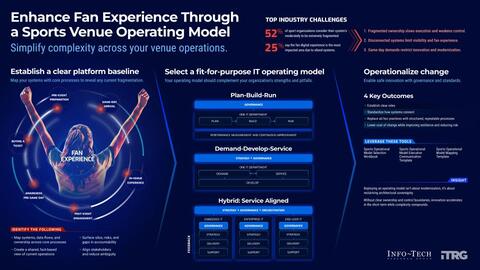
- Map systems, data flows, and ownership across core processes to create a shared view of how the venue operates today and where fragmentation, silos, and risk are impacting operations.
- Define the right model based on control boundaries, decision rights, and orchestration needs across the venue ecosystem.
- Implement clear roles, integration patterns, and operating cadences to embed the model into day-to-day operations.