



Modernize 5G and fiber with resilience by design under CapEx pressure
The Challenge
CSPs must extend 5G and fiber coverage while their networks grow more software-defined and interdependent.
Each modernization step now sits inside cloud-native, distributed architectures, so it adds dependency risk at the same rate it adds capacity. The real question is no longer how fast coverage expands, but how quickly a fault can be isolated before it cascades across network, cloud, and operations layers.
Why It Matters
Resilience, not raw coverage, now decides whether modernization earns its capital.
Mobile data traffic grew more than 50% a year between 2012 and 2025 while telecom service revenue rose barely 1% a year, so every unstable change erodes already thin returns ("Issue Brief: AI Infrastructure," McKinsey, 2025). Building resilience into modernization upfront is what separates CapEx that compounds value from CapEx that compounds risk.
The Solution
Engineer modernization around service resilience
Define success with outage minutes, failed-change rate, and restoration time, not just deployment milestones.
Align network and IT change governance
Run joint planning and change control across network, infrastructure, and operations teams so major changes are coordinated, not siloed.
Build observability before adding complexity
Strengthen dependency mapping and service-impact visibility before layering on more virtualization and automation.



Streamline OSS/BSS to accelerate fulfillment and converged offers
The Challenge
Legacy OSS/BSS stacks slow every launch as portfolios converge across consumer, enterprise, and IoT.
Heavily customized core platforms create integration friction, fragment data, and stretch delivery timelines. Left unaddressed, that system sprawl becomes the ceiling on how fast a CSP can sell, fulfill, and bill a converged offering.
Why It Matters
OSS/BSS performance sets the ceiling on growth speed and cost to serve.
Order management, billing, and assurance are the engine behind revenue and customer experience, yet legacy integration keeps costs high and launches slow; modular, cloud-native architectures such as TM Forum's Open Digital Architecture can cut OSS/BSS integration costs by more than 30% ("Reimagining Telco With Microsoft," Microsoft, 2025). Modernizing the engine now is the difference between scaling converged offers and being throttled by technical debt.
The Solution
Standardize products and processes first
Reduce catalog and process inconsistency ahead of broad platform shifts, so integration and fulfillment become repeatable.
Simplify the application and integration landscape
Retire redundant platforms, cut unnecessary customization, and enforce standard APIs and orchestration across the OSS/BSS estate.
Manage modernization by order-to-cash outcomes
Track activation lead time, fallout rate, and billing accuracy rather than technology completion alone.
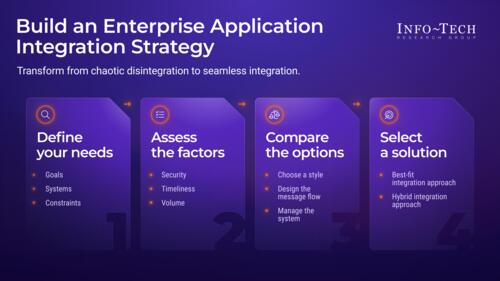
Scale AI and closed-loop automation without breaking reliability or unit economics
The Challenge
AI moves easily into CSP pilots but stalls on the way into live operations.
Operators are testing AI across network operations, customer experience, and internal workflows, yet weak controls, uneven data quality, and unclear decision accountability widen the blast radius as autonomy grows. Where AI can touch fault diagnosis, capacity, or customer decisions, scaling safely demands far more discipline than experimentation.
Why It Matters
Automation maturity is becoming the line between CSPs that scale efficiently and those buried in overhead.
Nearly every operator is piloting AI, but only 57% have scaled use cases across multiple domains, and just 16% call AI the new normal ("Telcos’ AI Inflection Point," McKinsey, 2026). The value is real only when reliability and unit economics hold at production volumes, so the priority is actually disciplined scaling, not more pilots.
The Solution
Gate AI before it scales into production
Require explicit rollback, override, blast-radius, and auditability gates before any AI use case enters live workflows.
Separate platform readiness from domain readiness
Treat data, tooling, and controls as IT-owned enablers, and have network and customer owners validate domain logic.
Prove economics at production volume
Scale only when a use case still performs at real-world volume without unpredictable cost, degraded service, or new operational risk.
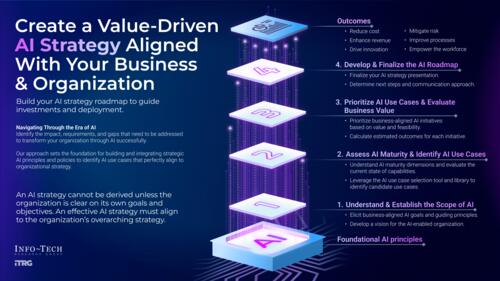


Secure software-defined networks and network APIs end to end
The Challenge
Virtualization and open APIs widen the attack surface across both IT and network domains.
As architectures open to partners, developers, and cloud ecosystems, CSPs inherit more interfaces, identities, and concentrated points of control. Securing the core is no longer enough when API access, orchestration layers, and partner interactions each create new single points of failure.
Why It Matters
In telecom, a security failure is a resilience failure.
State-aligned espionage against telecom intensified through 2025, with the Salt Typhoon campaign alone affecting at least three EU member states ("ENISA Threat Landscape 2025," ENISA, 2025). Because networks underpin critical services and new API-based business models, weak security erodes not just cyber posture but enterprise trust and revenue credibility.
The Solution
Converge security across IT and network
Unify control frameworks, monitoring, and incident response so enterprise IT and network operations defend as one.
Treat APIs as security products
Build identity, consent, rate limiting, anomaly detection, and partner governance into exposed network capabilities from day one.
Harden shared points of failure
Strengthen shared platforms and orchestration layers that could take down multiple services if compromised.
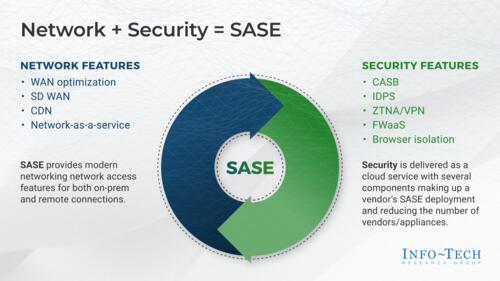
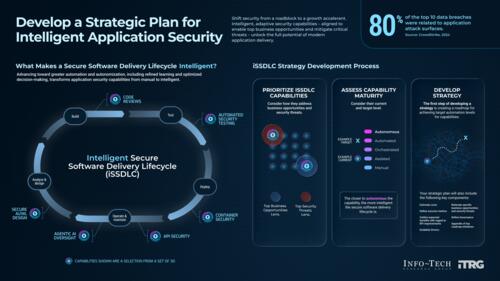
Reconnect digital journeys to cut churn and cost to serve
The Challenge
Digital journeys break wherever customer intent crosses too many disconnected systems.
A single journey can span discovery, signup, identity, payment, order, provisioning, billing, and assurance across multiple apps and partners. When those systems are loosely connected, handoffs fail, friction rises, and the promised experience drifts from what operations can actually deliver.
Why It Matters
Customer journey friction drives churn and cost to serve at the same time.
Poor customer journeys increase fallout, repeat contacts, and failed conversions, and customer care is one of the largest value pools for telco AI, with up to 50% of activity automatable and 30% to 45% productivity gains available ("Beyond the Hype: Capturing the Potential of AI and Gen AI in Tech, Media, and Telecom," McKinsey, 2024). In commoditized markets, fixing the journey is now a faster route to margin than chasing new acquisition.
The Solution
Fix the highest-volume friction first
Start with provisioning fallout, billing disputes, and service-quality contacts where cost and frustration concentrate.
Tie journey design to operational reality
Connect customer, product, and assurance signals so digital journeys reflect what can actually be delivered and supported.
Automate to remove repeat work
Focus AI and automation where it cuts repeat contacts, shortens resolution time, and improves first-contact resolution.
Monetize network APIs through a productized developer platform
The Challenge
Exposing network APIs is easy; monetizing them at scale is not.
Standardized APIs only create revenue when they sit on a repeatable foundation for onboarding, metering, charging, compliance, and partner support. Without that operating model, a CSP has capabilities to expose but no product to sell.
Why It Matters
Network APIs are the clearest growth lever beyond connectivity, but only for operators that productize them.
GSMA Open Gateway now spans 73 operator groups and 285 networks covering close to 80% of mobile subscribers, and the industry focus has shifted squarely to monetization ("GSMA Open Gateway: State of the Market, H1 2025," GSMA Intelligence, 2025). Operators that run APIs as a formal developer product, not a loose set of endpoints, are positioned to capture that shift.
The Solution
Start with a few high-value APIs
Launch a narrow set of use cases with clear demand and measurable value rather than a broad, weak portfolio.
Productize the developer experience end to end
Build onboarding, documentation, sandboxes, metering, charging, and support as one developer platform offer.
Govern exposure against abuse and load
Ensure monetized APIs account for service-level impact, demand spikes, fraud, and partner misuse from the outset.

Govern hybrid and multicloud with FinOps and hyperscaler discipline
The Challenge
Multicloud flexibility turns into uncontrolled complexity without strong governance.
CSP workloads now span private infrastructure, public cloud, cloud-native platforms, and multiple hyperscaler tool chains. Without clear rules for placement, accountability, and cost, the flexibility operators want quietly becomes volatility they cannot see.
Why It Matters
Cloud decisions now shape service agility, resilience, and financial performance together.
Cloud-native architecture does not automatically improve economics, and hidden costs add up fast, with cloud data transfer (egress) fees alone estimated at $70 billion to $80 billion a year industry-wide ("Issue Brief: AI Infrastructure," McKinsey, 2025). Governing placement, portability, and supplier dependence with FinOps discipline is what keeps multicloud an advantage rather than a leak.
The Solution
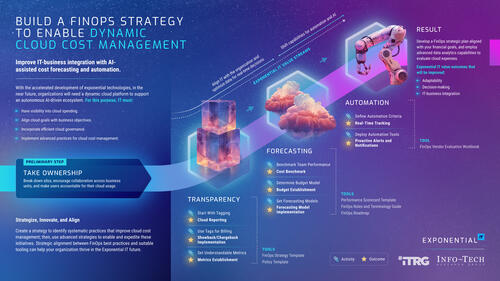
Make product-level FinOps operational
Allocate cloud cost to products, domains, and services so leaders see which workloads create value and which burn spend.
Set placement and exit rules upfront
Define sovereignty, latency, resilience, and portability rules before workloads are deployed, not after.
Manage hyperscalers as critical partners
Use shared metrics, defined incident interfaces, and contractual levers to hold hyperscalers to the same rigor as other strategic dependencies.


Industrialize private networks, edge, and IoT delivery
The Challenge
Enterprise demand for private networks, edge, and IoT is real, but delivery rarely repeats cleanly.
Requirements swing widely by vertical, maturity, criticality, and integration need. When product, provisioning, assurance, and lifecycle support are not standardized enough to absorb that variation, every deal becomes bespoke and margins erode.
Why It Matters
Enterprise connectivity is a core diversification path, but inconsistency costs both profit and trust.
GSMA Intelligence puts the addressable enterprise opportunity beyond core connectivity at more than $400 billion, around 35% of operator revenue and growing far faster than the 3% core B2B base ("Telcos Eye $400bn Enterprise Opportunity," GSMA Intelligence, 2024). Once these services are embedded in customer operations, inconsistent delivery does outsized damage, so repeatability is the key to real growth.
The Solution
Own the lifecycle end to end
Assign clear ownership across design, deployment, assurance, and support for every offer.
Standardize verticalized playbooks
Align product design, deployment steps, and service models into repeatable patterns for priority industries and use cases.
Protect margin with cross-domain visibility
Track provisioning effort, support demand, and exception handling to surface hidden delivery complexity and margin risk.

Cut network energy intensity through telemetry and smarter design
The Challenge
Network expansion, data growth, and AI workloads keep pushing energy use up across distributed infrastructure.
Traffic has grown far faster than operator energy use, but consumption is shaped by architecture, traffic management, and design choices made long before costs surface in OpEx. That makes energy a strategic engineering question, not just a facilities line item.
Why It Matters
Energy is both a major cost driver and the industry's largest decarbonization lever.
Mobile operational emissions fell 8% between 2019 and 2023 even as data traffic quadrupled, but the sector must now cut emissions about 7.5% a year to stay on a net-zero path ("Mobile Industry Emissions Down 8%, but Pace Must Double to Hit Net Zero," GSMA, 2025). Energy efficiency therefore drives operating cost, carbon commitments, and the long-term viability of network choices at the same time.
The Solution
Measure energy at the operational level
Use site, domain, and workload telemetry to find outliers and tie usage to actual network operations.
Optimize across software, hardware, and sites
Combine sleep modes, dynamic optimization, hardware refresh, and design changes rather than treating energy as a facilities-only issue.
Build energy into planning and procurement
Make energy performance a decision criterion in network planning, modernization, and vendor selection.

Rewire the operating model and skills for a software-driven CSP
The Challenge
Operating models are being outpaced by the skills and coordination cloud-native networks demand.
A software-driven CSP needs different capabilities than a legacy infrastructure-led operator, spanning new skills, process designs, and governance. When operators keep legacy role boundaries and fragmented ownership, transformation stalls even when the target architecture is clear.
Why It Matters
Technology transformation cannot outrun the skills and operating model behind it.
GSMA Intelligence warns that operators must bridge critical skills gaps to capture a non-telco IT services market worth around $500 billion in 2025 and nearing $1 trillion by 2030 ("Operators Must Transform Now to Unlock $1 Trillion Enterprise Tech Opportunity," GSMA Intelligence, 2025). Without new skills, accountabilities, and delivery patterns, modernization slows, supplier dependence deepens, and retiring experts take institutional knowledge with them.
The Solution
Pilot new delivery models where risk is lower
Start in IT and platform domains where governance can be strengthened safely, then extend into network operations once proven.
Clarify accountability across IT and network
Define where platform ownership ends, where domain ownership begins, and where joint accountability is required.
Build skills tied to production outcomes
Prioritize reliability engineering, platform engineering, data governance, and automation controls over generic upskilling.