



Defend every layer with mission-grade zero trust
The Challenge
Perimeter defenses no longer protect a distributed defense enterprise.
Modern networks span commercial cloud, partner systems, mobile users, and operational technology that all sit well beyond any fixed boundary, so a single compromise can move laterally into mission systems. Persistent intrusion attempts and long recovery times make the point plainly: security has to be engineered into every layer, not bolted onto the edge.
Why It Matters
Zero trust is now the baseline for mission resilience, not an aspiration.
Continuous verification limits lateral movement, contains compromise, and lets forces share data securely with partners, which is why the US Department of Defense set a target of reaching its zero trust goals by fiscal 2027 ("DoD Zero Trust Strategy," 2022). Organizations that treat it as a tooling project rather than an enterprise operating model will miss that bar and the protection it confers.
The Solution
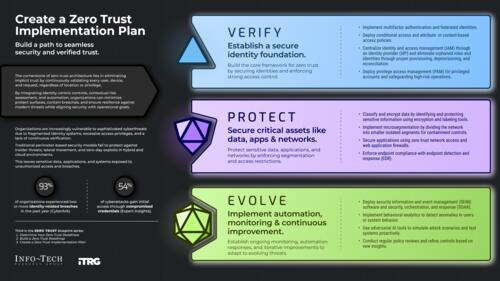
Map to the DoD zero trust reference architecture
Benchmark current maturity against the seven pillars of the DoD zero trust framework across enterprise IT, OT, and multiclassification networks, and set target levels that account for cross-domain and coalition constraints.
Unify governance across IT, OT, and classified domains
Stand up architecture governance over identity, micro-segmentation, and continuous monitoring so systems that evolved independently, including weapons platforms, are controlled under one model.
Fund zero trust as a multi-year program, not a tool purchase
Secure executive sponsorship and sustained funding tied to measurable milestones, because enterprise-scale zero trust depends on adoption and accountability rather than isolated point products.



Build a secure cloud backbone across classification levels
The Challenge
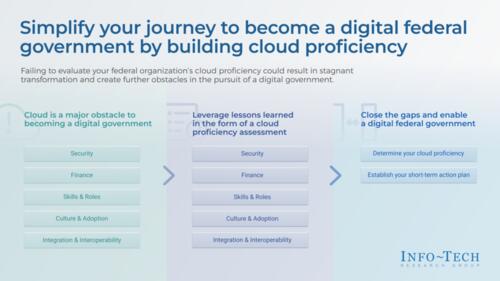
Cloud adoption in defense is harder than in any commercial sector.
Classification levels, data sovereignty rules, coalition requirements, and legacy dependencies all constrain how and where workloads can run, which slows migration and inflates cost. Treating cloud as a simple lift of existing systems leaves the enterprise paying for complexity without ever gaining mission agility.
Why It Matters
Cloud is now the backbone for analytics, AI, and resilient mission systems, so delays compound fast.
Recent defense cloud guidance frames migration as foundational to readiness rather than a cost play ("OSD Cloud Migration Primer," DoD, 2025), and organizations that stall face higher sustainment costs and widening capability gaps against better-equipped partners. The advantage goes to those who treat secure, multiclassification cloud as core infrastructure today.
The Solution
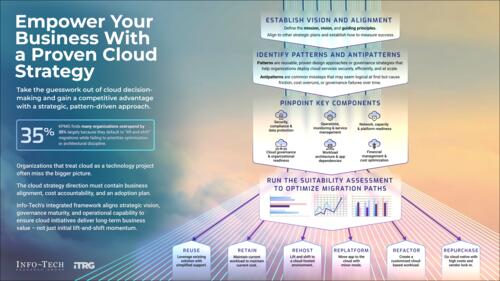
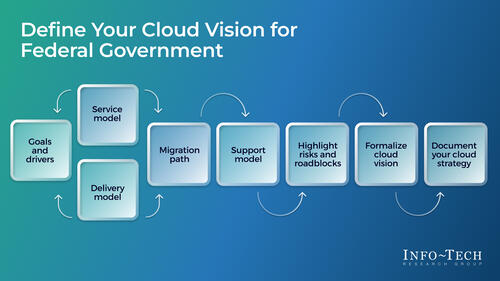
Define workload placement by classification level
Establish a clear framework for what runs in commercial hyperscale, sovereign cloud, and on-premises secure enclaves so placement decisions are repeatable and compliant with national and alliance controls.
Build in-house cloud engineering capability
Stand up a cloud engineering function that can manage multicloud operations, negotiate enterprise agreements, and enforce portability, reducing dependence on any single hyperscaler.
Modernize applications as you migrate
Refactor or retire applications during migration rather than lifting and shifting, so the move to cloud sheds legacy inefficiencies instead of replicating them.


Operationalize data as a mission asset
The Challenge
Defense data is abundant but trapped.
It lives across incompatible platforms and strict classification boundaries, which makes enterprise access, reuse, and fusion difficult. Until data is governed as a shared asset rather than a byproduct of individual systems, it stays siloed and underused.
Why It Matters
Data governance is the hinge for AI, interoperability, and real-time command and control.
Allied bodies now treat consistent data standards and sharing frameworks as strategic infrastructure ("Data Strategy for the Alliance," NATO, 2025), because cross-domain fusion and coalition operations are impossible without them. Mature governance is what converts scattered data into operational advantage.
The Solution
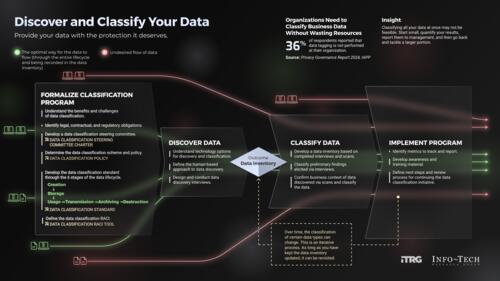
Govern data with classification-aware controls
Implement governance that integrates security classification, data ethics, and cross-domain access so mission-critical data is both protected and usable.
Treat data architecture as core infrastructure
Manage pipelines, metadata, and quality assurance as foundational infrastructure, because data maturity is what enables AI, decision support, and coalition interoperability.
Operationalize sharing with allies and agencies
Stand up classification-aligned data-sharing frameworks with international and domestic partners so mission data moves with minimal friction.


Turn AI readiness into decision advantage
The Challenge
Defense leaders recognize AI as decisive, yet most organizations are not ready to scale it.
The data foundations, governed platforms, and skilled people needed to move from pilots to production are largely missing, so promising prototypes stall before they reach the field. Rising investment without readiness simply funds experiments that never become mission capability.
Why It Matters
AI advantage is unattainable without the readiness to scale it.
With 81% of aerospace and defense organizations already using or planning to use AI and machine learning ("2025 Aerospace and Defense Industry Outlook," Deloitte, 2024), the gap is opening between those who built data and governance foundations and those still running disconnected pilots. The window to lay that foundation before AI becomes table stakes is closing quickly.
The Solution
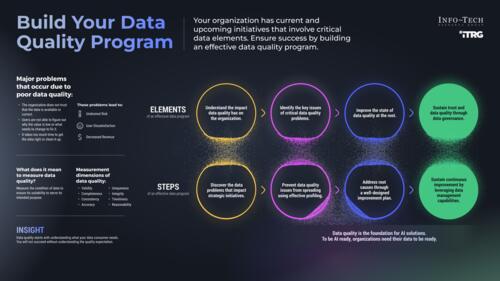
Build the data foundation before the models
Stand up enterprise data pipelines, metadata standards, and classification-aligned governance first, since model quality and safety depend entirely on consistent, trustworthy data.
Establish defense-appropriate AI governance
Formalize rules for model use, auditing, bias mitigation, and autonomy limits that exceed commercial norms, because mission and safety stakes demand tighter oversight.
Invest in workforce AI literacy
Dedicate a defined share of every AI program budget to upskilling and adoption so personnel can use, supervise, and trust models rather than resist them.


Retire technical debt to reclaim mission capacity
The Challenge
Aging systems quietly tax every modernization effort.
Fragmented architectures, stove-piped applications, and outdated platforms block interoperability, widen the attack surface, and consume budget that should fund new capabilities. Every year these systems persist, the cost and risk of carrying them compound.
Why It Matters
Retiring legacy systems is the precondition for nearly every other modernization goal.
Industry forecasts put US aerospace and defense AI and generative AI spending at $5.8 billion by 2029, about 3.5 times 2025 levels ("2026 Aerospace and Defense Industry Outlook," Deloitte, 2025), yet that investment cannot pay off while it runs on architectures that block integration and secure data exchange. Modern, modular platforms are what let defense organizations actually operate at mission tempo.
The Solution
Quantify technical debt and rank by mission risk
Assess systems by operational dependency, security exposure, and integration cost to build a defensible modernization roadmap that targets resources where they unlock the most downstream value.
Replace or refactor rather than rehost
Treat modernization as rearchitecture toward modular, secure-by-design platforms, because rehosting legacy systems in the cloud only carries their inefficiencies forward.
Fund modernization on a rolling basis
Redirect the savings from retiring legacy systems into continuous modernization so platforms keep evolving instead of drifting back into technical debt.


Build a cleared, digital-ready defense workforce
The Challenge
Defense cannot hire and keep the digital talent its missions now demand.
Clearance timelines, fast-rising skill requirements, and direct competition with industry make AI, cyber, software, and data expertise especially hard to secure. Without a deliberate talent strategy, modernization plans outrun the people available to deliver them.
Why It Matters
A skilled, cleared workforce is now as decisive as any platform.
Workers with AI skills already command a 56% wage premium over comparable peers ("AI Linked to a Fourfold Increase in Productivity Growth," PwC, 2025), a signal of how fiercely defense is competing for the very talent modernization depends on. Without a deliberate pipeline and continuous upskilling, critical systems become unsustainable and contractor-dependent.
The Solution
Build cleared-talent pipelines with education partners
Partner with universities and training institutions to develop recruitment pipelines of cleared and clearance-eligible candidates in AI, cyber, software, and data.
Shorten clearance and onboarding timelines
Redesign internal clearance and onboarding processes to cut delay, since clearance bottlenecks are a primary reason defense loses candidates to commercial employers.
Make upskilling continuous, not one-time
Deliver ongoing training aligned to emerging mission needs so internal talent keeps pace with fast-changing platforms instead of becoming contractor-dependent.


Illuminate the defense industrial base
The Challenge
The defense industrial base is deep, global, and poorly understood below the prime contractor.
Sole-source suppliers, multitier dependencies, and shrinking domestic capacity create concentration risks that an adversary can exploit or a single disruption can expose. Without visibility into the lower tiers, leaders are managing risk they cannot actually see.
Why It Matters
Supply-chain illumination has become a direct measure of mission assurance.
The Department of Defense depends on a network of more than 200,000 suppliers, yet its visibility efforts remain uncoordinated and shallow below the top tiers ("Defense Industrial Base," GAO, 2025), leaving readiness exposed to disruption, counterfeits, and adversarial infiltration. Seeing the lower tiers early is what turns supply risk from a crisis into a managed condition.
The Solution
Deploy multitier illumination tooling
Implement platforms that map Tier 2 through Tier 4 suppliers and surface upstream bottlenecks, giving early-warning indicators and dependency views that enable proactive mitigation.
Screen for cyber, counterfeit, and compliance risk
Extend monitoring to software, firmware, and component suppliers so tampering, counterfeits, and compromised code are caught through authentication and assurance checks.
Diversify toward allied and domestic sources
Use illumination insights to prioritize redundancy and sovereign capability, reducing concentration risk and ensuring continuity of supply in contested environments.

Acquire digital capability at mission speed
The Challenge
Acquisition timelines were built for platforms, not software.
Multi-year processes and heavy administrative overhead mean digital capabilities often arrive late, already dated, or misaligned with the mission that requested them. When the buying cycle is slower than the technology cycle, the enterprise is behind before delivery.
Why It Matters
Acquisition speed now directly determines whether modernization succeeds.
As defense spending commitments rise, recent analysis urges flexible, outcome-driven procurement models precisely because multi-year cycles leave digital capability obsolete on arrival ("Defence Agile Procurement Insights and Analysis," CDSN, 2025). Buying at the pace of the technology, not the platform, is what keeps delivered capability aligned with the mission.
The Solution
Adopt agile, outcome-driven acquisition
Shift from linear, multi-year pathways to iterative procurement that delivers capability incrementally and adjusts to evolving mission needs.
Build compliance in from the start
Embed FAR, DFARS, and ITAR requirements at project inception so approvals move faster and late-stage compliance issues do not reset the cycle.
Widen the vendor base and support smaller suppliers
Create clear onramps for small and medium enterprises while preserving competition, improving resilience, and bringing in faster digital innovation.


Engineer interoperability for coalition advantage
The Challenge
Coalition missions demand seamless integration, but allied digital systems remain fragmented.
Differing standards, architectures, and data models limit how effectively nations can operate together across air, land, sea, space, and cyber. Interoperability bolted on after the fact rarely holds up under operational tempo.
Why It Matters
Interoperability is a strategic requirement for effective coalition operations.
Shared situational awareness, coordinated logistics, and synchronized command and control all depend on digital cohesion, which is why NATO has made digital transformation and common standards an explicit alliance priority ("NATO’s Digital Transformation Implementation Strategy," NATO, 2024). Nations unable to interoperate at scale risk reduced influence and a diminished role in collective missions.
The Solution
Embed interoperability in enterprise architecture from the start
Define standards, data models, and interfaces before selecting technology so domestic systems can connect cleanly to allied digital backbones.
Align national investment with alliance standards
Map modernization roadmaps to NATO and coalition interoperability expectations, including STANAG standards, to reduce integration cost and stay relevant in multinational operations.
Engineer cross-domain, multiclassification sharing
Implement cross-domain solutions and classification-aware interfaces so coalition partners can share data in real time without breaching national security boundaries.

Govern digital transformation across mission, risk, and adoption
The Challenge
Transformation stalls on culture long before it stalls on technology.
Hierarchical structures, risk-averse norms, and fragmented ownership slow adoption even when the tools work exactly as intended. Treating transformation as a technology rollout, rather than an organizational change, is why so many efforts quietly fade.
Why It Matters
Culture and governance decide whether transformation sticks.
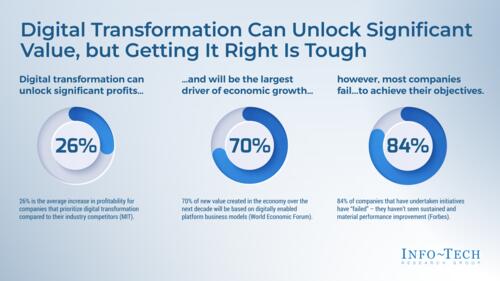
Fewer than 30% of digital transformations succeed at improving performance and sustaining the gains ("Unlocking Success in Digital Transformations," McKinsey, 2018), and the difference is almost always leadership alignment, capability building, and clear ownership rather than the technology itself. Strong governance sustains momentum and ensures initiatives reinforce mission outcomes.
The Solution
Establish enterprise digital governance
Create cross-functional governance bodies spanning operations, IT, HR, and capability development to prevent siloed efforts and set the cadence for transformation.
Make change management a required workstream
Treat change management as a funded part of every major digital program, not an optional add-on, to increase adoption and reduce cultural resistance.
Build capability and psychological safety
Invest in training pathways and norms that let teams experiment without fear of punitive outcomes, since that is what sustains adoption of new technology.