Digital Disruption
with Geoff Nielson


Our Guest Dag Kittlaus Discusses
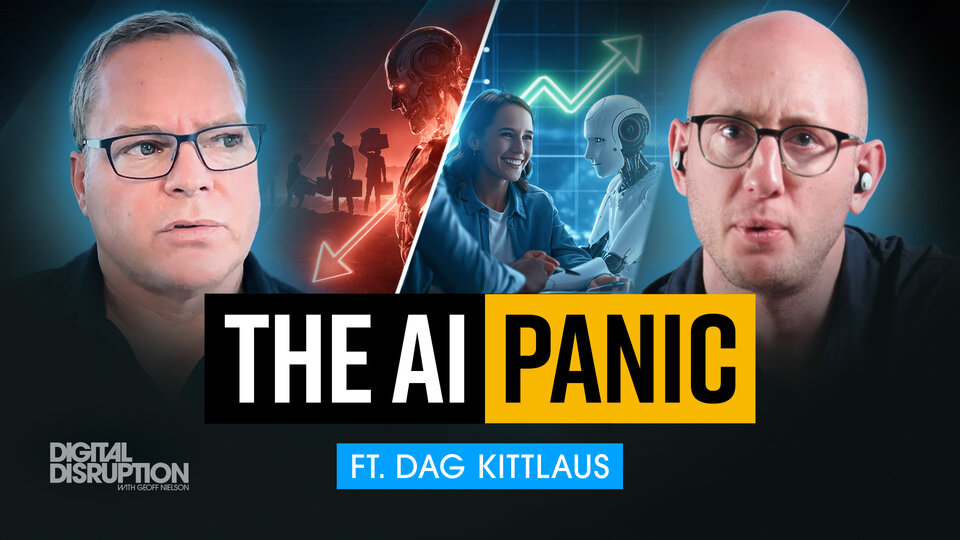
Will AI Take Your Job? Dag Kittlaus Separates Hype From Reality
AI is moving faster than most organizations can keep up with, but according to Siri co-creator Dag Kittlaus, the biggest challenge isn't the technology itself. It's adoption.
In this episode, Dag shares his insights on how artificial intelligence will reshape your career, your business, and the future of work.
Drawing on his experience building Siri and investing in the next generation of AI startups, Dag explains why widespread AI-driven job loss is unlikely in the near term and how business leaders can successfully integrate AI into their organizations. He explores the important differences between AI capability and AI diffusion, arguing that this distinction will shape the next decade of innovation, productivity, and economic growth.
The conversation covers AI productivity gains, enterprise AI adoption, AI-first startups, Apple's AI future, personalized AI assistants, healthcare innovation, data centers, AI infrastructure, and the emerging opportunities that business and technology leaders can't afford to ignore.
Whether you're a CIO, business leader, entrepreneur, or technology professional, this episode offers practical insights into how artificial intelligence is transforming industries and why understanding AI today may be one of the most important investments you can make in your future.
00;00;01;08 - 00;00;17;00
Dag Kittlaus
It's in everybody's interest. No matter what your future, what your career looks like. Start understanding this and how it applies to whatever your interest or career path is if you ignore it. Yeah. I think you're screwed.
00;00;17;02 - 00;00;39;24
Geoff Nielson
This is a show about the future of tech and the future of work. I'm Geoff Nielsen, and today my guest is Dag Kittlaus. He's the co-creator of Siri. And to quote Steve Jobs, cracked AI in a consumer friendly way. He quit Apple the day Steve Jobs died, but has been living and breathing AI ever since. I'm interested in what we can learn from his time at Apple, but I'm more interested in what's coming next.
00;00;39;26 - 00;00;53;08
Geoff Nielson
How can modern AI tools actually help, and are they going to lead to catastrophic job loss? And how can we, as leaders make sure that we're ready? Let's find out.
00;00;53;11 - 00;01;15;09
Geoff Nielson
Dag, thanks so much for joining today. You know, I wanted to jump right into it. I mean, you built Siri. You did. I before I you know, you worked with Steve Jobs. I'm curious, you know, from your perspective, when you look at the AI landscape right now, what it can do, where it's going next? Where do you see the promise?
00;01;15;12 - 00;01;52;00
Dag Kittlaus
The promise is everywhere. And as is the peril, so to speak. I'm not a believer in the fact that these incredible capabilities are going to wipe out white collar jobs in the next 18 to 24 months. I do see that there's already beginning to be a semblance of breakthroughs in terms of applying these incredible capabilities to research, and you can see there's some obvious productivity gains.
00;01;52;02 - 00;02;28;11
Dag Kittlaus
I see, I see, you know, like others, a very broad based, application of the technology, you know, for the betterment and, and productivity and ultimately GDP growth and, and a lot of the narrative that you've already heard. But I think one of the main areas that people underestimate is the difference between capability and diffusion, which is to say there's there's a lot going on in the labs that's incredible.
00;02;28;11 - 00;02;41;21
Dag Kittlaus
But sitting in, you know, Chicago, it's going to take a while for that to actually get out into all of the industry, and make the market impact. We'll expect.
00;02;41;24 - 00;03;03;21
Geoff Nielson
I'm curious when you when you talk about the diffusion and I guess the kind of this the slower pace of adoption than people, you know, wished for or hoped for. How much of that do you see as being just sort of a, human centric issue in terms of the people actually adopting this stuff versus is this, you know, a design issue on the part of some of the builders?
00;03;03;21 - 00;03;15;01
Geoff Nielson
And, you know, the reason I ask that is I think about Siri and I think about sort of that, you know, you know, the consumer centric nature of it. Where does it sit or is it both?
00;03;15;03 - 00;03;47;29
Dag Kittlaus
It's definitely both. So, you know, the buzzwords these days are if you if you spend a lot of time in it, which I do, is they're looking to create 100% workflows. So people are using AI in almost every industry for a limited set of things, but it's not yet replacing what, you know, a full, you know, role is in a company because it only does a part of their job.
00;03;47;29 - 00;04;17;08
Dag Kittlaus
So, you know, a lot of the big players anthropic, OpenAI are sort of copying Palantir's playbook, which is forward deployed, engineers, which are, you know, knee deep into various industries and learning the problems from the inside out, that I can help with, and then designing and building those on and off ramps to create that sort of single workflow, you know, one at a time.
00;04;17;10 - 00;04;31;16
Dag Kittlaus
So that sort of thing is what's going to make this AI, you know, revolution or whatever you'd like to call it. Truly, you know, a part of the fabric of most businesses.
00;04;31;19 - 00;04;56;20
Geoff Nielson
You you mentioned earlier that you don't see a huge displacement of white collar jobs. Is that. I want to unpack that a little bit, because when we talk about AI revolution or the impact that I do hear you talking about is that that I won't replace jobs or it will replace them, but with even more new jobs that are focused on AI.
00;04;56;22 - 00;05;24;21
Dag Kittlaus
I don't have a big short term worry about, you know, unemployment, rising faster than we're able to ingest the new capabilities. We've gone through this with many, many waves of new tech all the way back from agriculture. Used to be 80% of every, you know, worker in the United States in 1800. Now it's less than 1%.
00;05;24;23 - 00;05;58;27
Dag Kittlaus
So it's really the rate at which, these technologies diffuse, so to speak, and become a part of the fabric that matters in terms of what does it do to unemployment? Of course, it's going to create a whole new wave of jobs simultaneously. The question will be, you know, do the efficiencies and the resultant, you know, decrease or, you know, in, in employment offset, you know, the gains.
00;05;58;29 - 00;06;06;11
Geoff Nielson
Rate and your sense is that they will because of all the all the doors that they'll opened.
00;06;06;13 - 00;06;43;08
Dag Kittlaus
I mean, there isn't much evidence yet that there's a bunch of AI unemployment that's happening. Yes, there's layoffs, but honestly, you know, a lot of these companies use is an excuse to lay off people they want to lay off. Anyway, if you look, you know, look, find me a good example of a company who laid off a significant percentage and proportion of their workforce and can show, you know, a dramatic increase in the bottom line and productivity.
00;06;43;10 - 00;07;14;06
Dag Kittlaus
That's hard to find, right now. And in fact, you know, anthropic did their own study where 42% of people that laid people off because they thought they had AI efficiencies has have begun to hire those people back. So this is going to take a while. I think it's going to be just as impactful as, you know, the hype will will have it, you know, have you believe, it's just going to take a lot longer than people think.
00;07;14;08 - 00;07;46;01
Geoff Nielson
There's there's an implication there that rushing to lay people off and then try and figure out what they were doing and replace them with AI or, you know, free up, capital to invest in AI, that there's, you know, business leaders should should heed a bit of caution there. I'm curious if you know, from your perspective, if there's a better way to be thinking about how to actually adopt this technology or how to modernize your organization for AI.
00;07;46;04 - 00;07;56;28
Dag Kittlaus
So is the question, what should that what should companies be doing in order to sort of maximally, you know, use this technology to their advantage or.
00;07;57;00 - 00;08;14;02
Geoff Nielson
Yeah, yeah. The question is if we if we're not convinced that laying people off so we can bring in AI is the right solution and you know, half of us who do that are going to end up just bringing back those same employees anyway. What's what's the better road?
00;08;14;05 - 00;08;54;04
Dag Kittlaus
The better road is to get have a systematic, process by which you start using the technology, understand how it can help your particular business. And of course, various industries will have, you know, very different ways that they'll do that. But get your hands dirty, start using it. Recognize where it can help, where productivity gains are really had, and, you know, encourage people to use it and to come up with their own ideas about how, you know, to use it to make their themselves even more productive.
00;08;54;07 - 00;09;30;24
Dag Kittlaus
So, like anything else, it's all hype until you're on the ground, you know, in front of your desk trying to get something done. And hence, that is why a lot of the companies that are going after the enterprise aspect of of, you know, getting AI productivity are literally just sending people in to really understand the business and to create custom, you know, AI modules, you know, like anthropic doing for legal and accounting and all these things, that will be prevalent, that will be a huge Cod.
00;09;30;24 - 00;09;36;26
Dag Kittlaus
Is it industry, to help those businesses figure that up?
00;09;36;28 - 00;10;10;23
Geoff Nielson
If you don't work in enterprise technology, you can skip ahead or take a quick brain correction. But if you do, Infotech is your secret weapon. Infotech helps IT teams get projects done faster, better, and at a lower cost. Whether you're rolling out new tech, improving processes or just looking for cost savings, Infotech provides unlimited access to practical tools and expert guidance you need to execute at a fraction of the cost of traditional consulting, no matter the project from AI strategy to cybersecurity to vendor negotiation, Infotech has you covered.
00;10;10;26 - 00;10;30;03
Geoff Nielson
Check it out at the link below and don't forget to like and subscribe! You mentioned that you personally are pretty deep in using these tools. I'm curious from that perspective, where do you see the most value? How do how do they help you the most in terms of the work that you're doing?
00;10;30;05 - 00;10;50;29
Dag Kittlaus
So I'm I'm not on a specific project at the moment. I just got through a gantlet of doing three start ups in a row, over the last, you know, ten, 12 years. So right now I'm spending a lot of time just understanding, you know, as as anyone knows, us here, this stuff is changing on a daily or weekly basis.
00;10;50;29 - 00;11;20;22
Dag Kittlaus
So, you know, my my time is spent because I've had sleepless nights, because my, my whole career is seeing five years out a little more clearly than the rest and building things to, you know, meet, meet the future. And it's been murky for me. So I spend a lot of time, you know, researching, building and getting my own perspectives on where this is all going.
00;11;20;25 - 00;11;56;11
Dag Kittlaus
I use it to, to invest, I invest in startups and, you know, some of my own things, but, there's a lot of noise out there, and I really, has spent a lot of time, Vic, to come up with my own, thesis around all of these things, including what we spoke about earlier, related to the fact that don't believe the hype, that this technology, this train is going to come through and suddenly there's going to be, you know, 20% of white collar jobs are going to be, you know, gone.
00;11;56;14 - 00;12;41;06
Dag Kittlaus
So, yeah, I'm using and all sorts of ways, I'm having my kids, build something. I have seven kids through, like a Brady Bunch, kind of, an arrangement and, you know, all of them are either using OpenCL, or, you know, cloud Co-work or, you know what Google announced, you know, not too long ago related to what they're doing and a tech stuff, I think, I think it's in everybody's interest no matter what your future, what your career looks like is to start understanding this and how it applies to whatever your interest or career path is.
00;12;41;08 - 00;13;03;25
Geoff Nielson
That that that's helpful. And helps me understand, I guess, a little bit better. Some of the applications, the research part is interesting, and I'm sure, you know, you've gotten pretty deep in terms of trying to suss out what is the future, what's not the future. You know, especially with the lens of investment. And, and you mentioned the 20% of white collar jobs is like that.
00;13;04;01 - 00;13;27;21
Geoff Nielson
That's something you're calling BS on as like this. This is not going to be something we see in the next handful of years in terms of what we do see. Are there any, you know, kind of trends that you've been following that you see as like these are places, you know, you may want to invest or that you think will be kind of the next hot area.
00;13;27;24 - 00;14;05;21
Dag Kittlaus
You know, the debate is around the sequencing. I mean, there's just no question about the the avalanche of resources going in this, like no other industry before it. But what I'm starting to see is, you know, our semis, you know, can the semis, keep cranking out revenue when the data centers are getting delayed for both construction reasons, power supply shortages, memory constraints and, frankly, people just don't want them in their neighborhood.
00;14;05;21 - 00;14;31;23
Dag Kittlaus
Right? So the what's happening is, a large number of, purportedly completed data centers in 26 are going to be built in 27 or 20 8 or 29. They're all going to be delayed. Meanwhile, you have all the fab producers out there, cranking out chips that may or may not have a home because of the delay of the rest of the supply chain.
00;14;31;25 - 00;14;54;12
Dag Kittlaus
So those are the type of dynamics that are happening. A lot of people are trying to figure out there's just so much resources and, and money going into this that, it's hard to say, you know, and, and of course, it's all priced to perfection right now. Everybody assumes that these timelines, these execution paths are, you know, good to go.
00;14;54;12 - 00;15;27;12
Dag Kittlaus
And of course, there's going to be certain things that aren't there, but it all depends on each other. So the opportunity is being able to see and predict where those delays are going to be, how it's going to impact things downstream. You know, and and that's just sort of the public trade, in the private investing world, I would say there's going to be a thousand unicorns with companies that are building.
00;15;27;14 - 00;15;49;13
Dag Kittlaus
Well, let me give you an example. I'm in Chicago. You know, it's not on the coast. It's there a lot of the industry in Chicago is what they call, you know, Rust Belt companies, right? They've heard about AI. They're talking about it in their board meetings. They've got nothing but customers and resources, but very little knowledge on what to do with it.
00;15;49;16 - 00;16;27;19
Dag Kittlaus
And so now there's some incubator starting up with some friends at AI that literally look at what are some very sort of boring, tedious issues and major industries that, you know, we can come in and help build companies with people that have insider knowledge of, you know, industry specific stuff like insurance, you know, becoming a third party administrator for, you know, a health plan and being able to customize health plan for medium sized businesses, in a way that they would never get from Aetna or Blue Cross.
00;16;27;21 - 00;16;41;10
Dag Kittlaus
So there's some really innovative stuff that's happening where the general, attention just isn't focused on. And I think those are really good opportunities to build companies around.
00;16;41;12 - 00;17;13;10
Geoff Nielson
When you look at the, I guess, the landscapes of organizations out there, whether it's tech, whether it's non-tech, I'm curious who you see as some of the winners and losers shaking out from the next handful of years and this sort of diffusion pattern. What what are the character? I mean, first of all, are there any specific sectors or any specific, I guess, organizational demographics, whether it's the bigger guys, the smaller guys, any any particular areas where you think are going to be more conducive to, you know, getting ahead versus falling behind.
00;17;13;12 - 00;17;26;14
Geoff Nielson
And you know what I guess, what are the the characteristics that organizational leaders can, can think about to try and make sure they end up in the winter camp?
00;17;26;17 - 00;17;34;08
Dag Kittlaus
Well, are you talking about sort of the battle of the frontier models or are you talking about just, you know, everyday enterprise?
00;17;34;10 - 00;17;56;21
Geoff Nielson
I'm talking I'm talking about everyday enterprise. I'm talking about, you know, whether we think, you know, big companies are going to get farther ahead, whether we think startups are going to come and start disrupting them. Are there particular sectors that are going to completely be changing their business models in a way that, you know, disrupt some of the incumbents?
00;17;56;23 - 00;18;42;00
Dag Kittlaus
I think the basic tenant, is valid for all of them, which is begin, you know, have a very specific and aggressive plan for getting your hands dirty with the tech, having your employee base get to understand it, and they'll discover through their day to day work, especially if there's, you know, a few experts that can run around and help people sort of get up to speed on what's possible and teach them, I think it's more about getting that attitude and getting that process rolling then whether or not they're big or small, because, you know, this is a layer on top of everything.
00;18;42;03 - 00;19;20;00
Dag Kittlaus
It's not an industry or sector specific, advance. So, winners and losers, you know, you can see that, for example, consulting companies are clearly, replaceable in many ways, with their existing model. Right. So because you can just go in and get expert advice and have them make, you know, decks for you in ten minutes, which used to cost, you know, $500 an hour for, you know, whoever to come in and help you do that kind of thing.
00;19;20;02 - 00;19;41;18
Dag Kittlaus
But they're getting smart and now they're doing deals with, so the Accenture's of the world, you know, they're partnering up with the frontier companies and saying, hey, we're going to take it upon ourselves to take your platform and get it deeply embedded in various industries with the scale that we have. And that's going to help you.
00;19;41;19 - 00;20;15;07
Dag Kittlaus
And so now we're doing joint ventures, which, you know, were several of which were announced not too long ago. I don't know if you heard any about, you know, about any of those, but, that's starting to happen. But I would say in general, you know, having a systematic approach to, you know, getting your employees, you know, feet wet and hands dirty on, on the tech and having some kind of systemized way to, you know, figure out how it can best help, you know, your enterprise.
00;20;15;07 - 00;20;41;20
Dag Kittlaus
And there's clearly going to be, you know, like I said, it's going to take longer than everyone thinks. But the benefits, will be there. It's just it's not going to be as disruptive. I don't see civil unrest coming down the road. But, you know, I think a deliberate, clever and, you know, disciplined way to get that ball rolling is the way to go, regardless of, you know, the enterprise.
00;20;41;22 - 00;21;17;13
Geoff Nielson
This might be too much of an oversimplification, but I'm curious. You know, one of the ways that I talk or think about organizations using AI is sort of, you know, top down versus bottom up is it's, you know, the board coming up with this big grandiose this will be the organization of the future and how I will get us there versus how do you empower, you know, rank and file grassroots employees to, you know, to your point, have the tools and be, I guess, smart and motivated enough to re-architect things that they're doing in a way that rewires the business.
00;21;17;16 - 00;21;32;18
Geoff Nielson
It's it sounds like your perspective is more the the ladder, right. Like, let's decentralize this. Let's have people actually do it. Is that is that a fair categorization or is there more to it than that?
00;21;32;21 - 00;21;58;20
Dag Kittlaus
So I would say that large enterprises and startups will have, will diverge in a big way in terms of how that's accomplished. So the larger companies will have to go through the process. I was just talking about, which is, hey, let's figure out what the best way is, you know, to use this new revolutionary, capability for our business and get organized about that.
00;21;58;23 - 00;22;32;12
Dag Kittlaus
The newest startups are going to be completely re-architecting what companies look like with a real eye forward, you know, not someone that's already down the road. And it's ten years old. You know this. You see a lot of the software stops stocks getting beaten up. Because they're really trying to overlay something into an existing process. But, you know, there's going to be one, two, three person companies that start everything with at the baseline of AI first, where they're not changing existing workflows.
00;22;32;12 - 00;23;11;12
Dag Kittlaus
They're building their original workflows using AI, which will be, you know, multiples more productive than trying to overlay AI on something existing. So I think it depends. I think the larger companies will have, you know, some kind of transformation projects to, you know, get gain efficiencies through getting their, their, their hands dirty. And then the newest startups are going to come out and change everything by being AI first across a lot of things that never were AI.
00;23;11;14 - 00;23;47;13
Geoff Nielson
That that makes a lot of sense to me. And it's interesting that there's now this kind of new generation of companies that are suddenly a lot leaner, a lot more efficient. And, you know, I guess to use the trope can do a lot more with less because they've been engineered and architected to be AI first. You know, if you're a leader in a large company, is that when you're when you're thinking about this new wave of competition, like, is that an existential threat, like, should these companies be worried about finding themselves to be like the blockbuster and like a blockbuster versus Netflix story?
00;23;47;15 - 00;24;00;10
Geoff Nielson
Or, you know, do you think there's room for everybody or some other structural advantage of the large companies have that are going to help them, you know, get through this wave of competition?
00;24;00;12 - 00;24;25;18
Dag Kittlaus
I would say in the most, for the most part, yeah. If you don't make a concerted effort to jump on this, this wave, I'd say your prospects are dim. It will be a part of things. There's no question about the the productivity gains that you'll get, especially after you've taken the time to understand where and how to implement those.
00;24;25;20 - 00;24;31;19
Dag Kittlaus
If you ignore it. Yeah. I think you're screwed.
00;24;31;22 - 00;24;54;03
Geoff Nielson
That makes sense. So. So, you know, if you're in a large organization, you really don't have a choice other than, you know, get these tools out there, whether it's a big transformation project or whether it's just kind of getting the licenses or the getting the tools in the hands of employees to start figuring out how to how to build the architect, the firm of the future.
00;24;54;05 - 00;25;21;01
Dag Kittlaus
Yes. And of course, you know, it depends a bit on the industry. If you're in hospitality and you're running a group of restaurants, you know, that's about people, right? You're not going to have robots in there serving food, any time soon or if ever people are there to to be with people. I don't think that changes for those industries that have the same characteristic of clearly there are some back end stuff that they can do.
00;25;21;04 - 00;25;48;08
Dag Kittlaus
They can automate, you know, marketing and some of the campaigns that they do. So there's there's efficiencies even where people first sort of is the business. But those are, you know, those are in the minority, I think I think there's clearly, I would call it a ten year time frame over which all of this diffuses and becomes a regular part of all business.
00;25;48;11 - 00;26;22;21
Dag Kittlaus
And frankly, that's going to be a huge net positive, productivity growth, GDP growth. How long is it before we get to a four day workweek? I mean, who knows? Universal basic income and all that. It's hard for me to see anytime soon. I think this stuff takes a lot longer. But, you know, it's coming, and, you know, what's what's the smart way to do it is sort of what I've covered already.
00;26;22;23 - 00;26;48;11
Geoff Nielson
I want to come back to the notion of, diffusion versus, I guess, technological capabilities. And it sounds like a lot of in your mind, the issue right now is just, you know, the diffusion piece that the, you know, the future is here, but it's not evenly distributed. I was, I was thinking about a conversation, so I was talking to, Adam Shire, on the show in the fall.
00;26;48;14 - 00;27;11;10
Geoff Nielson
And at least at the time, he was he was a very tough critic of labs and was complaining that they're a lot less intuitive than even Siri was in its early days. And, you know, could could create a lot of interesting text or, you know, media, but couldn't actually get things done in the same way that that Siri could do.
00;27;11;11 - 00;27;38;09
Geoff Nielson
You know, basically 15 years ago, the reason I'm bringing up that that anecdote is I'm curious to what degree, you know, from what you've seen, the technology is here already. It really is truly a diffusion problem versus are there, you know, to that to what we were talking about earlier, some real issues with the technology itself. And we need to see it continue to develop before, you know, we can expect it to be deployed at scale, effectively.
00;27;38;11 - 00;28;00;25
Dag Kittlaus
So I'd break that into two parts. The original Siri vision, for lack of a better word. I mean, we have this sort of anchor, this notion of a personal assistant to something people knew when we started it way back in the day because they didn't people didn't understand what we were talking about. So we call it a do engine instead of a search engine.
00;28;00;27 - 00;28;33;14
Dag Kittlaus
And the technology to make that vision, come to life is now here. I don't see any any restraint like understanding language, being able to delegate to a multitude of, you know, APIs, you know, the, the, the, the architecture of MCP and, and the, UCP and some of these other connective tissue things that agents will use to conduct commerce.
00;28;33;16 - 00;28;57;16
Dag Kittlaus
All of these bridges are being built right now. The APIs exist and almost all of these companies that you could I mean, we call it back them. And our second company called Viv was actually even more about this. I don't know if you remember that or not, but that was, acquired by Samsung and is now their version of Siri called Samsung, called Bixby.
00;28;57;18 - 00;29;30;07
Dag Kittlaus
At Samsung. But yeah, we could spin up with one query. It might do five API calls. You know, use a variety of services to figure out the weather book book the table that has the good view of Alcatraz for dinner and, you know, have an Uber at your door, you know, 20 minutes before your reservation, knowing what traffic patterns look like.
00;29;30;09 - 00;30;04;26
Dag Kittlaus
Those two types of use cases are definitely coming and have no further technical constraints. If you want to jump forward a little bit now, there's talk about, you know, limbs advancing scientific research, but you still need people on the ground that are mixing the chemicals. And, I mean, before you have this and it's going to take a while before you've got, you know, millions of optimists, robots out there that are doing the scientific work.
00;30;04;28 - 00;30;30;17
Dag Kittlaus
You need researchers out there in the fields to do this kind of thing and in many fields. So, you know, do we have what it takes to to make Siri, the full vision of Siri, to be able to do all kinds of things for you, predict what you want, understand your preferences, you know, get serious productivity behind just a voice interface.
00;30;30;17 - 00;31;03;01
Dag Kittlaus
Absolutely. I would kill to have had that tech when we were starting this because we spent a lot of time just getting it to try to understand us. The rest of the pictures eminently doable. And I've, I've written a letter to Tim Cook about what Siri should do, in this regard, because Apple is in a unique position here to, you know, ascend back to the, you know, to the, you know, to the trophy, stand when it comes to agenda guy.
00;31;03;01 - 00;31;30;25
Dag Kittlaus
So, yeah, there's a lot going on. I have gained a lot of respect for where lems have headed and in terms of assistants and all that. You know, with the possible exception of, of memory and preferences, which they still haven't really figured out. There are some architectural things that need to be done there, but, yeah, it's ready to go.
00;31;30;28 - 00;31;32;16
Dag Kittlaus
People just need to do it.
00;31;32;19 - 00;31;55;26
Geoff Nielson
Right. Well, it's you know, it's interesting, interesting to me and maybe more depressing or a more of an emotional aspect for you, given your work on Siri, that you know that to your implied point, like Apple has not been leading the charge in this stuff, the, you know, series trajectory kind of lost ground. I hope it's not controversial to say, relative to some of these other players.
00;31;56;01 - 00;32;19;14
Geoff Nielson
And so I'm curious when you think about I mean, first of all, when you think about that was that just an inevitability based on, you know, Apple not having labs there? Was that just an issue with, you know, losing Steve Jobs, losing folks like you from the company and sort of losing the, I guess, the human side of it and the will to do that.
00;32;19;16 - 00;32;34;22
Geoff Nielson
And then the, the road forward, I guess from here, I'm curious, you know, how much you're comfortable sharing about what you see Apple needing to do if they're going to regain that? You know, supremacy.
00;32;34;25 - 00;32;54;18
Dag Kittlaus
Yeah. So regarding the path that Apple took after we left. So, you know, we worked with Steve every week, this was a personal project of his. He was very interested in the space. Ten years before he bought Siri.
00;32;54;21 - 00;33;16;12
Dag Kittlaus
So we were on a great trajectory. We had we had a similar vision. That was a part of the reason we, you know, basically decided to take the deal and join Apple. We wanted to sort of make our baby go big with with someone like Steve and Apple. We were on the right track. But Steve died the day after the Apple after the Siri launch.
00;33;16;15 - 00;33;35;10
Dag Kittlaus
I actually quit the same day he died because I didn't want to, work without him on it because, you know, you can see how other how things are going to change. You can get a sense for it. And there's a lot of other sort of noise that was coming into what we should do with Siri and whatnot.
00;33;35;10 - 00;33;58;29
Dag Kittlaus
So I, I left, Adam left soon after we started the second company. And, you know, off to the races and what we felt was important, which was opening up a Siri like environment for third parties to be able to build apps on. So I think an app store for AI where, you know, anyone could build capabilities for Siri.
00;33;58;29 - 00;34;24;09
Dag Kittlaus
And just like the App Store, which to this day I think Apple has an opportunity to use incredible ecosystem that they have to create an app store where people can create their own capabilities and choose what their personal assistant can do, you know, versus just waiting for the next roadmap to drop,
00;34;24;11 - 00;34;35;04
Dag Kittlaus
Yeah. Going forward, what specifically are you thinking about, on that roadmap that you're thinking about?
00;34;35;06 - 00;34;53;04
Geoff Nielson
Well, I mean, I'm, I'm curious. And again, I don't know how personal we're getting here. You mentioned you wrote a letter to to Tim Cook. Like what? What what are kind of the broad strokes in as much detail as you're comfortable sharing about what what needs to happen to to right the ship.
00;34;53;06 - 00;35;29;15
Dag Kittlaus
So there's an aspect of what we have been working on for 15 years that a lot of the people or most, if not all, I haven't seen it yet. They're working on building intelligence and, you know, getting better at benchmarks and solving harder problems. There aren't many people who have thought through. What would it take to apply that intelligence to make, you know, the virtual assistant vision that we had back in the day, a reality.
00;35;29;22 - 00;36;12;09
Dag Kittlaus
So there's taking the tech and morphing it into something that really gets to know you. So, you know, the gist of that paper was what I call the conductor thesis, which is that Siri should be spending most or all of its time getting to know you, knowing everything about you, your preferences, your habits, how you use various things, what time you get up in the morning, your health status, and then using that information to delegate tasks and getting information and timely, alerts about various things that matter specifically to you.
00;36;12;11 - 00;36;40;20
Dag Kittlaus
I don't see anybody in the market whose sole focus is to build the conductor that directs the symphony of what will ultimately be a world of specialized agents out there. And I think series in a really good position to do that. They have a ton of context about us already, as does Google. If you think about, you know, Gmail search history, you can go on and on.
00;36;40;20 - 00;37;14;17
Dag Kittlaus
And Apple has a similar, you know, baseline that gives you an advantage to jump start how quickly you can do things that are relevant to, you know, any of us. So, yeah, I think, I think the future of the the personal assistant aspect of this, I call it the consumer play, is build that interface that the individual can't do without it, spend a lot of time get, you know, and it's a it's a two way street.
00;37;14;17 - 00;37;40;04
Dag Kittlaus
It's not just inferring things by looking at your emails and understanding the relationships that you have been able to write and respond in, in your voice, you know, knowing your preferences when you book the flight that you like aisle seats rather than window seats, and you like to travel in the morning and generally speaking, you travel out of O'Hare and sort of Midway in Chicago.
00;37;40;07 - 00;38;07;06
Dag Kittlaus
You know, there's a whole preference graph that's going to come out of this for someone who does it properly. And I don't see anybody doing that properly. So I think that is a missing link. And what consumer AI morphs towards and, you know, not as relevant in the business and enterprise case, although you could argue that there's enterprise versions of this around it, getting to know your work very specifically.
00;38;07;09 - 00;38;12;05
Dag Kittlaus
So the whole.
00;38;12;07 - 00;38;30;01
Dag Kittlaus
Part of the ecosystem that seems to be missing is that very personal aspect of it. And, you know, I've always thought nobody's done personalization, you know, even close to what the opportunity is. And I think that holds very well in this world where.
00;38;30;04 - 00;39;07;16
Geoff Nielson
I think it's really interesting. And, you know, one of the aspects of consumer AI, of consumer technology now that's on my radar that I feel like wasn't as present, you know, 15 plus years ago is it feels like we're starting to see a real consumer backlash against AI, that there's this kind of negative reception of and, by the way, in no small part because there's all these narratives about, oh, AI is going to take your job or AI is going to have some sort of negative societal consequence.
00;39;07;18 - 00;39;39;03
Geoff Nielson
And we're starting to hear more stories about people saying people opting out or saying, no, I don't want that. I equals bad. Assuming we want to overcome that and that there actually is, you know, value in these things that we're, we're creating, how do we overcome that? And how would a more consumer focused company like Apple or anyone serving consumers, I guess, really overcome that and be able to you know, build that trust or build that demand?
00;39;39;06 - 00;39;45;13
Dag Kittlaus
Let me ask you, did you hear about the commencement speech that Eric Schmidt gave at University of Arizona?
00;39;45;15 - 00;39;47;10
Geoff Nielson
Let's let's talk about that for a miniature.
00;39;47;12 - 00;40;20;28
Dag Kittlaus
I was there, I was in the audience because my daughter was graduating, and it was, wildly inappropriate. But and the message was really good. But yes, there was this incredible negative bias around AI and tech in general. And, you know, I think that narrative has been way overblown. But it doesn't help when the leaders of these companies are, you know, Dario, and with every other breath is talking about white collar job loss.
00;40;20;28 - 00;40;46;07
Dag Kittlaus
And maybe all jobs will be gone in ten years and it'll just be a bunch of robots out there. All of that stuff is just, really, I mean, it's overblown. It's clearly not going to happen. And if anything, you know, AI is a huge net positive in the world now, notwithstanding all of the potential dangers around cybersecurity.
00;40;46;07 - 00;41;15;07
Dag Kittlaus
And, you know, you know, the bad actors using it to create new viruses or whatever, those are real risks. And I think that they're being, you know, appropriately, you know, prioritized in terms of wanting to make sure that that doesn't happen. But I think people just need to project the future of what's possible and more likely to be possible, which is great advances.
00;41;15;07 - 00;41;49;24
Dag Kittlaus
And, you know, disease research, drug discovery, the economics of productivity and that, that people can understand and feel, getting a lot more done in their job. You know, I do think that there will be societal shifts in our patterns, like a four day workweek. I think that is a real possibility, which gives people more free time.
00;41;49;27 - 00;42;12;21
Dag Kittlaus
The GDP growth is real. I mean, I think we're already starting to see, GDP growth, accelerate other than, you know, some of the inflationary pressures that we're feeling now. If you were to take that all out of the, equation right now, you would see higher GDP growth and you seen a long time, if ever.
00;42;12;23 - 00;42;36;29
Dag Kittlaus
You know, the productivity is starting to really happen, but it only accelerates over time. So that's nothing but good news for, you know, the everyday person's life ability to afford things, to have time to spend more time to spend with their families and on hobbies and, you know, the whole issue around, hey, what if we end up not needing to work?
00;42;37;01 - 00;43;12;06
Dag Kittlaus
What's our identity? I find that, a non-issue. You know, if I had a bunch of time on my hands, I would be, you know, working for. I would be planting trees and, you know, I would be doing things that made me feel really good about contributing to, you know, the long term, decline of the environment or, you know, take your pick, pick your favorite hobby.
00;43;12;08 - 00;43;37;22
Dag Kittlaus
You'll have more time to do it. Pick your favorite friends. You'll have more time to hang out. That's the message I think is more realistic. So all the doom or stuff, I think they need to just tamp down a little bit. And, you know, I'm not saying that that are at risk there, but they don't have to make that, you know, the primary narrative of every talk that they get.
00;43;37;24 - 00;43;51;22
Dag Kittlaus
So I think that that stuff spreads, you know, the news media comes out and starts convincing people that AI is bad and all these jobs are going to be gone. That's just not the reality.
00;43;51;25 - 00;44;25;25
Geoff Nielson
It's it's I, I agree with you. I'm just processing it because it's not the reality and yet it's become the reality because people believe it and have an emotional attachment to it. And because there's so many, I don't know, I guess, conspirators who are that that might be too strong a word, but there's there's so many people who are complicit in this narrative to your point, you know, starting at some of the heads of these AI companies and then through this whole, you know, diffusion network of, of the media.
00;44;25;25 - 00;44;46;16
Geoff Nielson
So how do we how do we dispel this myth? Is it like, is it as simple as just like, convincing, like the CEOs of the world to like, shut up? Or is it like painting a more prosperous picture? Or how how do we get this? Yeah. How do we get this? I want sorry.
00;44;46;18 - 00;45;32;21
Dag Kittlaus
Sorry, sorry to interrupt. Find the examples where it actually is doing some incredible things and they are out there by the, you know, the dozens or hundreds already, create, you know, if you're if you're advertising in the Super Bowl for, you know, don't be not don't make it be about the, you know, the fact that one of your competitors is now using ads, show that future that's already happening, use real life, stories about people who created using, artificial intelligence, a medication that saved their dog's life.
00;45;32;21 - 00;45;53;13
Dag Kittlaus
I don't know if you heard that story. You know that there are things that are, you know, real mainstream upsides that should get a lot more sort of media coverage. And there should be a concerted effort to turn that around, because I saw firsthand, you know, Eric Schmidt couldn't get his words out. You couldn't even hear him.
00;45;53;13 - 00;46;18;15
Dag Kittlaus
They were booing the whole time. And the message was actually positive in the sense that, you know, he said, you know, we're we're we're walking into this world. But you have the opportunity of making sure we do it in the right way, and it's applied to the right things. And it's, you know, we guarantee that the benefits, not the perils, are what ends up happening, you know, in all of our futures.
00;46;18;15 - 00;46;42;08
Dag Kittlaus
So, you know, yeah, it's a marketing issue. And, you know, there's no reason at all. We can't turn around, I think as more people use it, and see the benefits of it. And we, we come up with really good, showcases for those wins. Get it out there.
00;46;42;10 - 00;47;05;01
Geoff Nielson
So if we, if we shift the playing field slightly and now instead of talking about consumers and the consumer backlash, we're talking about business use cases and how to make sure employees are using it versus an employee backlash and dealing with employees who are saying, well, why would I use AI as soon as I use it, you're just going to fire me and, you know, have it do my job without me?
00;47;05;03 - 00;47;19;09
Geoff Nielson
Is it is it the same playbook for getting employees on board, or is it a different playbook if you're if you're a business leader, how would you try to convince your employees that this is actually good for them, not just good for the business?
00;47;19;12 - 00;47;50;23
Dag Kittlaus
So behaviors are driven by incentives. So I've already heard companies who literally track how much people are using AI, like in terms of hours per day or hours per week. And you know, giving them a pat on the back or the AI employee of the month. But, you know, I would say just yes, here's some tools. Let's see how much more you can get.
00;47;50;23 - 00;48;19;14
Dag Kittlaus
We get on this week. Then you got one last week and we're going to pay you, bonus or overtime or whatever, you know, pick your compensation. But, you know, behavior is driven by incentives. So, you know, they get motivated to use these tools and figure it out in your own context, how to, you know, make this better for our company, make our company more productive.
00;48;19;17 - 00;48;21;06
Dag Kittlaus
And you will see the upside of that.
00;48;21;06 - 00;48;48;29
Geoff Nielson
Personally, I think I caught something there that I want to just confirm and talk a little bit more about. You talk about the incentives, but it sounds like when you talk about incentives, we're talking about more carrot than stick. I guess that it this isn't just, hey, use AI or we'll fire you. It's some compelling, positive reason to use AI or some reward for using it versus just more fear.
00;48;48;29 - 00;48;52;01
Geoff Nielson
Is is that fair?
00;48;52;03 - 00;49;17;26
Dag Kittlaus
Yeah. And I think it's the only effective way. I mean beating somebody over the head and having them, having them clock the number of hours or the number of tokens they use on AI, God knows what they're doing. You know, unclogged or whatever. To, to rack up those hours, you know, I would tie it to a specific productivity goal or, you know, certain tasks that they need to do.
00;49;17;26 - 00;49;49;24
Dag Kittlaus
And, hey, if you did 30% more of them this week, you get that upside. But the stick to me doesn't isn't a relevant way or an effective way to to fuze this into their everyday work stream. Because you know, you're literally just saying, hey, use AI whether you like it or not or else, and how they use it, you know, is the difference between whether it's actually benefiting the company or not.
00;49;49;27 - 00;50;05;05
Dag Kittlaus
So, you know, and if you if you don't want to use it, that's fine. But hey, start judging. Start creating productivity goals across various functions and we'll see who's who's winning that race with or without.
00;50;05;07 - 00;50;38;19
Geoff Nielson
So, you know, with that in mind you, you mentioned earlier that you've been doing some work with incubators and helping, you know, broader organizations, you know, kind of up their game when it comes to using AI, starting to rewire a little bit for AI, what's, you know, sort of your top advice for business leaders. So for, for business or technology leaders who are looking at bringing more AI into their organization or I guess you're sort of upping their game, rewiring their company for, you know, the economy of the future.
00;50;38;21 - 00;50;46;13
Geoff Nielson
What advice would you give them? What do they need to get right here? What do they need to do?
00;50;46;16 - 00;51;20;04
Dag Kittlaus
I mean, it goes back to what we spoke about earlier a bit, which is there isn't a simple, cross industry AI as a pill, you know, to, to solve your ailment, your business, ailments. It's it's understanding it. It's, it's getting your hands dirty. It's, you know, getting, like they said, a of a forward and, deployed engineer that's in there understanding your business, who knows very well what the tech can do.
00;51;20;07 - 00;51;43;25
Dag Kittlaus
And then having the companies describe problems or the individuals describe problems and have them build any. I mean, you've seen the way that software, programing is, is increasing now. It's it's insane. So even small wins that I have a huge impact. Just don't take the time and energy or money that they used to. So there's no downside.
00;51;43;25 - 00;52;19;18
Dag Kittlaus
And going in and taking a darn good look at all of your processes and workflows and saying what, what lends itself to automating and what does it and use use it for the the ones that it does. And you will see once you spent enough time on it, meaningful, you know, productivity growth. And I think this will be state, you know, very normal part of the way that this goes as we move forward, you're make sense.
00;52;19;21 - 00;52;36;19
Geoff Nielson
Dag, I'm looking at the clock. I'm looking at my question list. I think we covered most of what I wanted to cover. Is there anything we didn't cover here that you wanted to, dive into or talk a little bit more about?
00;52;36;21 - 00;53;03;28
Dag Kittlaus
You know, my big like I said, the things that I learned by diving all the way into this and tracking week to week, what's happening is that the gap between what the capabilities and the models can do is way ahead of of the ability and the rate at which which it's, you know, diffusing into the markets and the businesses in the enterprises.
00;53;04;01 - 00;53;38;07
Dag Kittlaus
That's the key takeaway, you know, the people that are effectively implementing it and going through some of the things we've already spoken about, are going to win. An example of this is like, you hear, okay, doctors are doctors are going to be replaced by AI. The answer is no. They're going to be augmented by AI and doctors who use AI will be preferred over ones who don't and will be better doctors as a result of it.
00;53;38;07 - 00;53;46;02
Dag Kittlaus
I mean, I spent a year on a project to gather.
00;53;46;04 - 00;54;22;26
Dag Kittlaus
A large majority of the United States patient data. And, you know, we talked about, and plan to potentially create a medical superintelligence that listens into patient doctor conversations and that uses real data to, you know, diagnose a non, a non-normal, you know, set of symptoms where, you know, I have these three symptoms, the doctors say, yeah, I know what that is, but that but I also have these two other symptoms.
00;54;22;26 - 00;54;50;16
Dag Kittlaus
They're like, I'm not sure what that is. And what's the next step? Let's order a bunch of tests right now. If there's a database with 100 million people in it that has 15 years of history that has, you know, claims data for insurance claims, data for insurance companies, you can you can have this thing recommend in real time follow up questions.
00;54;50;18 - 00;55;23;25
Dag Kittlaus
During the conversation with the patient that hones in on, hey, the 317,000 cases that had the three normal symptoms and the two outlier symptoms and give you a probable probability, ranked, you know, diagnosis of what it likely is. And, you know, I think that's inevitable. I think that'll raise the bar for medicine worldwide once that comes out and everybody uses it because, you know, there's a wide variety of quality of doctors.
00;55;23;27 - 00;55;46;10
Dag Kittlaus
And I think health care is a place where you can bring that bar way up, by using this technology. And, you know, that's just an example of, you know, an industry that is ripe for using AI to improve diagnoses, for example. And, you know, I could go on and on for another two hours about other industries and how they would do it, too.
00;55;46;12 - 00;55;48;23
Dag Kittlaus
But, you know, it's coming.
00;55;48;25 - 00;56;11;15
Geoff Nielson
Health care. Health care is an interesting one. I can the value to me is so insanely obvious and how it very materially improves people's lives or, you know, keeps them alive or extends their lives. And I can only imagine the regulatory headaches and battles you must have fought trying to do that.
00;56;11;18 - 00;56;46;05
Dag Kittlaus
Well, the good news is, if there's any good news, is that there? It's becoming more normal. That AI is is a part of FDA processes, and they're seeing a lot of effective AI, you know, therapeutics and other other AI, you know, based treatments. So I'm hoping that that drastically, reduces the burden to, you know, bring great ideas to the market in health care.
00;56;46;07 - 00;57;09;24
Dag Kittlaus
I went through a really horrible, last startup. We spent five years, and in the end, it worked. It was amazing. It was the number one health issue in the world we were working on. We created a much easier way for people to measure and manage blood pressure using their iPhone. Right. Just putting their finger over the camera to measure, you know, a track every day.
00;57;09;27 - 00;57;39;03
Dag Kittlaus
We got their blood pressure under control in just a few weeks. And then FDA ended up keep asking for more data that, you know, every time they ask, we have to do a clinical trial and get six sites mobilized and spend another $7 million that drove that company into the ground. So, you know, if we apply AI to both sides of the equation, it's going to make life a lot better for, for us all now.
00;57;39;03 - 00;58;07;27
Geoff Nielson
I think so, too. And it's a it's a sad story, not just a sad business story, but a sad, you know, kind of consumer health story that, you know, so that something that valuable couldn't get off the ground and I don't know, I yeah, I would like to believe that the whole thing is, is a win, not an F versus, you know, some intractable problem that we've created or who knows if there's a I don't want to, you know, besmirch the FDA too much.
00;58;07;27 - 00;58;23;01
Geoff Nielson
But if there's, you know, another country that has, you know, an incrementally more lax regulatory body where you can, you know, actually do it at scale and say, see if it works there, it can work here. But I don't know. I'm I'm like you. I'm trying trying to find ways to remain hopeful.
00;58;23;04 - 00;58;39;16
Dag Kittlaus
You know, I think this whole story is a hopeful one. I think the things we discussed on the dark side of it, which is the negative rap AI's getting for no good reason.
00;58;39;18 - 00;59;05;20
Dag Kittlaus
You know, the worry in the fears about job losses and and social disruption and the whole thing. I'm just I'm buying most of it. I and there's a there's evidence to back me up on that. I'm not saying ignore it. I think there's a lot of good initiatives to make sure that we navigate this period, you know, appropriately.
00;59;05;20 - 00;59;14;29
Dag Kittlaus
And I think if we do, you know, the future's bright and it's going to be way more net positive than net negative.
00;59;15;01 - 00;59;27;17
Geoff Nielson
I really like that. And I really like that as a note to end on. So, Dag, I wanted to on that note, I say a big thanks for joining us today. It's been really interesting, really insightful. And we appreciate you having having you here.
00;59;27;19 - 00;59;36;20
Dag Kittlaus
Thanks for having me, Geoff. And, yeah, it was, that there's a ton more to talk about, down the road. And, I'm happy to do so.
00;59;36;22 - 01;00;00;29
Geoff Nielson
Most viewers don't know this, but Digital Disruption is developed by Infotech Research Group, a leading advisor to technology leaders around the world. If that's not you, you don't need to care. So skip ahead and enjoy our content. But if you are a technology leader, Infotech helps IT teams get projects done faster, better and at a lower cost. Infotech provides unlimited access to practical tools and expert guidance.
01;00;00;29 - 01;00;15;23
Geoff Nielson
You need to execute at a fraction of the cost of traditional consulting, no matter the project. From AI strategy to cybersecurity to vendor negotiation, Infotech has you covered. Check it out at the link below, and don't forget to like and subscribe!



The Next Industrial Revolution Is Already Here
Digital Disruption is where leaders and experts share their insights on using technology to build the organizations of the future. As intelligent technologies reshape our lives and our livelihoods, we speak with the thinkers and the doers who will help us predict and harness this disruption.
Listen


Our Guest Dag Kittlaus Discusses
Will AI Take Your Job? Dag Kittlaus Separates Hype From Reality
In this episode, Dag shares his insights on how artificial intelligence will reshape your career, your business, and the future of work.

Listen
Our Guest Michael Clark Discusses
AI is Breaking the Economy and Education. Here's How to Fix it.
In this episode of Digital Disruption, AI and transformation leader, Michael Clark explains why AI is exposing fundamental flaws in education, business, leadership, and the global economy, and what we need to do next.
Listen
Our Guests Charlie Tyrell and Ted Tremper Discuss
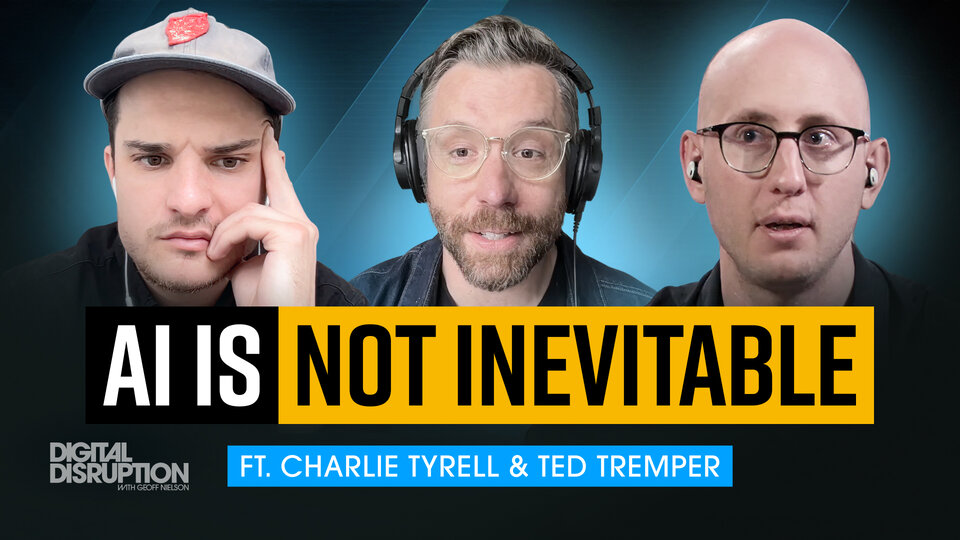
The Most Insidious AI Narrative: We Can't Shape the Future
Artificial intelligence is reshaping work, creativity, business, and society faster than ever before, but how worried should we really be? In this episode, we sit down with The AI Doc producers Charlie Tyrell and Ted Tremper to discuss the biggest lessons they learned after spending years investigating AI and interviewing leading experts
Listen
Our Guest Joscha Bach Discusses
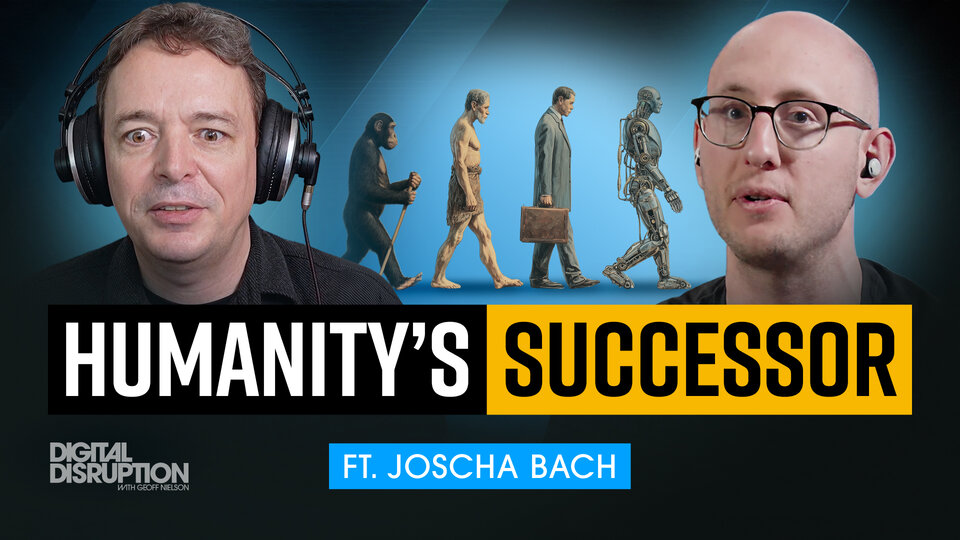
Joscha Bach: AGI, Consciousness, and the Evolution of Intelligence
Artificial intelligence is changing faster than most people realize, but are we asking the wrong questions about AI, AGI,consciousness, and the future of society?
In this episode, cognitive scientist and AI researcher Joscha Bach joins us for a thought-provoking conversation on AI, machine consciousness, LLMs, AGI, human intelligence, and the future of work.