
Build a Construction IT Resourcing Plan in Hospitality
Secure IT resourcing needs to drive construction project success.
- IT is often excluded from early project planning and project initiation, leaving critical technology requirements overlooked and driving frequent late-stage rework that causes budget overruns and delays.
- IT is typically brought in as part of FF&E, leaving compressed timelines and constrained resources that force key IT projects to be deprioritized in favor of quick wins, limiting business value and scalability.
- The value of IT initiatives is often misunderstood, leaving them deprioritized and resulting in missed opportunities and complications.
Our Advice
Critical Insight
IT is integral to every component of casinos, hotels, and venues, from gaming and security to payments and guest experience. To ensure both the success of the project and the long-term success of the business, IT decisions and planning must be prioritized at the highest level, equal to or above traditional construction decisions.
Impact and Result
IT should align project resourcing needs with the construction timeline and milestones to clearly communicate requirements and ensure proper IT engagement throughout the construction project.
- Understand current state to establish resourcing requirements against available FTE
- Map IT resourcing needs over construction timeline to align IT requirements
- Calculate gaps and quantify risks of understaffing IT
- Communicate resourcing needs to secure early involvement
Build a Construction IT Resourcing Plan in Hospitality
Secure IT resourcing needs to drive construction project success.
Analyst perspective
IT alignment across the construction project drives success.
Hospitality construction projects often underestimate IT, viewing it as part of FF&E and bringing it into the construction process late, rather than recognizing it as a strategic stakeholder. This leads to budget and time overruns, as key IT requirements are overlooked, leading to rework and delays. IT is forced to operate with constrained resources and a compressed timeline, frequently pausing essential projects and struggling to maintain day-to-day operations.
Without early, planned, and continuous IT involvement throughout the construction lifecycle, IT's ability to deliver solutions effectively is disrupted. Misalignment across the project timeline impacts IT's capacity to support both the construction project and other critical initiatives, ultimately harming the organization.
IT plays a critical role in nearly every component of casinos, hotels, and venues. Its considerations must be prioritized alongside other construction elements to ensure both project success and long-term business value. Embedding IT from the start of construction planning, with resourcing aligned to key construction milestones, is essential for seamless technology delivery and operational readiness of construction projects.

August Hummelbrunner
Research Analyst
Gaming, Hospitality, Sports & Entertainment Industries
Info-Tech Research Group
Executive summary
Your Challenge
IT is often excluded from early project planning and project initiation, leaving critical technology requirements overlooked and driving frequent late-stage rework that causes budget overruns and delays.
IT is typically brought in as part of FF&E, leaving compressed timelines and constrained resources that force key IT projects to be deprioritized in favor of quick wins, limiting business value and scalability.
The value of IT initiatives is often misunderstood, leaving them deprioritized and resulting in missed opportunities and complications.
Common Obstacles
IT is commonly overlooked and seen as a support function rather than a team with their own goals; this results in IT being left out of key construction project planning conversations as they aren't seen as a relevant stakeholder.
IT lacks control over the full scope of its workload, with sudden high-priority requests from other teams further straining already limited resources.
IT initiatives often fail to gain prioritization as teams struggle to translate technical outcomes into business language, resulting in missed opportunities, misaligned priorities, and underfunded projects.
Info-Tech's Approach
IT should align project resourcing needs with the construction timeline and milestones to clearly communicate requirements and ensure proper IT engagement throughout the construction project.
- Understand current state to establish resourcing requirements against available FTE.
- Map IT resourcing needs over construction timeline to align IT requirements.
- Calculate gaps and quantify risks of understaffing IT.
- Communicate resourcing needs to secure early involvement.
Info-Tech Insight
IT is integral to every component of casinos, hotels, and venues, from gaming and security to payments and guest experience. To ensure both the success of the project and the long-term success of the business, IT decisions and planning must be prioritized at the highest level, equal to or above traditional construction decisions.
Late IT involvement drives delays, overruns, and poor outcomes
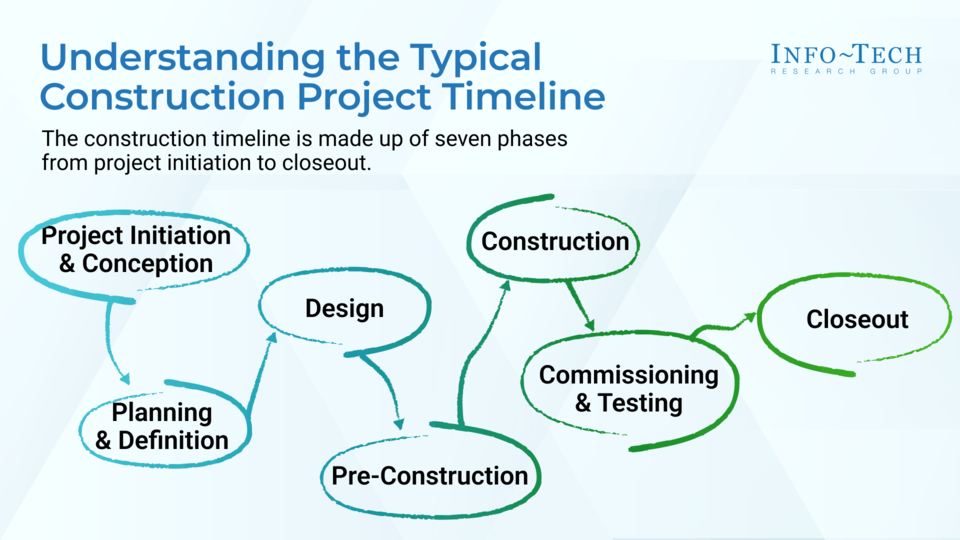
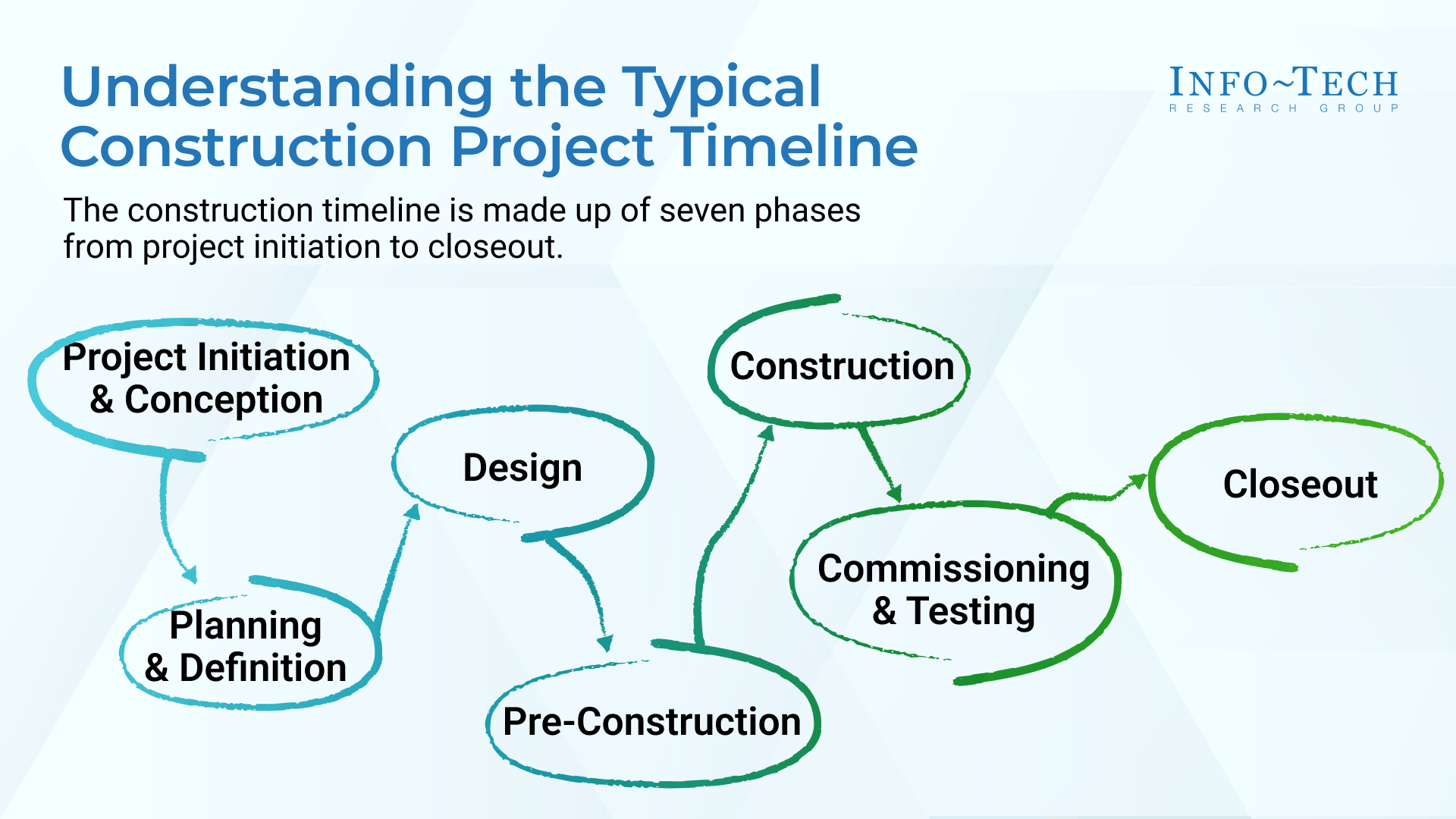
IT is a pivotal part of the core infrastructure in new builds and renovations, and their involvement throughout the project is essential to delivering on time and on budget construction projects. However, IT faces the following challenges:
IT is often excluded from early project planning and project initiation, leaving critical technology requirements overlooked and driving frequent late-stage rework that causes budget overruns and delays.
IT is typically brought in as part of FF&E, leaving compressed timelines and constrained resources that force key IT projects to be deprioritized in favor of quick wins, limiting business value and scalability.
The value of IT initiatives is often misunderstood, leaving them deprioritized and resulting in missed opportunities and complications.
Construction projects where IT is engaged as a valuable stakeholder from the start and properly staffed over the project lifecycle enable the delivery of a future-proofed venue that aligns with long-term goals.
Construction projects frequently exceed budgets and timelines, with risks increasing as project size grows.
9 out of 10 construction projects run an average of 28% over budget.
98% of megaprojects, such as hospitality and entertainment venues, are faced with cost overruns and time delays.
Source: Contimod, 2025
Download Info-Tech's Drive Vision Alignment for Successful Construction Projects blueprint to establish an owner representative for projects.
IT needs to align resources across the project lifecycle
To overcome the following obstacles, IT must advocate for earlier integration, positioning itself a strategic driver and aligning staffing with construction milestones:
IT is commonly overlooked and seen as a support function rather than a team with their own goals; this results in IT being left out of key construction project planning conversations as they aren't seen as a relevant stakeholder.
IT lacks control over the full scope of its workload, with sudden high-priority requests from other teams further straining already limited resources.
IT initiatives often fail to gain prioritization as teams struggle to translate technical outcomes into business language, resulting in missed opportunities, misaligned priorities, and underfunded projects.
IT is not commonly included in project planning
IT projects typically under deliver on expected value by 39% due to project constraints.
Source: McKinsey, 2022
Poor communication and misalignment of stakeholders contribute to roughly 30% of project failures.
Source: The Business Dive, 2025
Review the capability map for your specific industry
Download and review the business capability map for your specific industry:
Download the Hotel Industry Reference Architecture
Download the Integrated Casino Industry Reference Architecture
Download the Sports Entertainment Industry Business Reference Architecture
Business Capability Map Defined
In business architecture, the primary view of an organization is known as a business capability map.
A business capability defines what a business does to enable value creation, rather than how. Business capabilities:
- Represent stable business functions.
- Are unique and independent of each other.
- Typically, will have a defined business outcome.
A business capability map provides details that help the business architecture practitioner direct attention to a specific area of the business for further assessment.
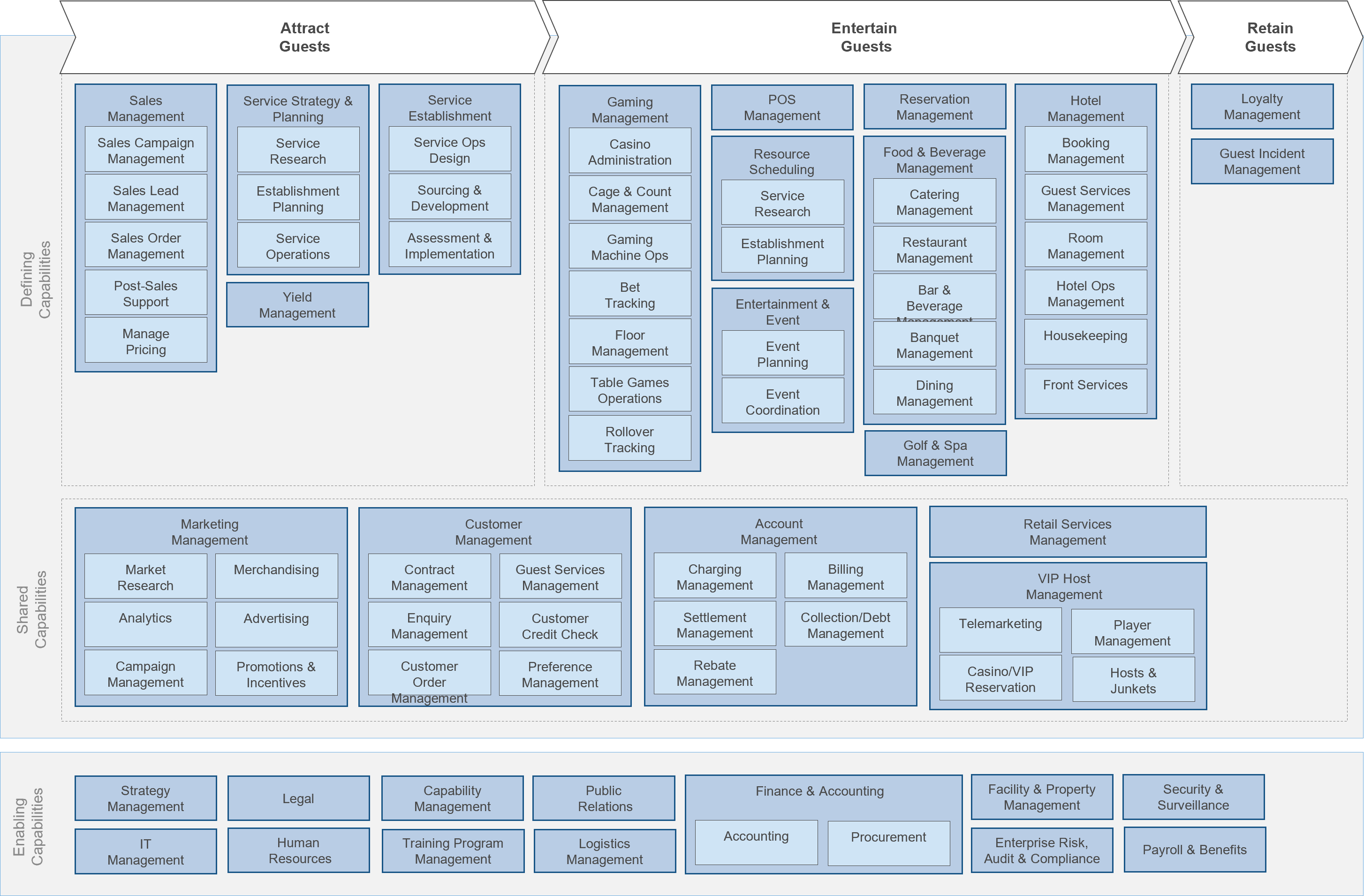
Source: Info-Tech Research Groups Business Capability Map for Integrated Casino Resorts
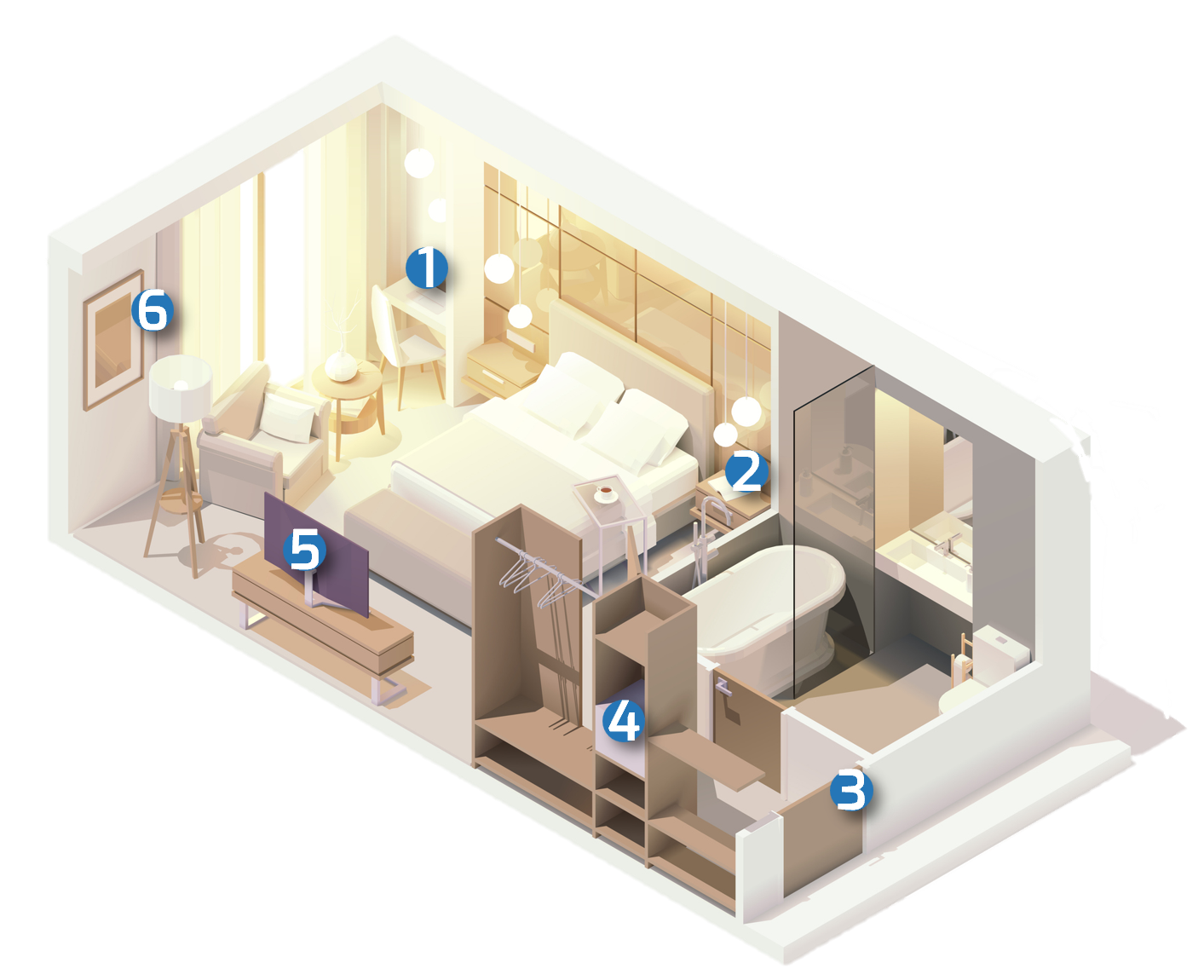
IT is embedded across every corner of hotels
IT plays a critical role in shaping the guest experience and enabling key business capabilities. The following table highlights how IT is integrated into the design and delivery of hotel rooms in construction projects.
| Guest Amenity | Business Capability | Role Owner(s) | IT Requirements | Provider(s) |
| 1. Wi-Fi | Guest Services Management | Network Architect | Access to high-speed internet through fibre installation, SSID (segmentation of network), access points, configure firewalls and bandwidth | Hardware vendor, network vendor |
| 2. Power Outlets | Hotel Operations Management | Infrastructure Architect | Low voltage power infrastructure, load capacity, conduit pathways, outlet placement, circuit segmentation, power availability for low voltage systems, security controls | Electrical contractor, fixture supplier, infrastructure integrator |
| 3. Mobile Key | Room Management | Infrastructure Architect, Systems Architect, Application Support | Access control integration, mobile app, key management server, Wi-Fi/network, VLAN segmentation, lock hardware, server placement, Bluetooth low energy coverage, Bluetooth elevator readers, data encryption for mobile device and lock | Hardware provider, PMS vendor, network and infrastructure provider |
| 4. Digital Safe Box | Hotel Operations Management | Infrastructure Architect | Low-voltage cabling, software configuration, access control, PMS and housekeeping integration | FF&E supplier, electrician |
| 5. Smart TV | Guest Services Management | Systems Architect, Infrastructure Architect, Application Support | High-bandwidth IP network, content distribution servers, configure VLAN isolation, IP addressing and configuration | Streaming provider, electrical contractor, millwork vendor |
| 6. Climate Control | Hotel Operations Management | Systems Architect, Infrastructure Architect | IoT sensors, HVAC controls and sensors, low voltage cabling, network topology, network segmentation, security and access control, network switch configuration | HVAC contractor, cabling contractor, electrical contractor |
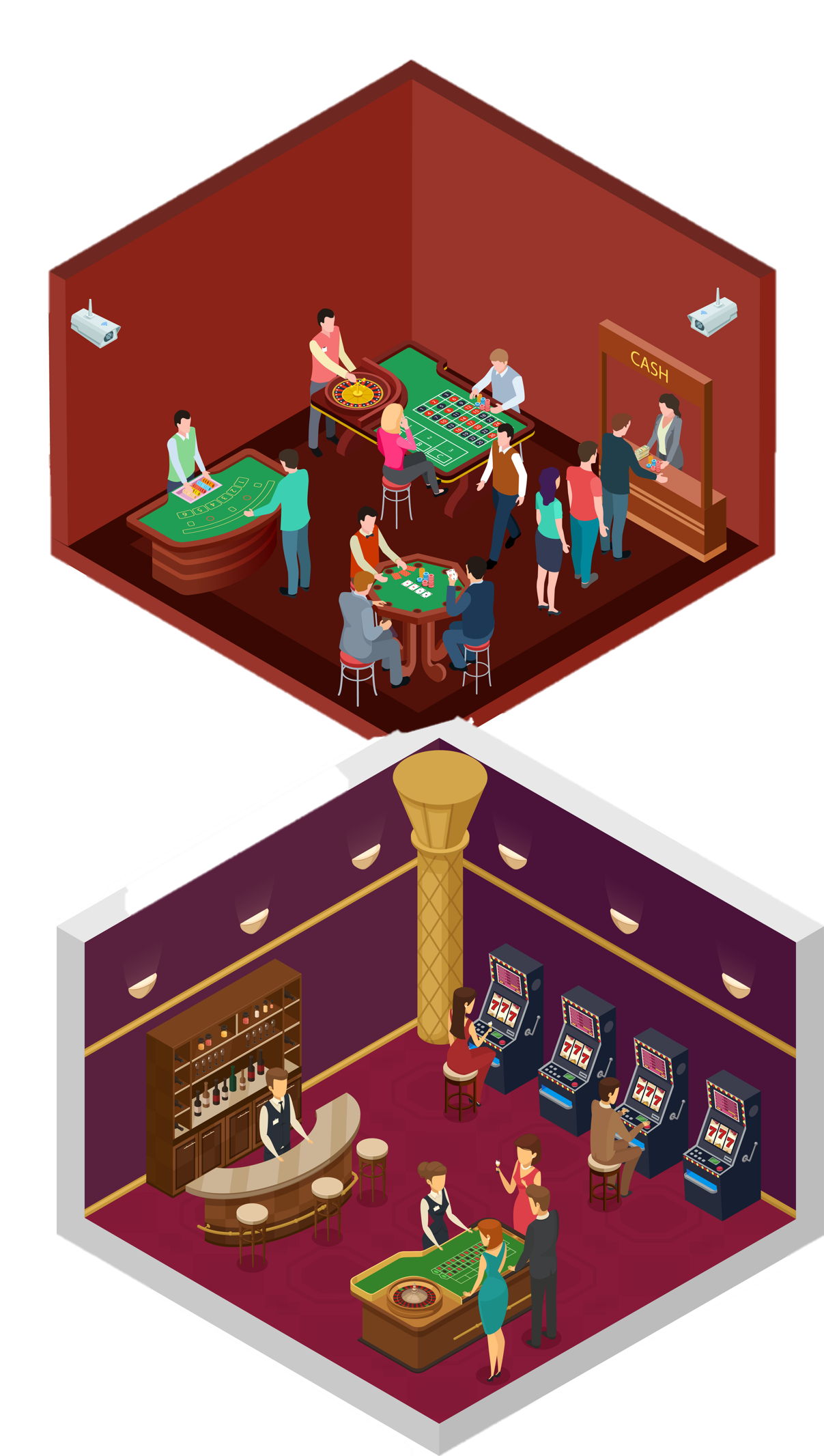
IT is embedded across every corner of casinos
IT plays a critical role in shaping the guest experience and enabling key business capabilities. The following table highlights how IT is integrated into the design and delivery of gaming floors in construction projects.
| Patron Amenity | Business Capability | Role Owner(s) | IT Requirements | Provider(s) |
| 1. Ticket Redemption Kiosk | Floor Management | Systems Architect, Applications Support | VLAN segmentation, highspeed cabling, PMS and CMS integration, data encryption, network connectivity, firewall configuration, endpoint hardening | Kiosk vendor, payment processing vendor, security vendor, slot machine vendor |
| 2. Slot Machines | Gaming Machine Operations | Infrastructure Architect, Application Support | Data centers, network topology, VLAN separation, IDF room, HVAC planning, UPS backup power, data pathways, low-voltage cabling, power/circuit isolation, CMS and SAS integration | Slot vendors. CMS and SAS vendor, cabling contractor, electrical contractor, gaming commission |
| 3. Rewards Kiosk | Loyalty Management | Systems Architect, Applications Support | VLAN segmentation, system integration, RFID/Barcode readers, secure authentication, network infrastructure, low voltage cabling, circuit load capacity, firewall configuration, data encryption | Kiosk vendor, software vendor, payment processing vendor, network vendor |
| 4. Point of Sale | POS Management | Systems Architect | High-speed network connection, VLAN segmentation, network paths, POS terminals, POS system, cabling | Low voltage vendor, electrical contractors, POS vendor, payment processing vendor |
| 5. Table Game | Table Games Operations | Infrastructure Architect, Application Support | High-bandwidth/low-latency network, fiber pathways, UPS backup planning, network ports, IDF/MDF rack installation, configure gaming servers/database clusters, configure TMS/CMS, configure user access controls, system integration (TMS, CMS, Accounting) | Gaming system vendors, network infrastructure vendors, electrical contractors, security and surveillance, FF&E vendors |
| 6. Wi-Fi | Guest Services Management | Network Architect | High-density wireless coverage, access points, backhaul connectivity, SSID (segmentation of network), network bandwidth, AP mounting, security configuration, telecom room (IDF/MDF) | Network vendors. cabling contractors, internet service providers, electrical contractors |
| 7. Security Cameras | Security and Surveillance | Network Architect | IDF room, network pathways, power circuits, UPS backup, HVAC planning, lighting, CMS, fiber cabling, cable run labeling, patch panels, data center, surveillance | Security and surveillance vendor, network vendor, AV vendor, compliance and regulatory |
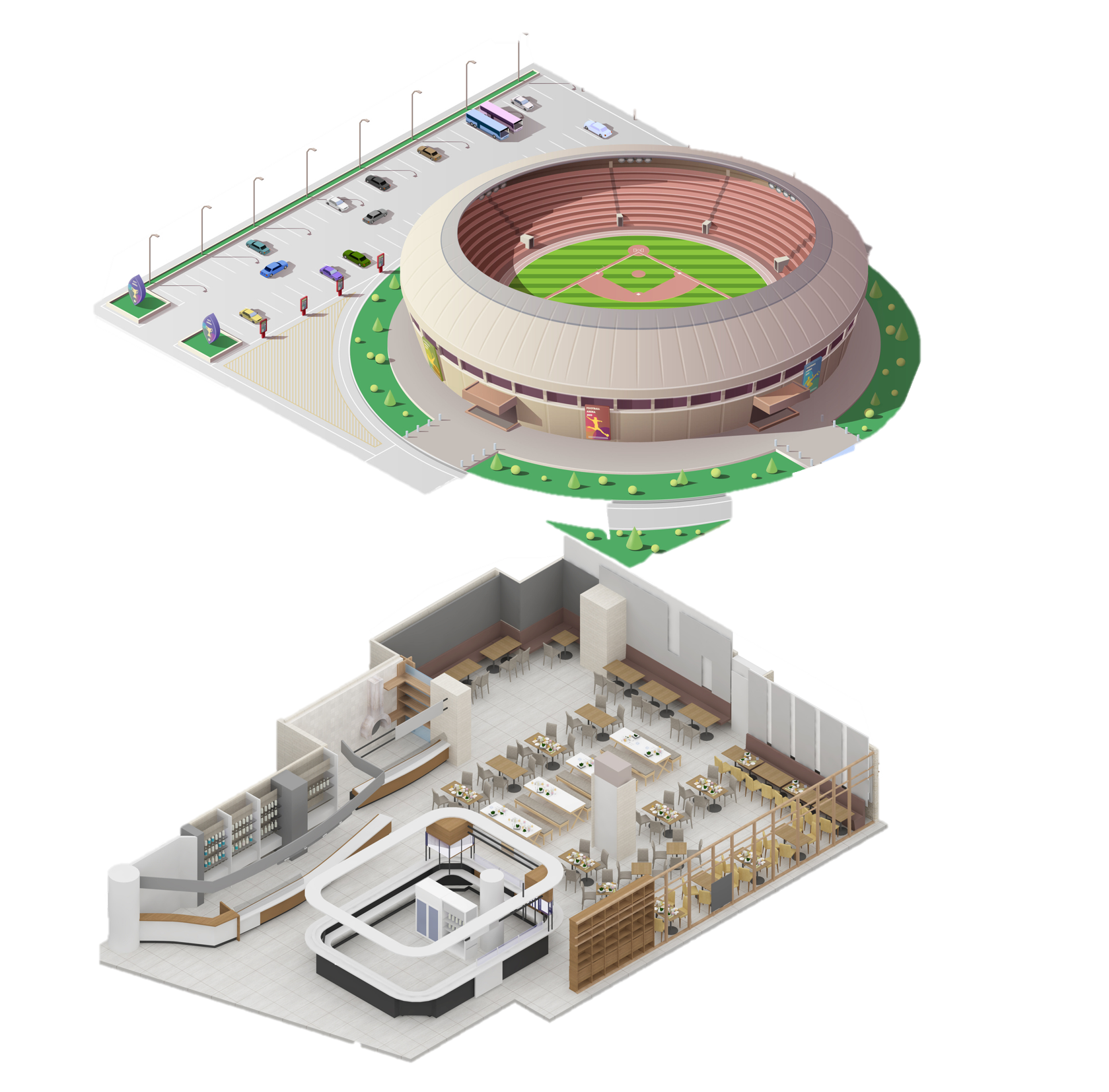
IT is embedded across every corner of venues
IT plays a critical role in shaping the guest experience and enabling key business capabilities. The following table highlights how IT is integrated into the design and delivery of sports venues in construction projects.
| Fan Amenity | Business Capability | Role Owner(s) | IT Requirements | Provider(s) |
| 1. Mobile Ticketing | Ticket Management | Systems Architect, Applications Support | High-speed network configuration, install DAS, configure digital ticketing systems, ticket management platform, data encryption, power and cabling for entry gates, ticket kiosks | Ticketing platform provider, gate hardware vendor, digital wallet integration, cabling contractors |
| 2. Stadium Lighting | Venue Management | Infrastructure Architect | Centralized lighting control network, fiber backbone, cabling, smart control/sensor integration, power distribution, conduit planning, HVAC planning, automated lighting, UPS backup, network pathways | Electrical contractors, FF&E vendors, lighting control system vendors, AV Vendors |
| 3. POS | POS Management | System Architect, Application Support | High-speed network connection, VLAN segmentation, network paths, POS terminals, POS system, cabling, firewall configuration | Low voltage vendor, electrical contractors, POS vendor, payment processing vendor |
| 4. Digital Concierge | Manage Fan and Profiles | Network Architect, Application Support | Bandwidth capacity, fiber cabling, integration with ticketing system, mobile app, loyalty integration, kiosks, IoT | Software developers, server vendors, kiosk vendors, IoT vendors |
| 5. Digital Signage | Venue Management | Infrastructure Architect | Cabling pathways, VLAN segmentation, redundant fiber uplinks, QoS policies, IDF, signage control system, define user access, display encryption, media player configuration | Digital display and hardware vendors, AV integrators, streaming vendor |
| 6. Sound System | Venue Management | System Architect, Application Support | AoIP design, low-latency network, IDF/MDF locations, audio system configuration, VLAN segmentation, audio endpoints, network switches | Audio hardware vendors, AV system integrators, electrical contractors, audio software vendor, AoIP control vendor |
| 7. Event Security | Security and Surveillance | Infrastructure Architect | Access control system, emergency alert system, configure video management systems, ticket and credential verification, UPS backup | Screening device vendors, security integrators, access control vendors |
IT plays a critical part in the success of construction projects
Excluding IT from the construction project early on creates major barriers to success, leading to rework, poor technology integration, and insufficient staffing at critical stages, ultimately producing a final build that is unprepared for future technological advancements and limits scalability.
Consequences of late IT involvement:
- Wi-Fi: Access points may not be situated in the correct areas, resulting in poor network connection.
- Mobile Key: Mobile keys rely on Wi-Fi and Bluetooth connection; if access points aren't strategically positioned, weak connectivity can result in unreliable key performance.
- Climate Control: Smart thermostats rely on low-voltage communication lines; if not planned for during construction, walls and ceilings may need to be reopened for retrofitting.
Consequences of late IT involvement:
- Slot Machines: The data room may lack sufficient space and cooling, causing slot machine data to fail to relay properly.
- Table Games: Insufficient planning for redundant fiber paths could lead to rework, as systems with a single power feed risk down time if the source fails.
- Security Cameras: Cameras may not be positioned properly, creating blind spots on the casino floor.
Consequences of late IT involvement:
- Stadium Lighting: The main lighting controller, show servers, and network switches are typically located in the data center; poor planning can lead to insufficient physical space.
- Digital Signage: Servers, decoders, and network switches require secure, ventilated media rooms; these spaces may be undersized or absent.
- Event Security: Security systems need structured cabling; poor planning can lead to missing or poorly routed conduits and costly rework.
About Info-Tech
Info-Tech Research Group is the world’s fastest-growing information technology research and advisory company, proudly serving over 30,000 IT professionals.
We produce unbiased and highly relevant research to help CIOs and IT leaders make strategic, timely, and well-informed decisions. We partner closely with IT teams to provide everything they need, from actionable tools to analyst guidance, ensuring they deliver measurable results for their organizations.
What Is a Blueprint?
A blueprint is designed to be a roadmap, containing a methodology and the tools and templates you need to solve your IT problems.
Each blueprint can be accompanied by a Guided Implementation that provides you access to our world-class analysts to help you get through the project.
Need Extra Help?
Speak With An Analyst
Get the help you need in this 2-phase advisory process. You'll receive multiple touchpoints with our researchers, all included in your membership.
Guided Implementation 1: Define Resourcing and Identify Gaps
- Call 1: Scope requirements, objectives, and understand your current state.
- Call 2: Collect construction project data.
- Call 3: Define your technology complexity index.
- Call 4: Map and align IT staffing to project timeline.
- Call 5: Analyze current FTE against required project resourcing.
Guided Implementation 2: Plan for Resourcing and Present the Case
- Call 1: Determine risk rating tied to staffing shortages.
- Call 2: Discover the right IT resourcing model.
- Call 3: Present your case.
Contributors
- Frank Bonini, CIO, Cordish Gaming
- Whitney Chavez, IT Director, Desert Diamond Casinos & Entertainment
- Justin Johnson, Director of Service Delivery, Kansas City Chiefs
- David Wells, Global Account Director, Hospitality Belden Inc.
- Elizabeth Silva Smulski, Research Lead, Info-Tech Research Group
- David Farlin, Executive Counselor, Info-Tech Research Group
- Edison Barreto, Executive Counselor, Info-Tech Research Group
- Larry Fretz, Managing Partner, Info-Tech Research Group
- Barry Cousins, Distinguished Analyst and Research Fellow, Info-Tech Research Group
- Patti Blackstaffe,Principal Advisory Director, Info-Tech Research Group